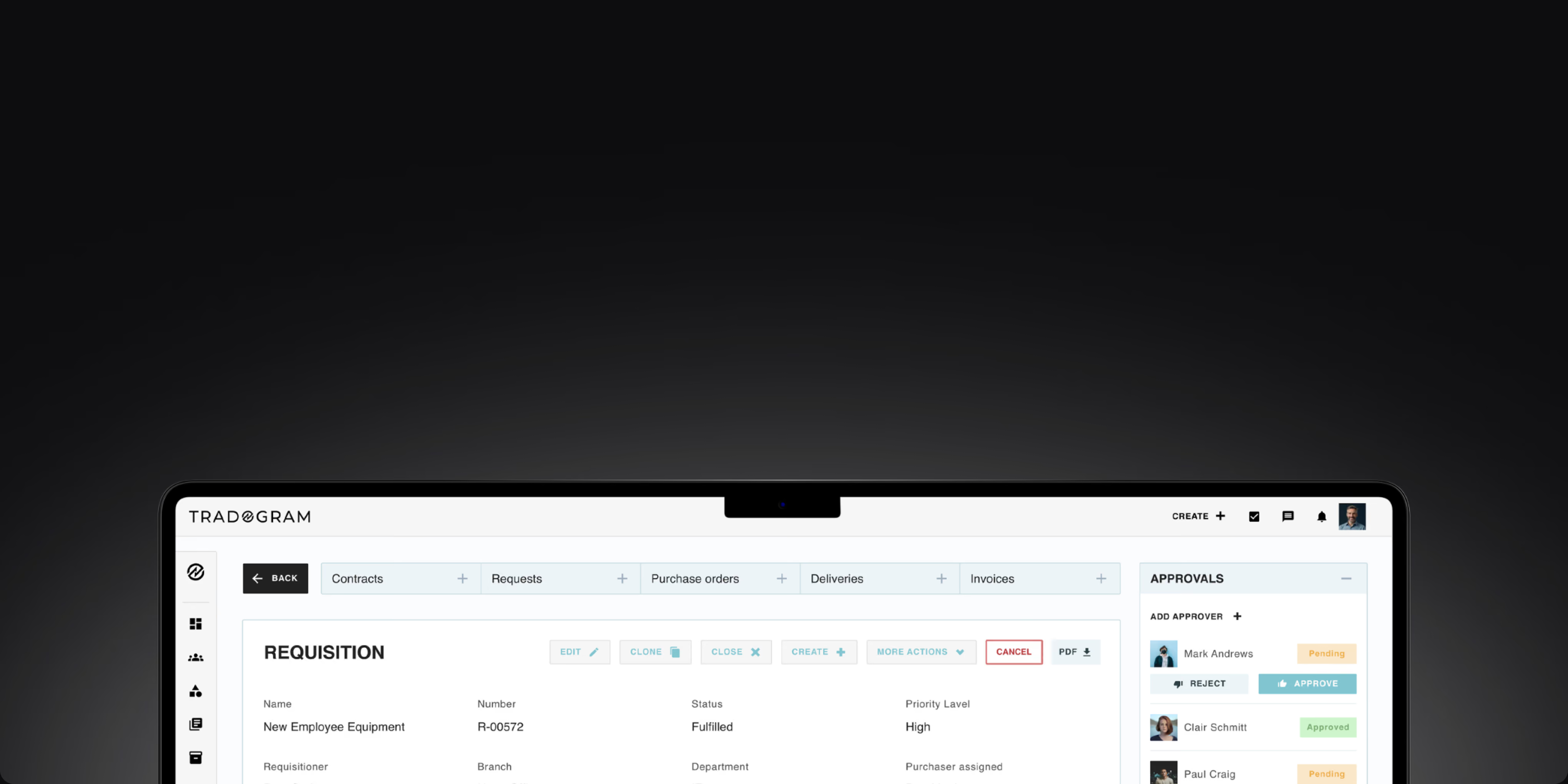
Tradogram's strategic sourcing software gives procurement teams a structured strategic sourcing process for supplier discovery, RFQ and RFP events, bid evaluation, and negotiation, so sourcing decisions are based on consistent data from start to award.


Without a consistent sourcing strategy, supplier selection happens informally. Limited scoring and side-by-side comparison make it harder to explain why one supplier was chosen over another.
Managing quote requests across email and spreadsheets fragments procurement processes. Responses arrive in different formats, follow-up stays manual, and comparing bids objectively takes more work.
After supplier selection, disconnected agreements break the source-to-contract process. Renewal dates, negotiated terms, and contract compliance become harder to manage without structured contract lifecycle management.
Tradogram connects supplier discovery, sourcing events, supplier management, and contract management in one strategic sourcing platform, creating a structured source-to-contract process from supplier discovery through award, onboarding, and contract handover.

Launch RFQ and RFP events from one place. Invite suppliers, collect responses, and compare bids with weighted scoring built into the strategic sourcing process.

Bring supplier onboarding, supplier information, and supplier performance tracking into one place so procurement teams have a trusted record for supplier management.

Compare supplier bids side by side, evaluate pricing objectively, and document award decisions before awarding business, giving teams a stronger foundation for supplier relationships.


From supplier discovery to supplier selection, Tradogram helps procurement teams structure sourcing activities, compare bids consistently, and keep each stage connected to broader procurement processes.

Understand where money is being spent, identify savings opportunities, and prioritize sourcing projects that support your overall sourcing strategy.

Centralize supplier information, supplier onboarding, qualifications, and performance data so procurement and supply chain teams manage suppliers from one trusted record.

Create and manage RFIs, RFQs, and RFPs in one place, standardize supplier communications, and keep each event moving through a structured sourcing approach.

Evaluate supplier responses with weighted scorecards, bid analysis, and consistent criteria to support transparent, data-driven decision making.

Review sourcing results, compare total value and supplier risks, negotiate terms, and document the final award. Structured selection gives procurement teams a stronger foundation for risk management and supplier relationship management.

Track supplier KPIs, scorecards, and performance trends to strengthen supplier relationships, support performance management, and improve future sourcing decisions.

Jeanne Hlebo - Vendor Relations Coordinator, Compass Charter Schools





Tradogram reduces sourcing costs by putting competitive bidding, weighted bid evaluation, and award decisions in one strategic sourcing platform, so every supplier choice is based on the same data. Procurement teams launch RFQ and RFP events, compare supplier bids side by side, and document why a bid won before business is awarded.
Awarded suppliers and pricing stay connected to supplier records and purchase orders, so negotiated savings carry through to everyday purchasing. Tradogram customers see 20% average cost savings and 3x faster sourcing cycles using configurable sourcing management software.
The best software for automating RFP and RFQ processes replaces email threads and bid spreadsheets with structured sourcing events that collect every supplier response in the same format. Tradogram's sourcing tools let buyers invite approved suppliers from one place, set deadlines, score bids against weighted criteria, and move from RFQ to award with every decision documented.
Key stakeholders get a clear record of how each supplier was chosen, which supports audits and contract compliance. Sourcing RFx is included in Tradogram's Premium plan and available as an add-on to Essentials, so teams can add it when competitive bidding becomes part of their sourcing strategy. Compare plans and add-ons on the Tradogram pricing page.
No. Tradogram is built for mid-sized procurement teams that need structure without the complexity of enterprise procurement platforms. Since 2014, Tradogram has helped thousands of organizations move sourcing out of inboxes and spreadsheets and into configurable workflows that both procurement professionals and business users can pick up quickly.
You set evaluation criteria, approval steps, and required documents once, and every sourcing event follows the same process without IT involvement. Approved vendors receive invitations and submit bids directly in Tradogram, so buyers can compare bids as soon as they arrive.
Yes. Tradogram connects supplier discovery, sourcing events, supplier management, and contract management in one system, creating a structured source-to-contract process. When a bid is awarded, the supplier's onboarding details, certifications, and performance history are already in the same record, and the agreed terms move into contract management tools with renewal alerts.
That link enforces negotiated pricing when purchase orders are raised months later and flags off-contract spend before it adds up. Procurement leaders get 100% supplier visibility from first quote through renewal.
Yes. Awarded suppliers and pricing flow directly into Tradogram's purchase orders, approval workflows, and invoices, so you never have to re-enter sourcing results in a separate purchasing tool. Approved records then sync with your accounting or ERP system through Tradogram's procurement integrations, with API access available for systems without a native connector.
Procurement and finance work from one aligned set of supplier and pricing data instead of keeping separate versions in spreadsheets. That makes sourcing one step in your procurement workflows, with no extra tool for the team to learn or maintain.
See how Tradogram helps you run structured sourcing events, compare supplier bids, and move from RFQ to award with every decision documented.