

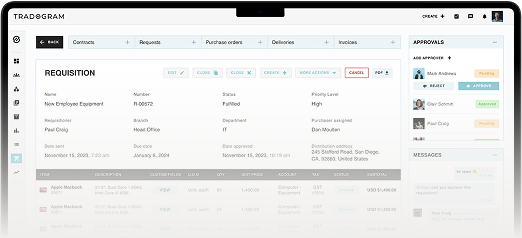
A single unbudgeted purchase order can trigger a state audit finding, and a missing signature on a $40,000 contract can delay a local school district's new HVAC installation by a semester. In government purchasing, paperwork isn't a formality; it's the record that proves public money was spent the way the law, the budget, and the taxpayers expected.
That's the pressure most public-sector buyers face when they start evaluating government procurement software. The right platform doesn't just move purchase orders faster. It gives finance, procurement, and department heads one shared record of what was requested, approved, sourced, ordered, received, and paid, so an audit becomes a matter of pulling a report rather than reconstructing a paper trail from emails and spreadsheets.
This guide covers what government procurement software actually needs to do for federal, state, and local agencies; where tools like GSA Schedules and Amazon Business fit (and where they stop); and what separates a platform that understands public-sector complexity from one that simply adds a government label to a private-sector-focused product.
What government procurement software actually needs to do
Government procurement software is a system that lets public agencies request, approve, source, purchase, receive, and pay for goods and services with the rigor public accountability requires, while giving finance and leadership a real-time view of what has been committed and why.
The best government procurement software for a given agency depends on its scale and structure, but the strongest platforms share four traits.
- They enforce approval workflows that match the layers of authority a public budget actually requires, not a flat, one-size-fits-all chain.
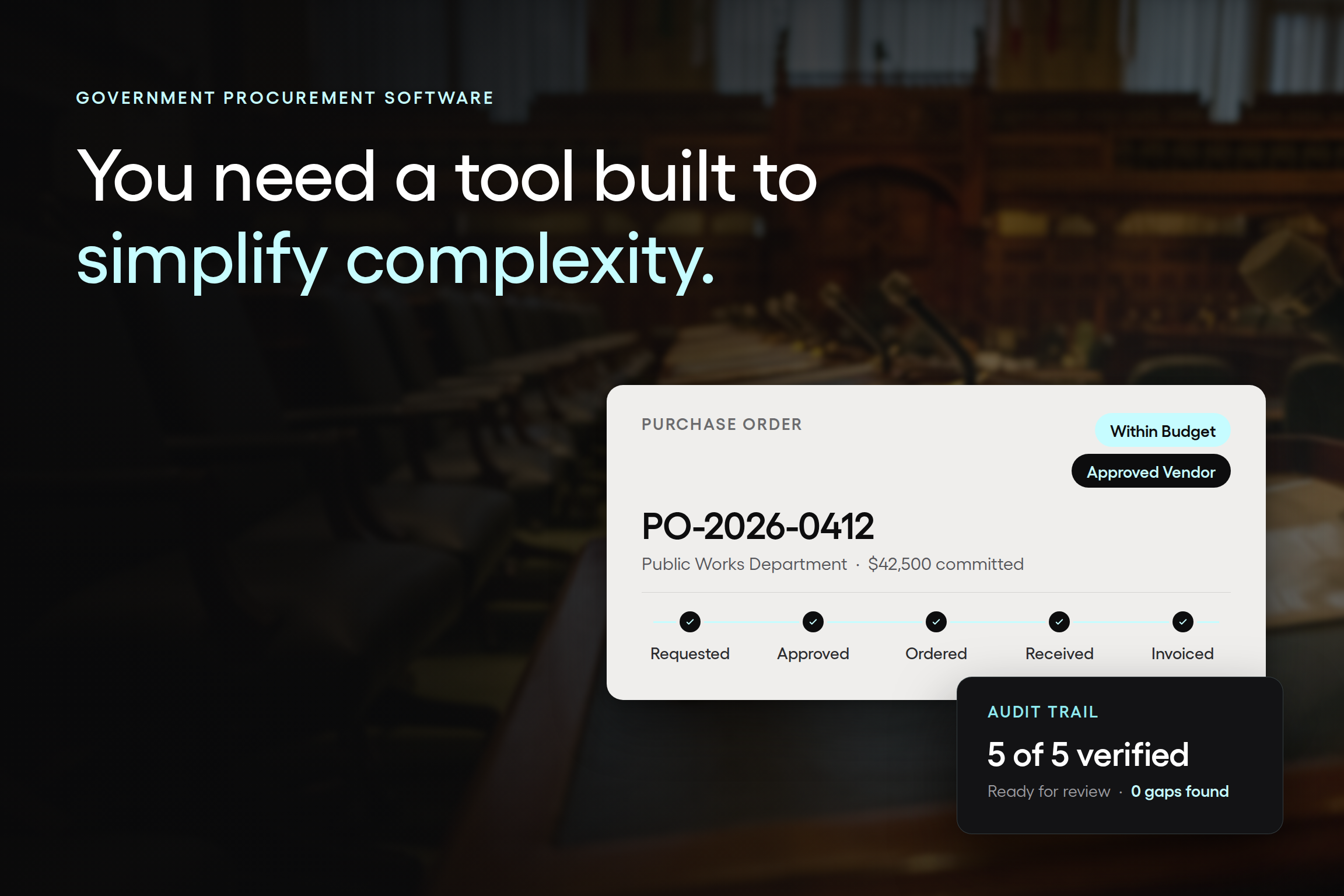
- They keep a complete audit trail of every request, approval, purchase order, and invoice, so a compliance review or open-records request doesn't turn into a scavenger hunt.
- They give department heads and finance the same real-time picture of committed spend, so a project budget shows what's already promised, not just what's been invoiced.
- They scale across departments, sites, or funds without forcing every office into an identical process.
That's a different bar than most general business software is built to clear. A purchasing tool designed for a single-location retailer doesn't need to route a $75,000 infrastructure purchase through three levels of departmental sign-off, or produce a report a state auditor can review line by line. Public sector purchasing carries legal and political weight that private purchasing usually doesn't, and the software has to be built with that in mind from the start.
That's also where manual, paper-based purchasing runs out of road first, and what to look for once you start comparing government procurement solutions.
Learn why organizations choose Tradogram, or see pricing details to find the plan that fits your government agency's size and complexity.
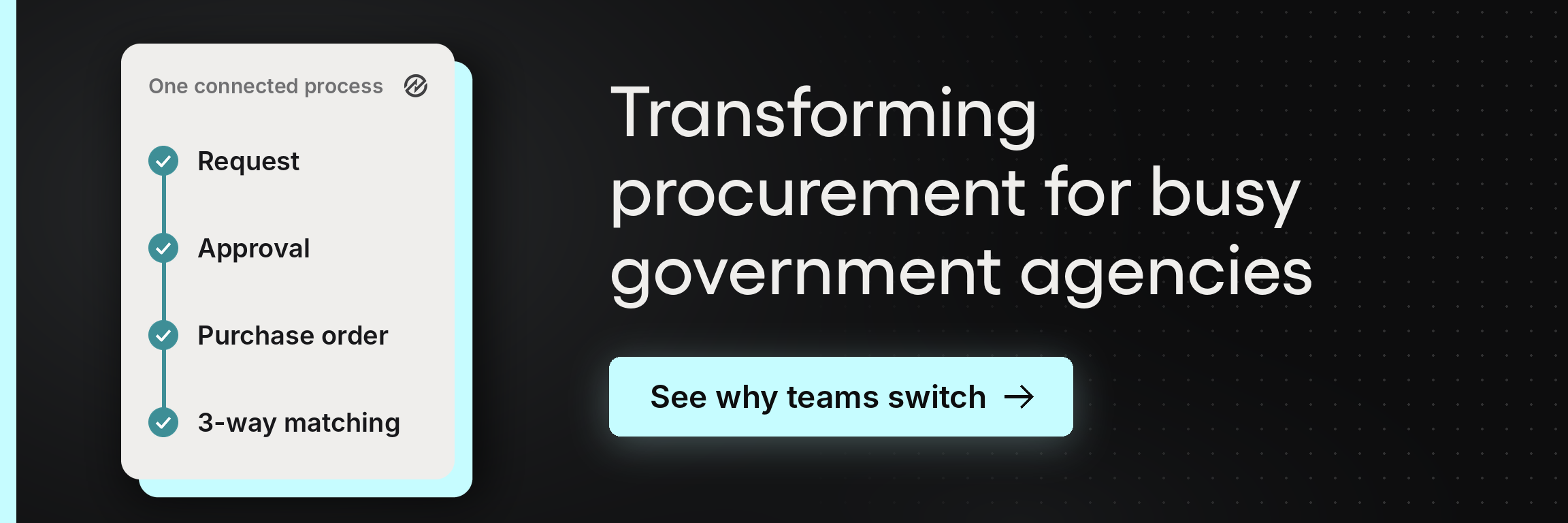
Where local governments hit the limits of manual, paper-based purchasing
A public works supervisor needs three quotes for a $12,000 equipment repair before Friday, because policy requires it. But the quote templates live on three different shared drives, the last approved vendor list is six months out of date, and finance won't see the commitment until the invoice lands, by which point the project is already over budget.
That's what manual purchasing looks like once a local government's department count, budget complexity, and reporting obligations outgrow what email chains and spreadsheets can carry. A few specific breakdowns show up over and over:
- Maverick spend. Staff buys outside the approved process because it's faster than following it, and procurement finds out after the fact.
- No visibility into committed spend. Finance sees a purchase order the day it's issued, not the moment a department head decides to buy, so budgets get caught off guard instead of managed.
- A scattered audit trail. Approvals live in email, purchase orders live in a spreadsheet, contracts live in a file cabinet. Reconstructing all of it for an audit or a public records request eats days that a compliance officer doesn't have.
- Ad hoc vendor management. Without a shared, current vendor list, three departments can each rediscover the same underperforming supplier before anyone flags the pattern.
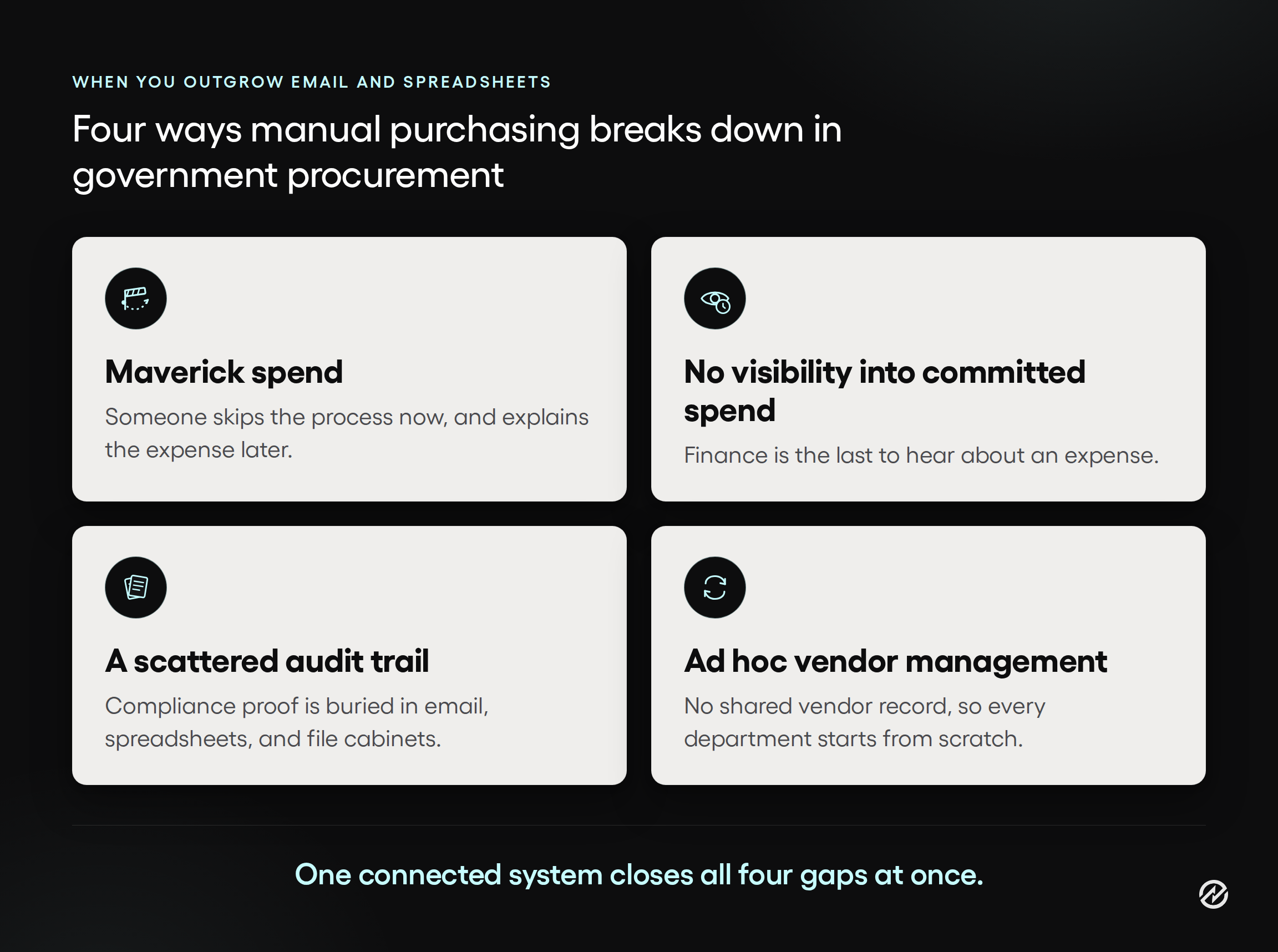
The common thread isn't the people running the process; it's the process itself. And closing that gap is exactly what pushes agencies toward government procurement platforms built to keep committed spend visible the moment a decision is made, not once an invoice lands.
GSA Schedules, Amazon Business, and cooperative purchasing: what they solve and what they don't
Procurement teams researching government procurement software often start here because GSA Schedules and Amazon Business are already part of most public-sector purchasing workflows.
GSA Schedules (also called Multiple Award Schedules) are pre-negotiated federal contract vehicles that let a vetted vendor sell to any authorized government buyer without running a full open bid. State and local agencies can sometimes reach them, or similar contract opportunities, through cooperative purchasing agreements that allow one agency to piggyback on a contract already competitively awarded by another agency. Either way, the pitch is the same: the pricing and vendor vetting are already done, so a purchase that would normally take weeks of solicitation can move in days.
Amazon Business, through its government program, works similarly at the catalog level: tax-exempt purchasing, PO-based checkout, and spending controls layered onto a marketplace most staff already know how to use.
Both are genuinely useful for what they cover: fast, low-risk purchases of standard goods from pre-vetted sources. Neither one manages the rest of the purchasing lifecycle. GSA Schedules and Amazon Business don't know a department's remaining budget, don't route a requisition through the three levels of sign-off a $40,000 purchase requires, and don't generate the same audit trail for a service contract or an infrastructure project that never touches a catalog.
That's the piece agencies still have to build for themselves, and it's why most public sector buyers end up evaluating government procurement solutions that wrap around every purchase, whether it originates from a GSA-scheduled vendor, an Amazon Business order, or a competitively bid contract, and give finance one consistent record of what was requested, approved, and paid for.
Contract management and public procurement compliance
What happens if a three-year janitorial services contract quietly rolls past its renewal date because the only reminder was a note in someone's calendar, and that person left the department eight months ago? Now the agency is paying invoices against an expired contract, exactly the kind of finding an auditor flags first.
Public procurement carries two obligations that private purchasing doesn't: proving the process that led to an award was fair and competitive, and proving every dollar spent afterward still matches the terms of that award. Both depend on RFx and contract management living in the same system as the purchase orders and invoices it governs, rather than in a separate binder or shared drive.
From RFP to award: keeping public procurement competitive and documented
Before a contract exists, there's a solicitation. A defensible RFP or RFQ process means every vendor sees the same requirements, every bid gets scored against the same criteria, and the evaluation itself is on record if a losing bidder ever questions the outcome.
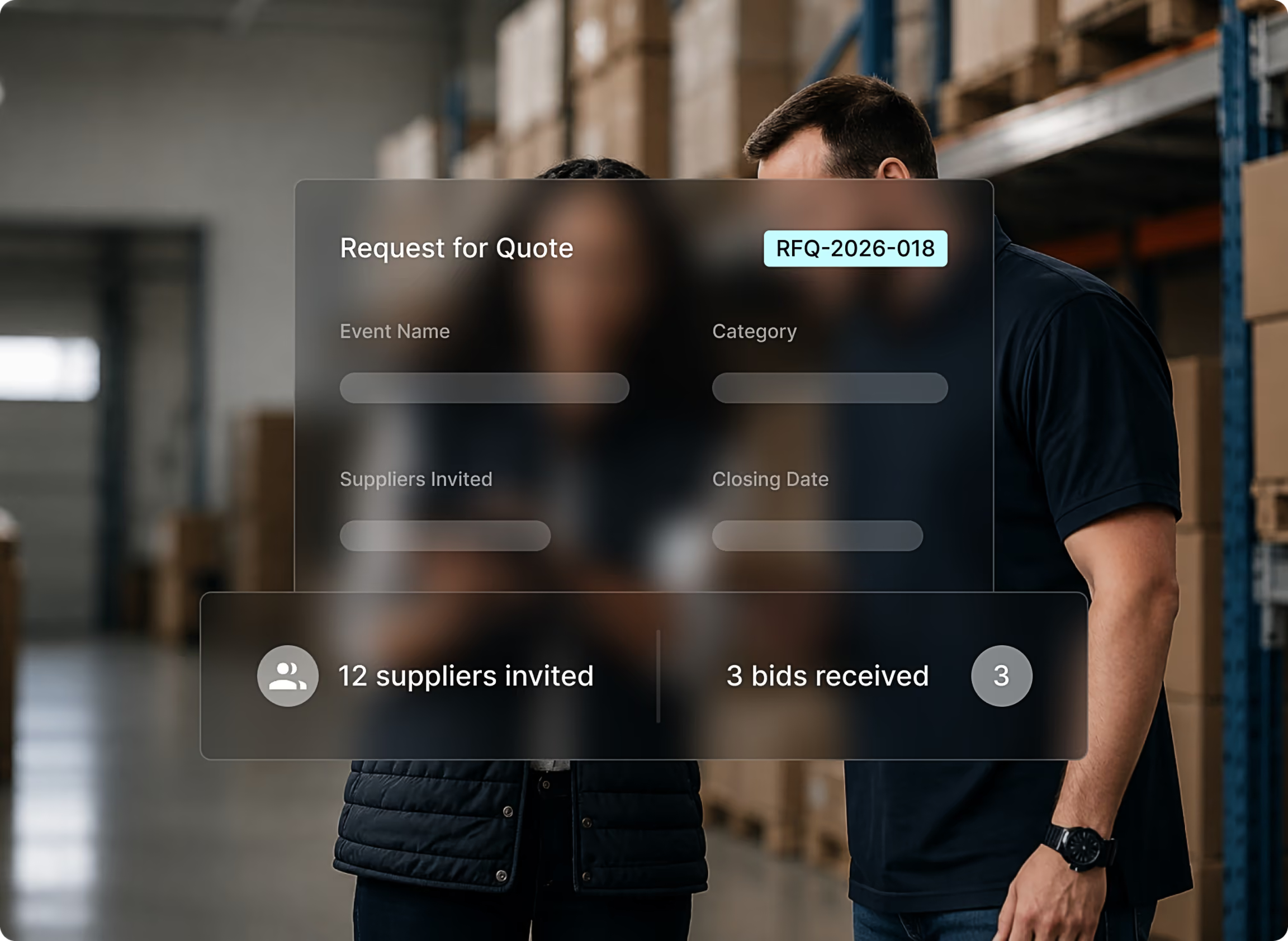
Sourcing management tools built for this handle the RFP-to-award workflow directly, so the comparison that justified the award lives next to the contract it produced, not in a separate spreadsheet someone has to go find.
After the award: contract renewals, compliance, and audit-ready records
Once a contract is signed, the risk shifts from picking the right vendor to staying within the terms already agreed to. That means flagging contracts approaching renewal or expiration before they lapse, matching every purchase order and invoice back to the contract that authorizes it, and keeping the full record, including the RFP, award, amendments, and invoices in one place a compliance officer can pull without a scavenger hunt.
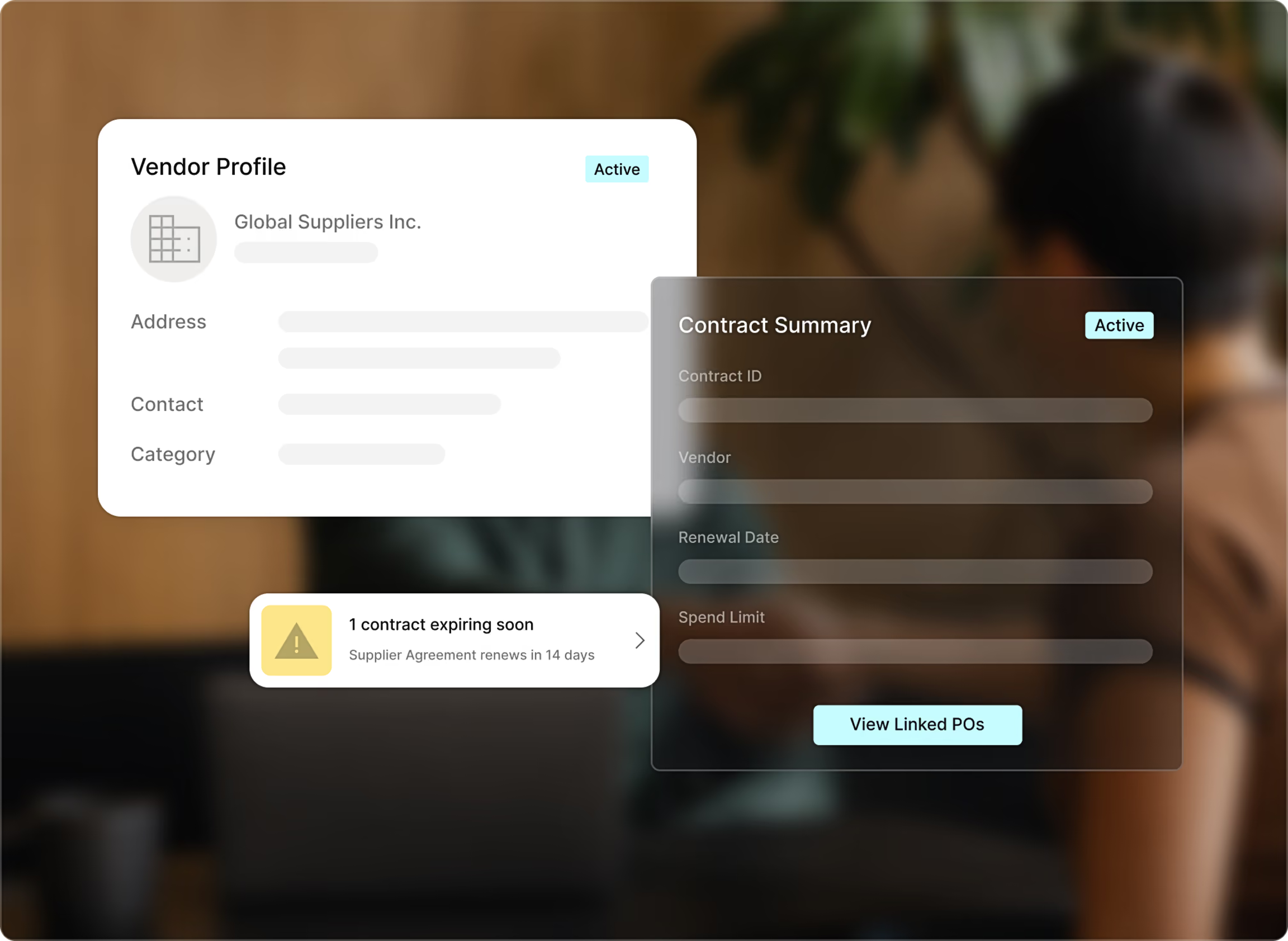
Contract management built into the procurement platform itself, rather than bolted on as a document repository, is what makes that possible. A repository can store the signed PDF, but it can't stop a requisition from generating a purchase order against a contract that expired last month, or flag that cumulative spend is closing in on a not-to-exceed ceiling before the next invoice pushes past it.
When a contract's terms, dollar limits, and expiration date are stored in the same system that generates requisitions and purchase orders, the platform automatically enforces those limits. An expired or over-threshold contract can’t be used to authorize a new purchase, so enforcement doesn't rely on someone remembering to check.
Supporting infrastructure projects and multi-department budgets
A road resurfacing project doesn't move through one department's budget. Public works owns the construction contract, engineering manages the professional services agreement with the design firm, finance tracks the state grant funding paying for half of it, and the contracting officer overseeing the award has to show every dollar was spent according to the grant's compliance standards, not just the organization's own policy.
That kind of project is common across government agencies, state and local governments, and federal agencies alike, and it's exactly where systems built for single-department purchasing fall apart. Infrastructure projects can run for years, cross multiple fiscal budgets, mix construction, professional services, and equipment purchases, and answer to more than one funding source at once. The same is true for an ongoing maintenance contract on a public building or water system: spend that never has a single "project end date" to close the books against.
Government procurement software built for this reality does three things a generic system doesn't:
- It tracks expenditures against the project or contract itself, not just the department's annual budget, so cost overruns show up before the project closes, not after.
- It keeps every step of the acquisition process, including contractor invoices, engineering fees, equipment purchases, tied to the correct funding source, so a state or federal grant audit can trace spending in minutes instead of days.
- It gives finance, public works, and engineering shared access to the same real-time data, instead of each department reconciling its own spreadsheet at month-end.
For agencies managing roads, water systems, and other critical infrastructure that serves entire communities, that visibility isn't a convenience. It's what lets a project stay on budget while still meeting regulatory compliance requirements tied to public funding, from prevailing wage documentation to environmental reporting.
Supplier relationships and small business participation in public procurement
A federal grant requires an agency to report the percentage of spend that went to small businesses last quarter, and the answer should be a two-minute pull from vendor records. Instead, someone spends a day cross-referencing invoices against a list of Small Business Administration certifications that's a year out of date, because nobody owns keeping it current.
Vendor participation goals aren't optional extras in public procurement. They're often tied directly to funding eligibility, and agencies that actively support the local economy by directing spend toward small, veteran-owned, or minority- and women-owned businesses have to prove it with records, not intent.
That starts with knowing who your potential vendors actually are.
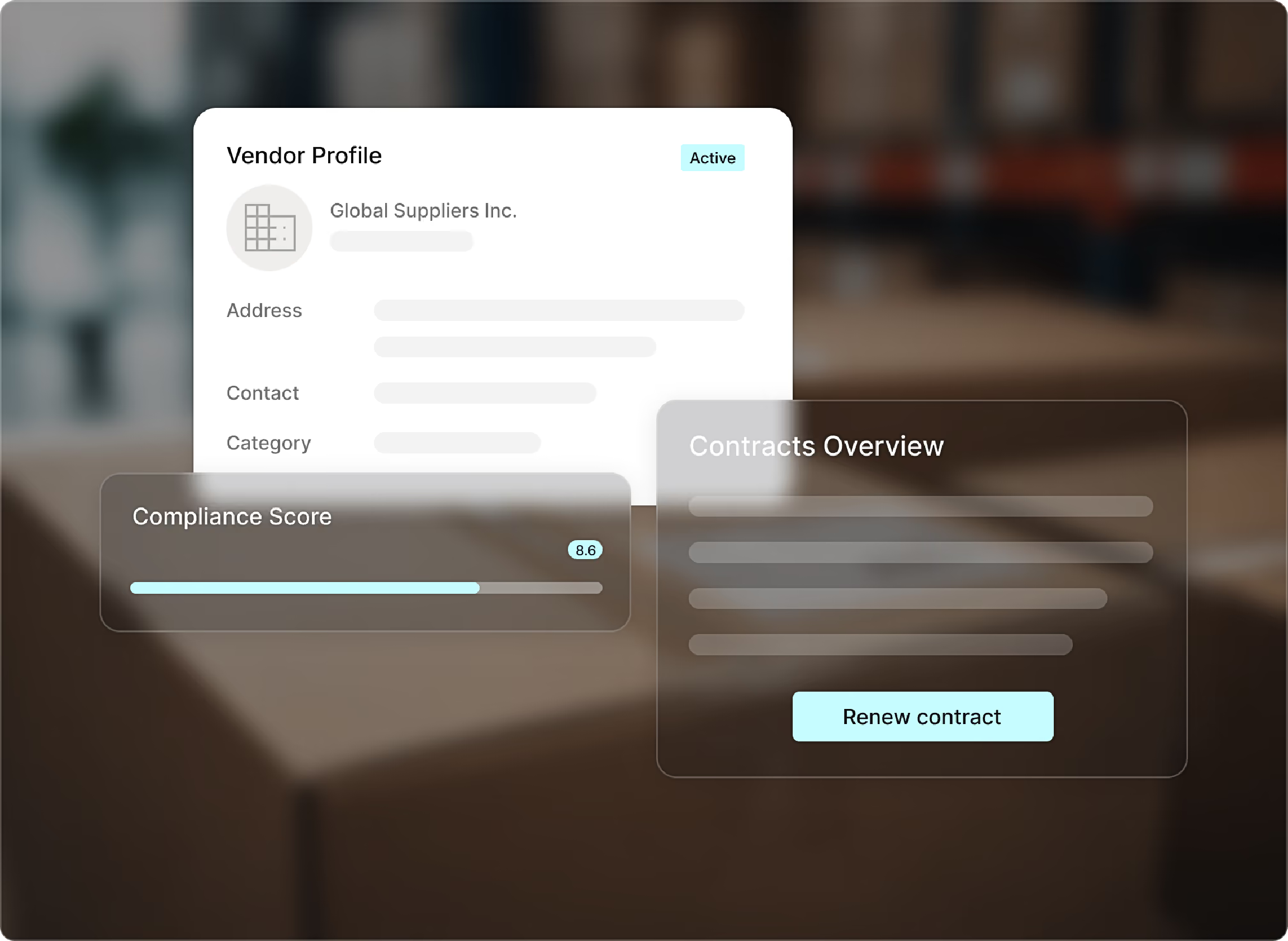
Supplier management built into a procurement platform keeps certifications (small business, DBE, WOSB, veteran-owned), insurance documents, and licensing current in a single vendor record, rather than scattered across whoever last renewed them.
It also keeps a performance history, on-time delivery, quality issues, and responsiveness, so awarding a contract on best value rather than the lowest bid is a documented decision, not a judgment call that nobody can defend later.
That matters beyond compliance. A current, searchable vendor list means a buyer under deadline pressure doesn't default to the same three suppliers out of habit. It surfaces new, qualified vendors, some of them small businesses actively creating job opportunities in the community the agency serves, instead of routing spend to whoever is easiest to remember.
Why Tradogram is the best government procurement software
Every capability covered in this guide, approval routing, contract management, supplier records, budget visibility across departments, is built into Tradogram as one connected platform, not stitched together from add-ons. That's the difference between software that understands public-sector complexity and general software that simply wears a government label.
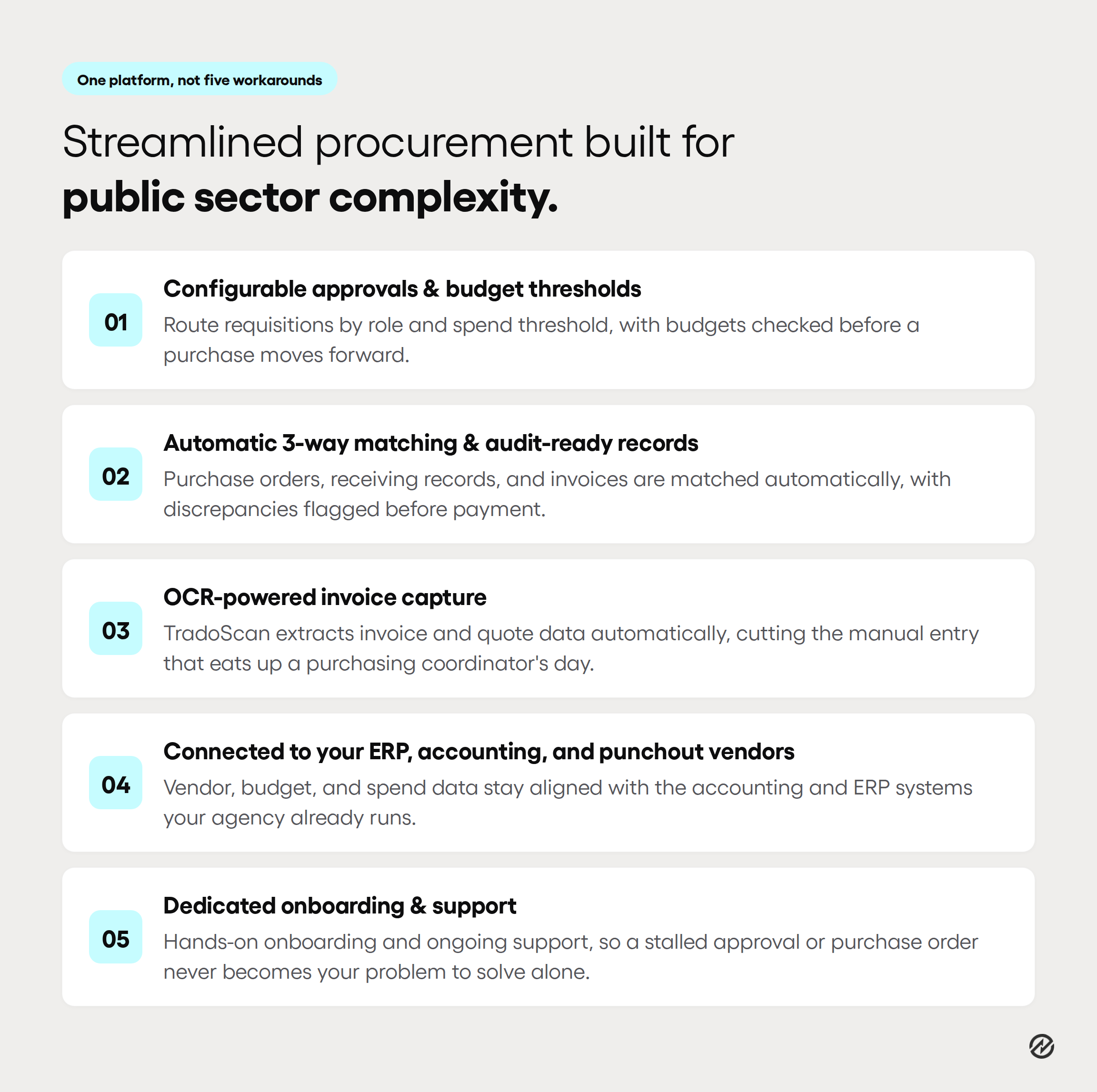
Built for the approval layers public sector budgets require
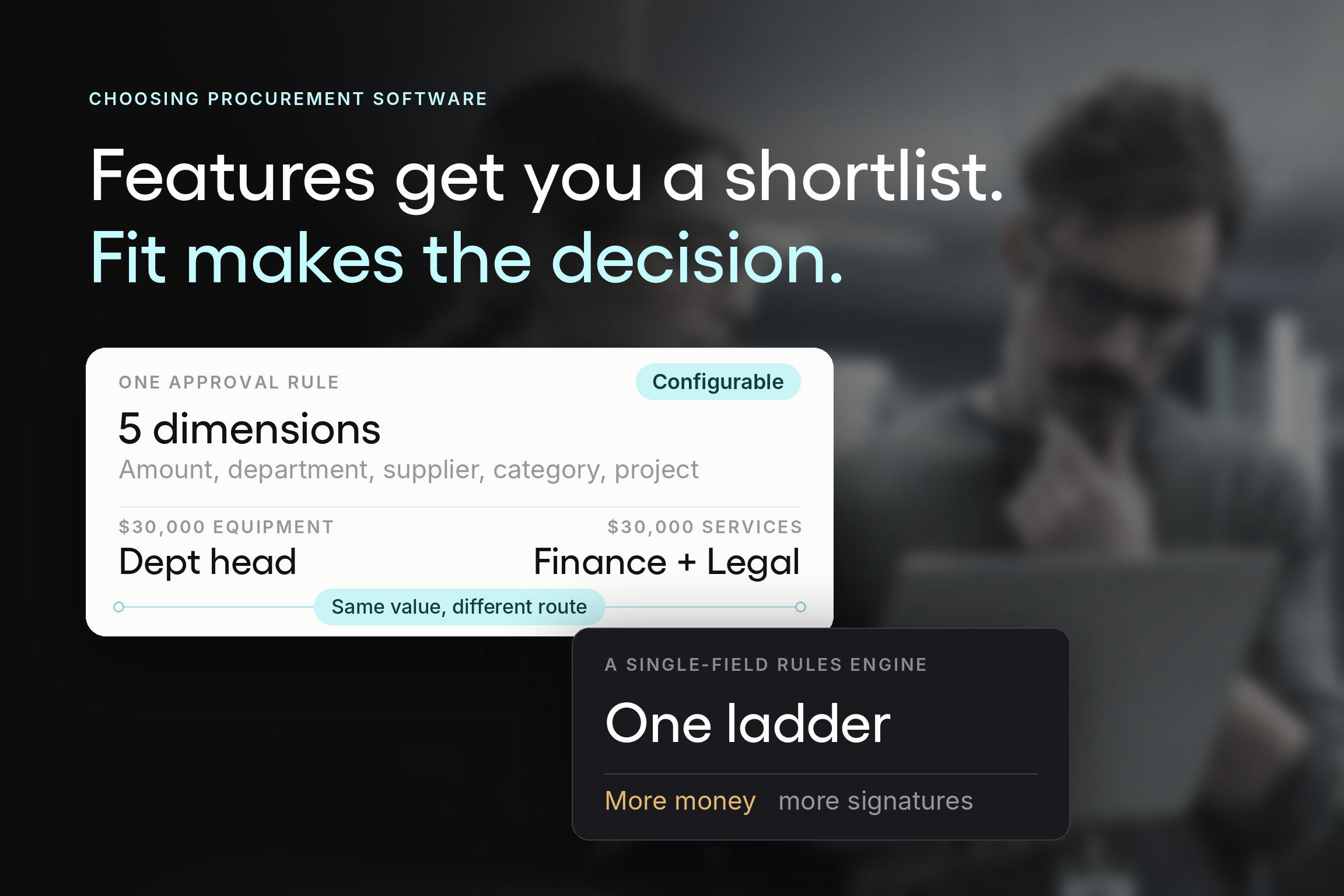
A $500 office supply order and a $75,000 equipment purchase shouldn't follow the same approval path, and on paper, in most agencies, they don't. Approval workflow automation makes it easy to configure routing, spend thresholds, and role-based permissions aligned with your organization's existing authority structure, so a purchase requisition automatically finds the right approvers rather than relying on someone to remember the approval chain.
Pair that with budget and spend controls set at the department, project, or fund level, and a purchase can't move forward without the budget to support it, which is important when your job is preventing an unbudgeted purchase rather than explaining one after the fact.
Every purchase stays connected to the record that proves compliance
An audit or open-records request shouldn't prompt anyone to dig through email. Tradogram automatically matches purchase orders, receiving records, and invoices, flags discrepancies before payment goes out, and keeps reporting and analytics up to date so finance can pull committed spend, not just what's been invoiced.
That same structure feeds into accounts payable automation software, so a compliance review becomes a matter of running a report rather than constructing one from scattered bits of paperwork.
Less manual work for procurement teams who are already stretched thin
Public sector procurement teams are rarely overstaffed. TradoScan uses OCR to automatically extract data from invoices and quotes, cutting into the copy-and-paste work that eats up a purchasing coordinator's day, while intelligent matching surfaces the exceptions that actually need a human look.
Customers using Tradogram's core workflow report that purchasing and approvals move up to 3x faster, and month-end close up to 7x faster once records are automatically structured and synced. See the core features built around procure-to-pay and inventory management for departments that track supplies and equipment on hand.
Connected to the vendors and systems you already use
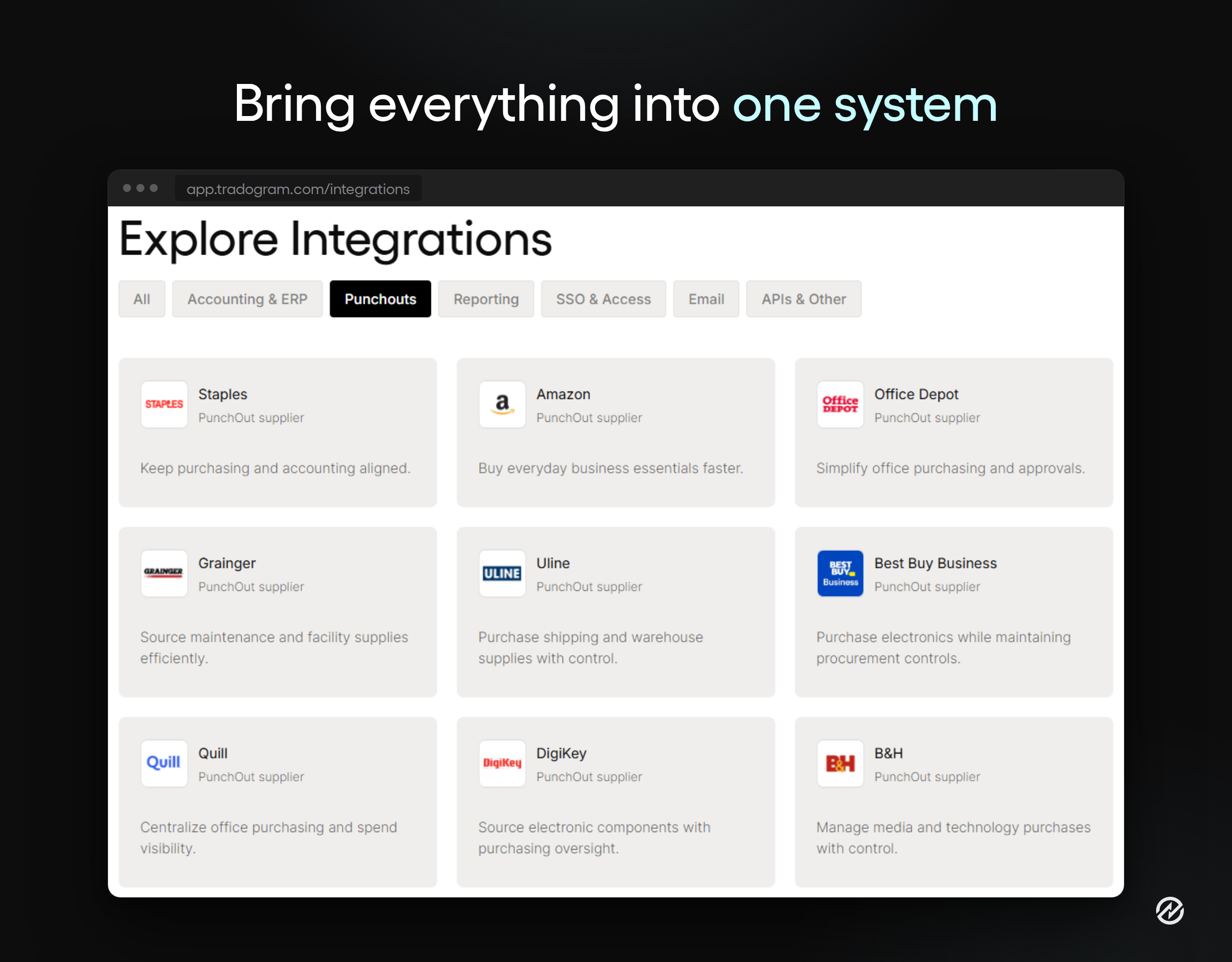
Beyond the punchout integrations covered earlier, Tradogram connects procurement to the accounting and ERP systems finance already relies on, so vendor, budget, and spend data stay aligned instead of living in two disconnected places.
For government agencies running formal solicitations, strategic sourcing and spend management tools sit on the same platform as the purchase orders and invoices they produce, forming a single, connected set of government procurement solutions rather than a patchwork of point solutions.
Dedicated support when procurement can't afford downtime
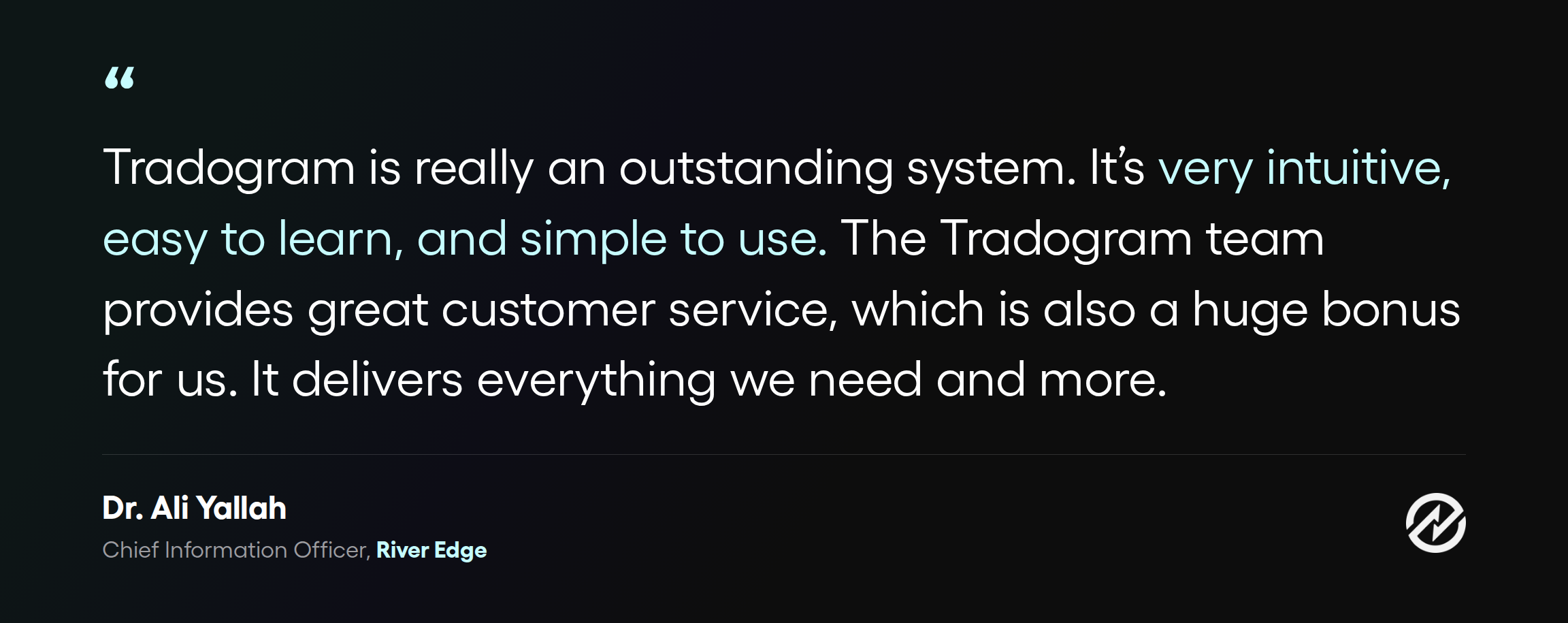
A missed approval or a stalled purchase order isn't just an inconvenience when it's holding up a public project or a time-sensitive contract. Tradogram customers consistently point to onboarding and ongoing support as a reason they stayed.
The paperwork was never optional, but it doesn't have to be the hardest part.
Every example in this guide, the unbudgeted purchase order, the missing signature, the contract that lapsed without anyone catching it, comes down to the same thing: government spending moving through a process that has to hold up under scrutiny, on a timeline that real communities, projects, and vendors are waiting on. For public procurement professionals, that's the real measure of software that fits: it doesn't change what your agency owes the public, but it changes whether proving that obligation was met takes an afternoon of running reports or two weeks of reconstructing a paper trail from emails and spreadsheets.
Tradogram gives procurement, finance, and department leaders one connected system for requesting, approving, sourcing, purchasing, receiving, and paying, built around the procurement workflows, approval layers, and funding sources your agency already relies on, not a generic process with government features bolted on.