

Procurement is one of the key elements of a successful organization. Aligning procurement with business goals is essential for driving organizational success. When procurement strategies align with broader business objectives, it improves overall efficiency, cost savings, and enhances the company’s bottom line.
In this article, we will explore how to align procurement with business goals, from its role to actionable recommendations.
The Role of Procurement in Business Success
Procurement plays a pivotal role in business success. It helps ensure cost efficiency by sourcing quality goods and services at the best prices, which contributes to profitability and reduced operational costs. Procurement also supports business continuity by managing the supply chain and ensuring that necessary materials and services are always available when needed. Additionally, procurement drives innovation by partnering with suppliers to introduce new products and services, fostering a competitive advantage.
Aligning Procurement with Business Goals
Now that we understand the role of procurement in business success, let's explore how to align procurement with broader business goals.
Understand the Strategic Priorities of the Business
To effectively align procurement goals with business objectives, it's essential to first identify the strategic priorities for the business. Is cost savings the top priority? Or is the focus on acquiring higher-quality materials or building long-term supplier relationships?
To align procurement with broader business goals:
- Review the company’s long-term vision and objectives to identify key focus areas such as cost reduction, growth, and innovation.
- Collaborate with leadership and key stakeholders to understand how procurement can support and contribute to these priorities.
- Continuously assess market and industry trends to ensure procurement strategies align with evolving business needs.
Analyze Total Spend for Strategic Alignment
A crucial step is analyzing total spending. If cost reduction is the goal, procurement efforts can directly contribute to achieving this.
To analyze spending:
- Conduct a thorough spend analysis to identify areas where procurement can optimize costs or increase value.
- Categorize spending based on strategic priorities to ensure resources are directed toward the most critical areas.
- Monitor and adjust procurement strategies to align with the business's overall financial goals.
Engage Stakeholders
Stakeholder engagement is key to ensuring that procurement aligns with business goals. Business leaders and stakeholders can provide valuable insights into the company’s vision and goals.
To engage stakeholders:
- Involve key business leaders and department heads in the procurement process to ensure alignment with departmental needs.
- Establish clear communication channels between procurement and other teams to ensure goals are mutually understood and supported.
- Build cross-functional collaboration to help stakeholders understand how procurement can drive value across the organization.
Integrate Procurement metrics with Key Business KPIs.
To align procurement with business goals, integrate procurement metrics with key business KPIs. For example, if the business goal is to reduce time-to-market, procurement can focus on metrics like lead time reduction and supplier reliability.
To integrate metrics:
- Identify procurement metrics that align with business KPIs, such as cost savings and supplier performance.
- Regularly track and report on procurement metrics to measure progress and highlight areas for improvement.
- Ensure procurement goals are incorporated into company-wide performance reviews to align with business objectives.
Foster a Culture of Continuous Improvement
A culture of continuous improvement is vital for ensuring that procurement processes remain aligned with business goals. Encourage regular evaluation and enhancement of procurement practices.
To foster continuous improvement:
- Provide ongoing training for employees to help them stay ahead of trends and develop strategies that align with market demands.
- Create a feedback loop with internal teams and suppliers to identify bottlenecks or areas for process improvement.
- Foster a proactive approach to solving challenges and optimizing procurement processes.
Incorporate the Right Technology
Investing in the right technology is crucial for improving procurement management and aligning it with business goals. A centralized procurement system can streamline processes and improve efficiency.
To incorporate technology:
- Invest in procurement software and tools that improve efficiency, transparency, and decision-making.
- Leverage data analytics and automation to streamline procurement processes and better align with business goals.
- Continuously evaluate and upgrade technology to ensure it meets the evolving needs of the business.
Align Procurement with Business Goals Efficiently via Tradoram
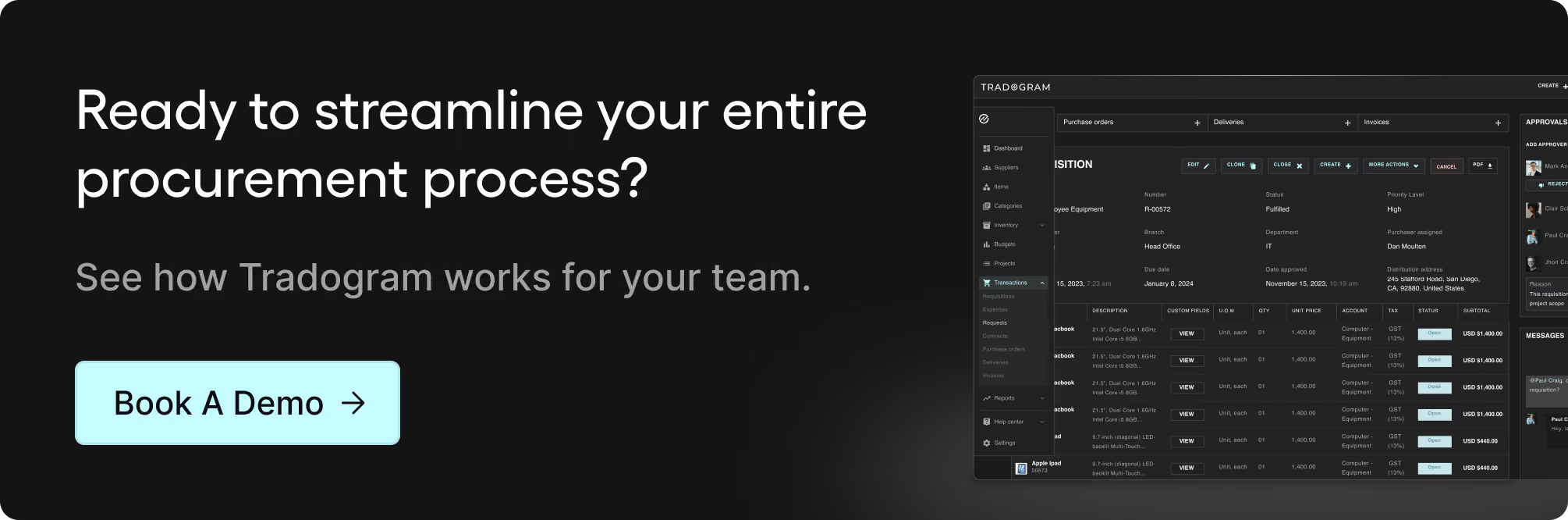
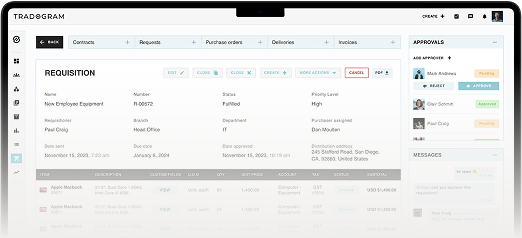
If you're looking for a tool to manage procurement and align it with broader business goals, Tradogram is the solution. Tradogram is an all-in-one procurement software that helps improve procurement management.
The platform offers features like inventory management, automation, supplier relationship management, and sourcing tools. To learn more about how Tradogram can help you align procurement with business goals, contact us, and our team will be happy to assist you.