

Efficient invoice processing is crucial for smooth business operations and overall company success. Long invoice cycle times can disrupt cash flow and strain supplier relationships, making it essential to optimize this process for better efficiency and stronger vendor partnerships.
In this article, we’ll explore everything you need to know about invoice cycle time, from how to measure it to practical steps for improving it. Let’s dive in!
What is Invoice Cycle Time?
Invoice cycle time is the total time it takes to process an invoice from receipt to payment. This metric is key for businesses as it reflects the efficiency of their accounts payable (AP) process. It includes:
- Invoice receipt: The time taken for the invoice to be received and entered into the system.
- Invoice validation: Verifying the details of the invoice.
- Approval preparation: This stage, especially if manual, often creates bottlenecks and increases cycle time.
- Invoice payment: Once approved, the invoice is scheduled for payment, completing the cycle.
Key Factors Influencing Invoice Cycle Time
Several factors impact how long it takes to process an invoice:
- Automation levels: Automated systems significantly reduce cycle times by streamlining workflows.
- Invoice accuracy: Errors in invoices can delay validation and approval.
- Approval processes: The complexity and speed of obtaining approvals can slow down invoice processing.
- Communication with vendors: Quick responses to queries or disputes help avoid prolonged delays.
Benefits of Calculating Invoice Cycle Time
Understanding and managing invoice cycle time offers several benefits:
Improved Process Efficiency
Identifying bottlenecks, such as delays in approval or manual data entry, allows you to streamline processes and reduce cycle time.
Better Cash Flow Management
Another benefit of understanding invoice cycle time is the ability to predict payment schedules more accurately. This helps businesses plan their cash reserves and financial obligations with greater precision.
To illustrate how effective invoice cycle time management can benefit your business, let's look at this example:
A mid-sized manufacturing company found that their average invoice cycle time was 14 days, significantly higher than their target of 6 days. Upon analyzing the data, they identified that the approval process was the main bottleneck, with invoices often waiting several days for manager sign-off.
To address this issue, they implemented an automated approval system through their invoice processing software. This system routed invoices directly to the right approvers and sent reminders for pending actions. Within three months, their average invoice cycle time was reduced to 7 days, resulting in $10,000 in early payment discounts and stronger relationships with their suppliers.
By improving invoice cycle time, the company not only streamlined their processes but also gained financial and operational advantages.
More Cost Savings
Shorter cycle times can help secure early payment discounts from suppliers and avoid late fees or penalties.
Enhanced Vendor Relationships
Timely payments foster trust and strengthen relationships with suppliers.
Data-driven Decision Making
Regular calculation of cycle times provides actionable insights into the performance of the AP process, helping guide workflow improvements.
How to Calculate Invoice Cycle Time?
To calculate invoice cycle time, track the time it takes for each invoice to go through each stage of processing (receipt, validation, approval, and payment). For manual processing, cycle times can range from 7 to 13 days. With automation, this can be reduced to 3 to 4 days.
According to the American Productivity and Quality Center, companies that prioritize automation have an average invoice cycle time of 2.8 days, while those with manual processes may take over 7 days.
Improve Invoice Cycle Time
Finally, let’s take a look at the practical section of this guide - recommendations for improving invoice cycle time.
Automate the Accounts Payable Process
Leverage invoice processing software to streamline data entry, validation, and approvals, reducing manual delays.
Standardize Invoice Submission Guidelines
Establish clear guidelines for suppliers to submit accurate invoices, reducing the need for back-and-forth corrections.
Implement Workflow Optimization
Review and optimize approval workflows to eliminate unnecessary steps and speed up processing.
Prioritize High-Value or Time-Sensitive Invoices
Identify and fast-track invoices tied to early payment discounts or critical suppliers.
Enhance Communication with Suppliers
Maintain open communication channels to resolve discrepancies or queries promptly, avoiding prolonged delays.
Regularly Review and Analyze Invoice Data
Monitor cycle time metrics to identify recurring issues and implement targeted improvements.
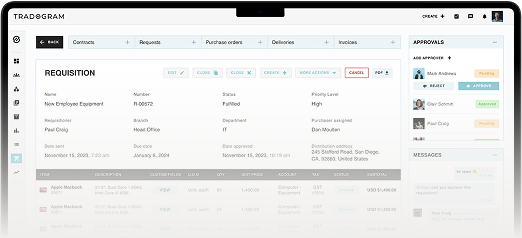
If you’re looking for a quality software solution to improve invoice cycle time, Tradogram is the tool for you. As a robust accounts payable invoice processing software, Tradogram helps streamline the entire invoice cycle, from receipt to payment.
With Tradogram, you can automate manual tasks, improve cost management, and enhance overall efficiency. Our platform enables you to track and manage your invoices seamlessly, reducing cycle time and boosting supplier relationships.
To learn more about how Tradogram can help you optimize your invoice cycle time, contact us today. Our team is ready to assist you!