

A fragmented procure-to-pay (P2P) workflow may seem manageable on the surface, but hidden costs can quietly drain your budget and reduce efficiency. Over time, everything from missed supplier discounts to compliance penalties can add up, resulting in low cost and time efficiency.
In this article, we’ll explore the hidden costs of an unorganized P2P process and provide actionable strategies for fixing them. So, let’s dive in.
Challenges of Procure-to-Pay Process
First, let’s overview the main challenges of a fragmented and unorganized procure-to-pay process.
Lack of Spend Visibility
Without real-time tracking of procurement expenses, organizations struggle to control budgets and optimize supplier relationships. Poor visibility can lead to overspending, missed cost-saving opportunities, and compliance risks.
Slow Approval Processes
Manual approval workflows often result in delays that disrupt procurement timelines. Slow approvals can cause late payments, strained supplier relationships, and potential stock shortages.
Absence of Centralized System for Data Storage
When procurement data is scattered across emails, spreadsheets, and disconnected systems, retrieving critical information becomes time-consuming. It also increases errors, reduces transparency, and complicates reporting.
Invoice Matching Errors
A mismatch between purchase orders, invoices, and receipts can cause payment delays and disputes. Manual verification increases the risk of errors, leading to duplicate payments, incorrect charges, and inefficiencies in accounts payable.
Hidden Costs of Procure-to-Pay Process
Besides challenges associated with the fragmented procure-to-pay process, there are also lots of hidden costs that hinder the profitability of your business. These come from inefficiencies in supplier management, data inconsistencies, and delayed payments.
Inefficiencies in Supplier Management
Poorly managed supplier relationships lead to missed discounts, inconsistent pricing, and higher procurement costs. Without structured vendor tracking, businesses may overpay for goods.
Compliance Penalties and Fines
Failure to adhere to regulatory requirements or internal procurement policies can result in costly fines. A disorganized P2P process increases the risk of contract violations, tax errors, and non-compliance with industry regulations, leading to unnecessary financial penalties.
Delayed Payment Costs
Slow invoice approvals and payment processing can lead to late fees or strained supplier relationships. Suppliers may increase pricing or revoke early payment discounts due to consistent delays, impacting cash flow and long-term procurement costs. If suppliers do such things, you will be charged a variety of hidden and unexpected costs.
Data Inconsistencies and Errors
Manual data entry and disconnected systems result in duplicate payments, incorrect invoicing, and reporting discrepancies. These errors can go unnoticed for months, leading to financial waste and increased administrative costs for reconciliation.
Integration and Maintenance Costs
A P2P system that lacks proper integration with ERP or accounting software often requires costly workarounds and manual interventions. Businesses may need additional IT resources or third-party tools to bridge data gaps, adding to long-term operational expenses.
How to Improve Procure-to-Pay Workflows
As far as we have some clarity regarding challenges and hidden costs, let’s look at actions you can take to improve procure-to-pay workflows.
Analyze the Current Process
Before making changes, it’s essential to understand where inefficiencies lie. Identifying bottlenecks and weak points helps streamline procurement and payment workflows.
- Map out the entire procure-to-pay cycle to pinpoint delays and redundancies.
- Gather feedback from stakeholders to identify common pain points.
- Use data analytics to track approval times, invoice matching errors, and compliance issues.
Set up Goals & KPIs
Clear objectives and measurable performance indicators ensure process improvements align with business needs.
- Define key metrics such as cycle time, cost per purchase order, and supplier performance.
- Establish benchmarks to compare current performance against industry standards.
- Regularly review KPIs to ensure continuous optimization and adjust as needed.
Leverage Technology
Automation and digital tools can eliminate inefficiencies, improve accuracy, and enhance visibility in procurement workflows. Here is how:
- Automated workflows reduce manual errors and speed up approvals.
- Cloud-based solutions centralize data storage for better accessibility.
- AI-driven analytics improve decision-making and supplier negotiations.
To fully optimize procure-to-pay workflows, selecting the right requisition management software is crucial.
- Look for solutions with seamless ERP and accounting software integration.
- Ensure the platform supports automation for purchase orders, invoicing, and approvals.
- Prioritize user-friendly interfaces and customizable reporting features.
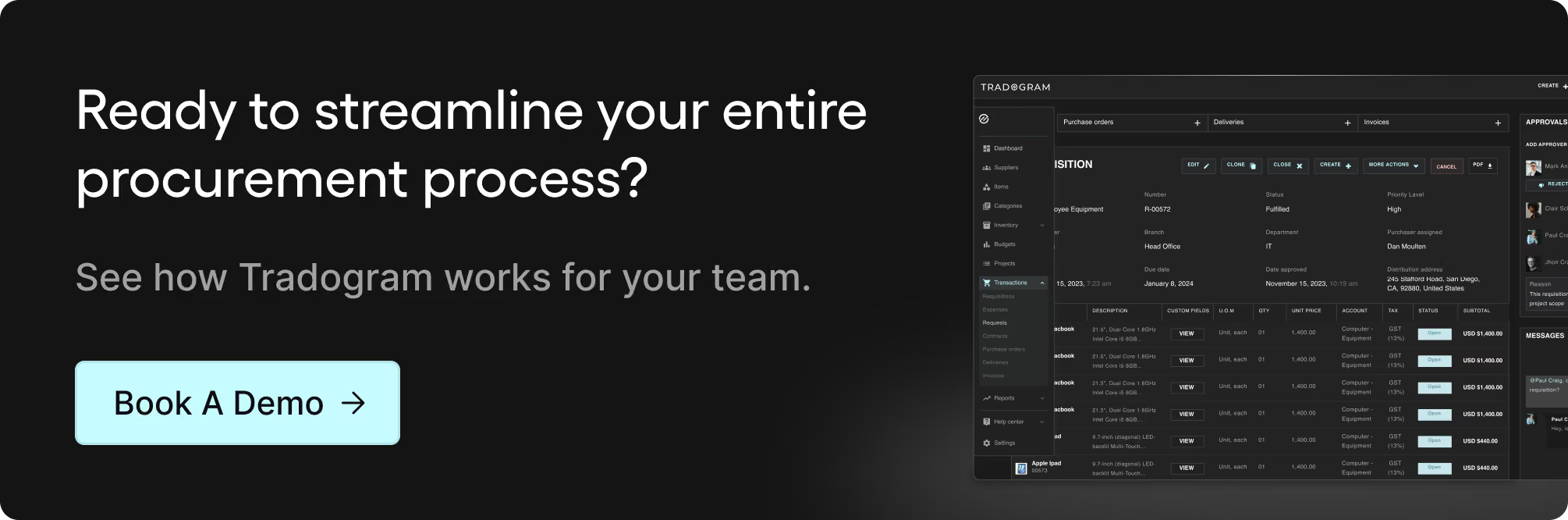
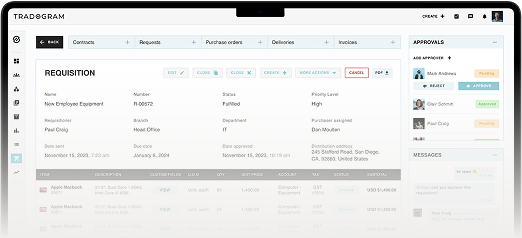
For a reliable procure-to-pay solution, consider Tradogram, which offers workflow automation, real-time tracking, and seamless integration options.
Improve Procure-to-Pay Workflows with Tradogram
If you are looking for a comprehensive solution to improve procure-to-pay workflows, then you are in the right place. Tradogram is an all-in-one tool that comes in handy with everything you need to optimize procurement workflows and streamline success.
The platform offers tools ranging from inventory and supplier management to real-time data insights and spend management. Contact us to learn more about what we offer and how we can help your businesses thrive.