

Key Takeaways:
- Requisition Definition: A requisition is a formal request or document within an organization to initiate the procurement of goods or services, serving as the initial step in the purchasing process.
- Components of a Requisition: It includes item details, budget and approval information, and department and requester information to ensure accuracy, financial oversight, and accountability.
- Requisition Process Flow: Involves identification of need, documenting the requisition, review and approval, and forwarding to procurement, streamlining the procurement journey.
- Importance of Requisitions: Requisitions streamline procurement, aid in budget planning, inventory control, and compliance, serving as foundational documents guiding subsequent procurement steps.
Definition of Requisitioning: What is a Requisition?
A requisition is a formal procurement request or document submitted within an organization to initiate the procurement of goods or services. It serves as the initial step in the purchasing process, detailing the specific items, quantities, and essential details needed by a department or individual. Typically, a requisition is generated when a department identifies a need for certain supplies, equipment, or services. Once approved, the requisition acts as the basis for creating a purchase order, guiding subsequent procurement activities. Requisitions play a pivotal role in maintaining organized and controlled procurement processes within businesses, ensuring that requests are properly documented, reviewed, and aligned with budgetary considerations.
Requisition Definition In Procurement

What does 'requisition' mean? In procurement, requisitions are made when employees or departments from within a company require additional goods or services in order to maintain their business operations. These internal company requirements are communicated by submitting a purchase requisition form - typically to a purchasing department or project manager. For example, if Jane is a construction worker who notices that a building site is running low on steel beams...

- Jane adds steel beams to a purchase requisition form.
- Jane submits her requisition form to her project manager, Jill.
- Jill approves the requisition before placing steel beams on a purchase order form (often abbreviated as 'PO').
- Jill follows through with the purchase order process by sending the PO to a vendor to procure the steel beams.
- The steel beams arrive at the building site or at a warehouse, and a goods receiving procedure is followed to confirm and document the delivery.
*Sometimes, additional steps and/or protocols are included in this procurement requisition process. You may also be interested in reading about the use of purchase orders vs requisitions.
Download our free purchase requisition process quick-start guide
8 Components of a Requisition
Item Details
A requisition specifies the items or services needed, providing comprehensive descriptions, quantities, and any pertinent specifications to ensure accuracy in procurement.
Budget and Approval Information
It often includes details regarding budget allocations, cost estimates, and approval requirements, enabling financial oversight and control.
Department and Requester Information
The requisition identifies the requesting department or individual, streamlining accountability and providing clarity on who is initiating the procurement need.
Requisition Process Flow:
The requisition process typically involves several steps, starting from the identification of the need to the final approval for purchase. It usually follows these stages:
Identification of Need
An individual or department recognizes the need for specific items or services required for operational purposes.
Documenting the Requisition
The identified need is formalized into a requisition document, detailing all necessary information and requirements.
Review and Approval
The requisition is then reviewed, verified, and approved by authorized personnel within the organization. This step ensures alignment with budgetary constraints and compliance with company protocols.
Forwarding to Procurement:
Once approved, the requisition is forwarded to the procurement department or relevant personnel responsible for executing the purchase process.
Importance of Requisitions in Procurement
Requisitions play a pivotal role in streamlining the procurement process by serving as a structured and formal request for necessary items or services. They aid in budget planning, inventory control, and ensure compliance with internal regulations. Moreover, requisitions serve as a foundational document, guiding the subsequent steps in the procurement journey.
What is a Purchase Requisition Form?
The definition of a purchase requisition form is:

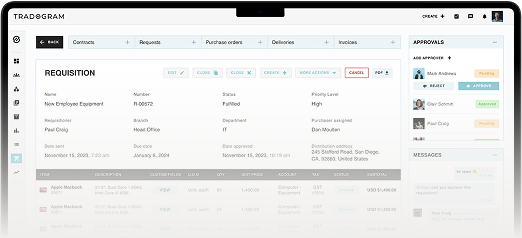
An internal company document used by employees to communicate that goods or services are required, with details including time-frames, quantities, and order specifications.
Purchase requisition forms are usually assigned a requisition number when they're created, but what is a requisition number? A requisition number is a numbering system included on requisition forms to help accounting personnel verify the details surrounding purchased items in a company, and to let employees track the status of their requisitioned items. A requisition number is also useful for tracking the source of multiple requisitions that are placed upon a single purchase order form. When carrying out a goods receiving procedure that includes different branches or departments, received orders can be distributed by referencing the requisition numbers that are associated with them. Why are requisitions used? Rather than having employees order goods and services themselves, purchasing is channeled through qualified individuals by using the purchase requisition process. This allows procurement experts to approve, source, and negotiate with one or more vendors to facilitate efficient cost control and material management within a company. Did you know...

In modern procurement departments, e-procurement systems are typically used instead of traditional purchase requisition forms. This eliminates the clutter and confusion caused by physical paper trails, and automates documentation of the entire procure-to-pay (often abbreviated as 'P2P') process. The next time a colleague or friend asks "what do requisitions mean?" - fill them in with more than just the dictionary definition!
Procurement Request Form Examples
When creating procurement request forms, it is essential to include detailed and structured fields that facilitate accurate procurement activities. For example, a procurement request form might contain sections for item descriptions, quantities, required delivery dates, budget allocations, and requester information. These forms streamline the procurement request process by clearly communicating needs to the procurement team, minimizing errors, and improving cost control.
Additional Resources: