

In today’s fast-paced business environment, efficient procurement is essential to success, and one of the key elements that drive efficiency is effective catalog management. A well-organized catalog system not only simplifies the procurement process but also empowers procurement teams to make data-driven, informed decisions. This article will explore the best practices for implementing quality product catalogs and how they can optimize procurement operations.
What is Catalog Management in Procurement?
Catalog management in procurement refers to the process of organizing, maintaining, and managing product catalogs within an organization. This includes ensuring the accuracy and consistency of suppliers’ products, services, and pricing. Effective catalog management helps maintain streamlined operations, cost savings, and supplier relationships.
Benefits of Catalog Management in Procurement
Before diving into the best practices, let’s first explore the key benefits of catalog management:
1. Streamlined Operations
Centralizing supplier catalogs and price lists helps streamline procurement processes such as requisitions and purchase order (PO) processing. Intuitive search functionality allows employees to quickly access necessary information, reducing PO cycle times and improving overall efficiency.
2. Enhanced Cost Optimization
By reducing maverick spending and limiting unauthorized purchases, catalog management directly contributes to cost optimization. Additionally, catalog data provides insights into spending patterns, helping procurement teams identify cost-saving opportunities. Automating workflows further reduces manual effort, freeing up valuable resources for strategic initiatives.
3. Improved Visibility
A robust catalog management strategy provides real-time product availability, pricing, and supplier performance data. This enhances decision-making and ensures procurement teams can act on accurate, up-to-date information. Tracking purchases through the catalog also allows organizations to monitor spending patterns, identify areas for optimization, and ensure compliance with organizational standards and regulations.
4. Higher Customer Satisfaction
Streamlining procurement processes benefits both businesses and customers. Catalog management helps reduce procurement cycle times, contributing to faster order processing and delivery. Maintaining optimal stock levels ensures product availability, leading to higher customer satisfaction and retention.

Best Practices for Catalog Management
Implementing effective catalog management requires following best practices that ensure consistency, accuracy, and efficiency. Here are some key strategies:
1. Standardize Procedures
Start by establishing standardized procedures for catalog management. Create clear guidelines for naming conventions, data formatting, and categorization to ensure uniformity across all entries. Implement a review mechanism to verify that catalog updates comply with established standards.
2. Centralize Data
Centralizing data in a single system ensures consistency and accuracy. Using a procurement solution like Tradogram can help keep all product information in one place, eliminating duplication and fragmentation. Regular audits will help maintain data accuracy and identify areas for optimization.
3. Engage Stakeholders
Engage key stakeholders in the catalog management process. Regular meetings or surveys can gather input on their requirements and challenges. Assign specific roles to stakeholders to oversee parts of the catalog relevant to their expertise or department. Transparent communication fosters trust and encourages continued participation.
4. Choose the Right Software
Selecting the right catalog management software is crucial for success. When evaluating software, consider factors such as cost, features, user interface, and scalability. Implement and configure the purchasing software properly to ensure all team members can use it effectively.
5. Prioritize Key Suppliers
Identify and prioritize key suppliers based on factors such as spend, reliability, and strategic importance. Build strong communication channels with these suppliers to foster long-term partnerships. Regularly monitor supplier performance using metrics like delivery timelines, quality standards, and cost efficiency to ensure they remain a priority.
6. Train Employees
Proper training is essential for successful catalog management. Provide comprehensive training for all employees who will interact with the catalog and procurement software. Develop user guides and online resources to support ongoing learning and reference.
Improve Catalog Management with Tradogram
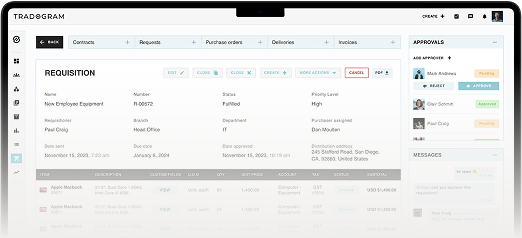
If you are looking for a comprehensive catalog management software solution, then you are in the right place. Tradogram comes in handy with all the necessary features to handle successful catalog and supplier management.
The platform offers catalog, supplier, and inventory management tools, the automation of PO and approval workflow, and a centralized database to effectively manage all procurement-related documents.
Improve your procurement performance and increase ROI with Tradogram. Schedule a free demo with us, our team will gladly walk you through our advanced solution.