

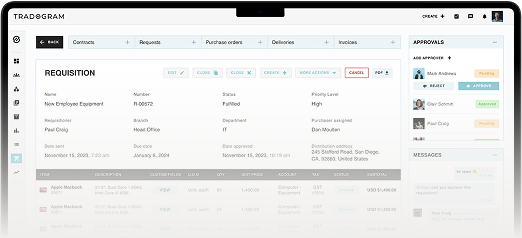
Managing procurement efficiently is crucial for maintaining a competitive edge in today’s fast-paced business environment. Centralized purchasing systems offer a streamlined approach to procurement.
Throughout this article, we will dive deeper into the advantages of centralized procurement for businesses to understand how it contributes to long-term operational success.
What is Centralized Purchasing?
Centralized purchasing occurs when a single team takes responsibility for the purchase process. Instead of every department handling their procurement needs, one team collects requests, oversees purchasing, and handles all procurement within the organization. This team is typically a dedicated procurement department.
For instance, centralized purchasing in education helps educators manage procurement efficiently. This approach reduces administrative tasks, allowing schools to allocate resources more effectively and maintain financial discipline.
Centralized purchasing works the same way at the level of a parent company overseeing several subsidiaries. Instead of each subsidiary negotiating its own supplier contracts and running its own approval process, the parent company can consolidate purchasing decisions, or at least purchasing visibility, across every entity it owns. This doesn't necessarily mean every subsidiary loses its own purchasing team. It usually means the parent company sets shared policies, tracks spend across all entities in one place, and negotiates supplier agreements that individual subsidiaries can use, while each subsidiary still manages its day-to-day requests and local supplier relationships.
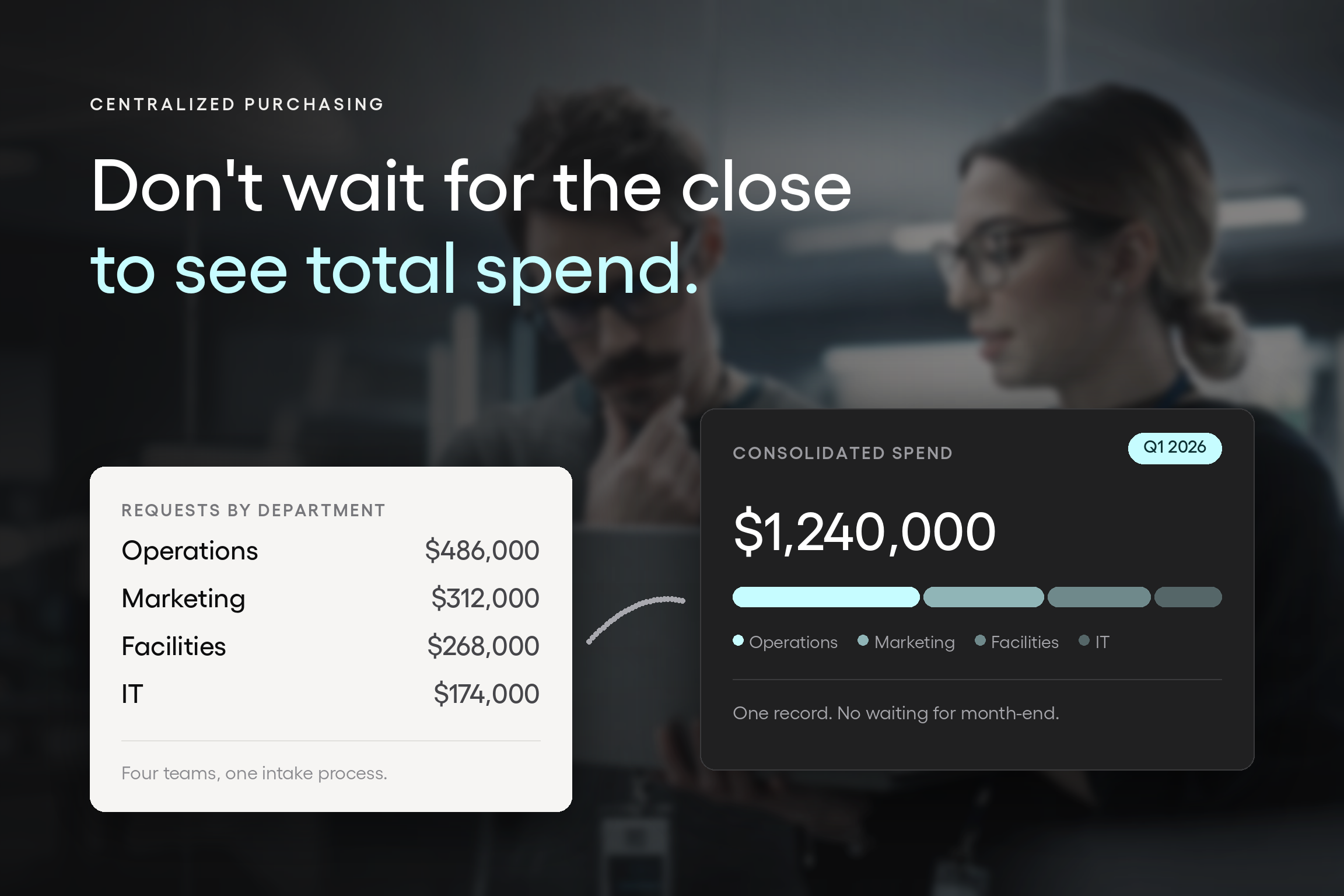
The tradeoff to manage is real. Full centralization can slow down subsidiaries that need to move quickly or work with local suppliers the parent company doesn't have a relationship with, while no centralization at all means the parent company has no consolidated view of spend until the accounting close. Most parent companies land somewhere between the two: shared policy and consolidated reporting, with approval authority and supplier choice still handled at the subsidiary level for routine purchases.
Why Your Company Needs Centralized Purchasing
Your business may benefit from centralized purchasing if you face the following challenges:
- Inability to save: Struggling to reduce costs despite growing purchasing volumes indicates inefficient procurement practices.
- Lack of transparency: Poor visibility into spending and supplier relationships hampers decision-making and accountability.
- Stock management issues: Overstocking or frequent stockouts reveal gaps in inventory planning and coordination.
- Compliance challenges: Difficulty enforcing procurement policies across teams signals the need for centralized control.
- Lack of spend visibility: Limited insights into overall expenses make managing budgets difficult.
- Slow procurement process: Lengthy approval or ordering times suggest the absence of streamlined processes.
Benefits of Centralized Procurement
Centralized procurement equips organizations with multiple benefits, ranging from increased savings to improved cycle times. Let’s explore these advantages in detail.
Cost Reductions and More Savings
Centralized procurement consolidates purchasing power, enabling businesses to negotiate better deals. Streamlining activities also helps achieve significant cost savings by reducing manual efforts.
Key benefits include:
- Access to bulk discounts due to consolidated purchasing across departments.
- Reduction in administrative costs by eliminating redundant procurement processes.
- Better control over maverick spending, ensuring all purchases align with budget goals.
Improved Supplier Relationships
Centralized procurement enhances collaboration with suppliers, fostering stronger partnerships that drive mutual growth.
- Consolidated orders make your business a higher-priority client for suppliers.
- Consistent communication improves trust and reduces miscommunication.
- Easier supplier evaluation and management ensure high-quality vendors are retained.
- Better negotiation leverage through larger, predictable purchase volumes.
- Long-term contracts with key suppliers strengthen reliability and pricing stability.
Increased Visibility and Control
A centralized procurement system provides better oversight of purchasing activities, ensuring strategic alignment and improved accountability.
Key benefits include:
- Centralized data management enables real-time tracking of procurement activities.
- Clear visibility into spending trends helps identify cost-saving opportunities.
- Improved budgeting and forecasting due to detailed expense analysis.
- Reduced risk of fraud through standardized approval workflows.
- Easier compliance with regulatory and internal policies.
Enhanced Compliance
Centralized procurement ensures adherence to company policies, supplier agreements, and regulatory requirements, reducing non-compliance risks.
Advantages include:
- Standardized processes reduce the chances of policy violations.
- Ensures ethical sourcing practices by vetting suppliers through a centralized system.
- Avoids penalties or fines due to missed contract obligations or reporting errors.
- Improves audit readiness with a clear, documented procurement trail.
Improved Procurement Cycle Times
A centralized procurement system streamlines processes, accelerating purchasing activities and improving operational efficiency.
Benefits include:
- Reduces delays caused by redundant approval processes across departments.
- Faster order placement through integrated and automated procurement systems.
- Avoids bottlenecks by having a single point of accountability for procurement.
- Improves project timelines by ensuring on-time delivery of critical resources.

How to Implement Centralized Procurement
Here’s a step-by-step guide to implementing a centralized procurement system.
Identify Bottlenecks in the Current Process
Start by analyzing current processes and identifying areas that hinder growth.
- Analyze procurement workflows to find inefficiencies.
- Interview stakeholders to understand their procurement challenges.
- Evaluate transaction data for common issues like frequent reordering.
Set Clear Goals
After identifying bottlenecks, set goals and KPIs for implementation.
- Define objectives such as cost reduction, faster procurement cycles, improved compliance, and better supplier relationships.
- Prioritize goals based on business needs.
- Establish metrics to track success, such as reductions in procurement cycle times.
Choose the Right Centralized Purchasing Software
Select a purchasing software solution to support procurement centralization.
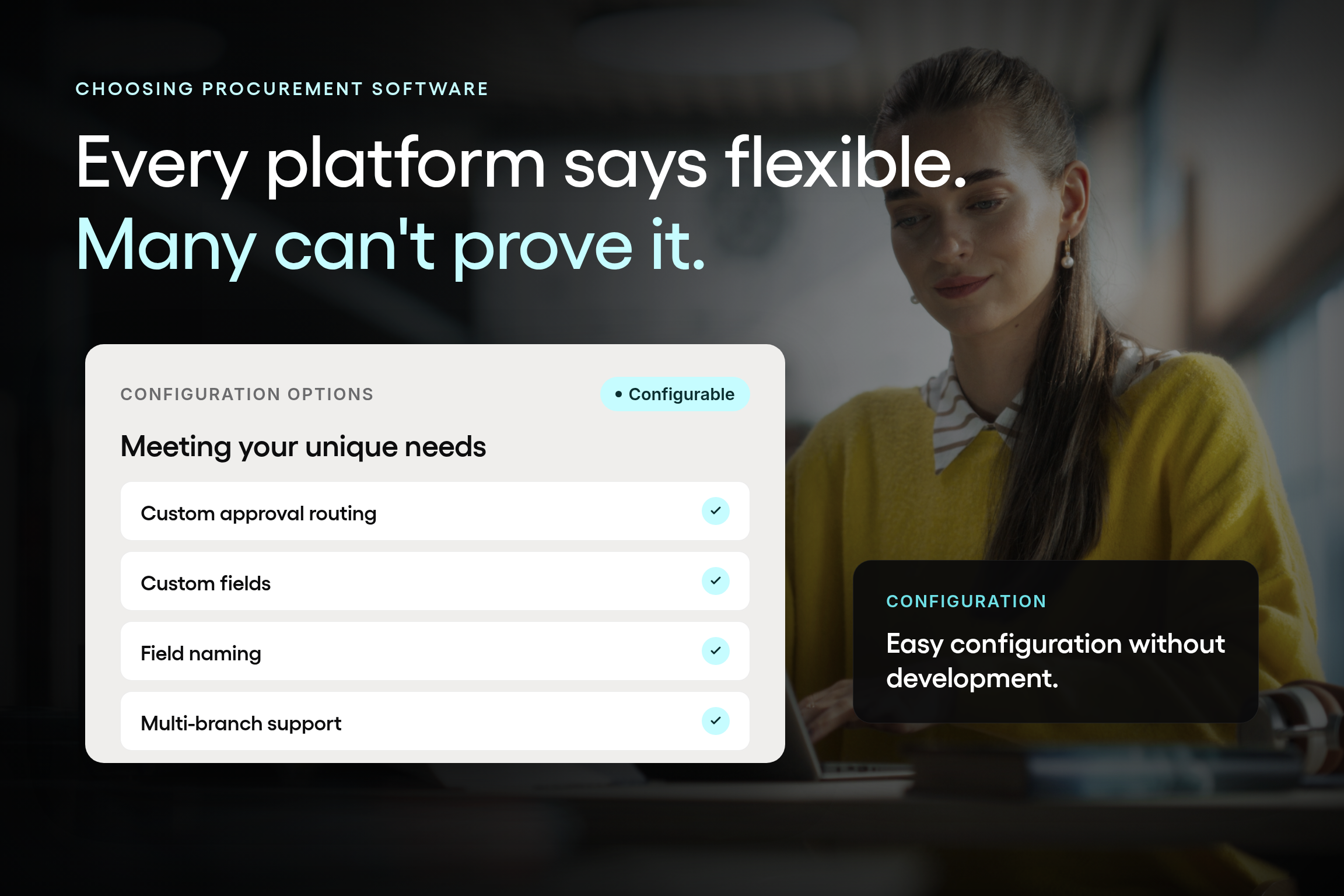
- Assess features to ensure they meet your business requirements.
- Consider scalability to support future business growth.
- Review software vendors for support, training, integration, and customer reviews.
One leading option in the market is Tradogram, a robust purchase order management and procurement centralization system.
Get Everyone Onboard
Once the solution is implemented, train employees to maximize productivity.
- Educate staff on how to use the new system.
- Provide training sessions and resources for understanding the software’s features.
- Communicate the benefits of centralized procurement to all stakeholders.
Centralize Procurement Management with Tradogram
If you are looking for a comprehensive procurement solution, then you are in the right place.
Tradogram is a perfect choice to simplify and speed up procurement processes. It is software that allows you to handle all aspects of procurement in one place, ensuring increased efficiency, cost savings, and ROI.
The platform offers features such as:
- Robust AI procurement automation functionality
- Centralized vendor management tools
- Real-time procurement analytics tools
- Inventory management tools
- Supplier management and communication tools.
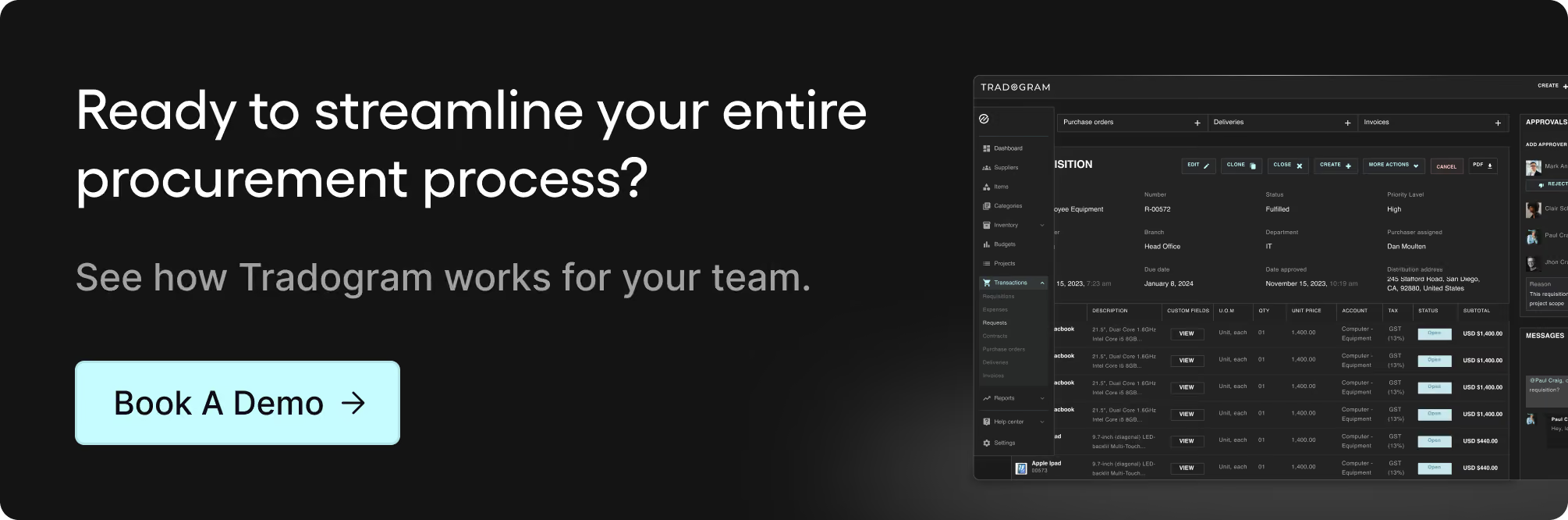
Book a free demo, and our team will walk you through everything we have to offer. Centralize your procurement management with Tradogram.