
One of the critical pillars of long-term business success is preparation, which includes developing financial plans. A solid financial plan helps you set the best foot forward and ensure that your organization's short and long-term financial goals are efficiently met.
Throughout this guide, we will overview everything in regard to financial planning, from what it is to an actionable guide on how to develop one. So, let’s dive into it!
What is a Financial Plan?
First, let’s clarify the definitions.
A financial plan is:
- A strategic document that outlines a company's financial objectives and strategies to achieve them.
- Provides a detailed picture of the company's financial health.
- Highlights future goals and how the company intends to meet them.
Importance of Financial Plans to Your Business
Financial plans are essential for several reasons. They help businesses gain confidence and develop effective strategies for resource allocation and investment.
Key reasons include:
- Confidence and Strategy
Helps businesses determine the best strategies for resource allocation and investments.
- Tracking Income & Expenses
Assists in monitoring income and expenses to ensure positive cash flow.
- Sustainable Growth & Stability
Guides businesses toward sustainable growth and financial stability. Also, it supports informed decision-making.
Benefits of a Financial Plan
Well, it is just about time to review the benefits of a financial plan in more detail.
Clear Overview of Goals and Objectives
Financial plans provide businesses of all sizes with greater clarity and direction in terms of goals and objectives. A financial plan provides significant benefits for both individuals and companies, including a clear roadmap for achieving financial goals.
Accurate Budget Allocation and Management
Another significant benefit of a financial plan is that it supports businesses with accurate budget allocation and management. First, it allows for the setting of clear and measurable financial goals. You can establish an accurate budget framework based on the goals outlining resource allocation for various categories.
Then, using the financial plan and tracking tools, you can monitor the performance with regular reviews and make necessary adjustments to strategies.
For instance, you can improve cash flow management by analyzing insights into income and expenses and creating strategies to avoid overspending.
External Funding Opportunities
A financial plan increases the chances for your organization to receive external funding. A detailed financial plan is a presentable and promising document that can be presented to potential investors and partners, allowing them to gain a comprehensive insight into what they are investing in and better analyze potential ROI. This can contribute to more efficient and faster decision-making.
Improved Capabilities for Performance Monitoring
Financial plans allow you to continue monitoring results and compare them with the initial projections. This will help you gain a better understanding of the performance and identify areas for improvement.
Key Components of a Financial Plan
Before moving on to the practical section of this guide, let’s briefly overview the critical components of a financial plan.
Income Statement
An income statement is a financial plan that summarizes a company’s revenues, costs, and expenses. It contains elements such as cost of goods sold, operating expenses, revenue streams, and total net profit or loss.
The income statement helps stakeholders, such as management, investors, and creditors, evaluate the company's financial health, operational efficiency, and profitability trends over time.
Balance Sheet
Another one of the critical components of a sound financial plan is a balance sheet. It is a report on the company’s current financial standing, focusing on what the business owes and shareholder equity. The balance sheet contains assets, liabilities, and shareholder equity.
Personnel Plan
To operate efficiently, you need staff across departments (depending on the size of your business). So, make sure to include the personnel plan as part of your financial plan. A personnel plan will showcase existing positions, examining compensation levels and benefits.
Sales Forecast
Another critical component of a financial plan is a sales forecast. A sales forecast estimates future sales revenue over a specific period. The primary purpose of this forecast is to help businesses plan inventory and efficiently allocate resources. The key components are historical sales data, market research, competitor analysis, and season trends.
Income Projections
Income projections are the estimate of future income and profits over a certain period that reflects expected revenues minus anticipated expenses. The primary purpose of income projections is to gather an idea of expected profitability. The components of income projections include projected revenue forms and formats, estimated costs of goods sold, anticipated operating expenses, and expected net income after tax deductions.
Assets and Liabilities
Assets are resources an organization owns that can provide future economic benefits. For instance, cash, inventory, and property all of these are assets. On the other hand, liabilities are obligations and organization owes to others. These obligations can include loans, accounts payable, and different types of debt.
The purpose of understanding and addressing assets and liabilities in the financial plan is to help assess the business's financial position and reveal the company’s liquidity and overall financial health.
Break-even Analysis
A good financial plan also has a comprehensive section of break-even analysis. The break-even analysis determines the point at which total revenues equal total cost, resulting in neither profit nor loss/ The purpose is to understand how many units of products or services companies need to sell to cover expenses. This analysis helps make informed decisions regarding pricing strategies, budgeting, cost management, and financial viability.
The key components of break-even analysis include fixed costs, variable costs, and sales price per unit.

How to Create a Financial Plan?
Finally, it is time to dive into the practical section of this guide and understand how to create a financial plan.
Understand What You Are Doing
First and foremost, you should understand what you are doing. With this being said, we do not mean understanding a financial plan but ensuring it answers several key questions regarding your business.
These questions include:
- How will the business profit?
- What can be done to achieve company objectives and goals better?
- What are the operating budget and budget allocation strategies?
Develop a Strategic Plan
After identifying the key questions your financial plan must answer, the next step is to develop a strategic plan.
Steps to develop a strategic plan:
- Define Clear Objectives
Establish specific, measurable financial goals for your business.
- Allocate Resources
Identify the necessary resources and assign them effectively to meet your goals.
- Create Actionable Steps
Break down larger goals into smaller, actionable steps for clarity and progress.
- Set a Timeline
Establish a realistic timeline for achieving the objectives.
- Monitor and Adjust
Continuously monitor performance and make necessary adjustments to stay on track.
Make Financial Projections
Based on anticipated costs and sales forecasts, make specific financial projections to include in your financial plan.
Steps to make financial projections:
- Align with Business Goals
Create projections that help you understand business goals and estimate the costs of achieving them.
- Prepare Best-Case and Worst-Case Scenarios
Develop both scenarios to address potential risks and plan for different outcomes.
- Collaborate with Stakeholders
Involve accountants and key stakeholders to create relevant and comprehensive projections.
Plan for Risks
Every business needs to plan for risks, as changes in the market can occur daily, and lacking an emergency plan can lead to costly consequences.
Steps to plan for risks:
- Conduct a Risk Assessment
Analyze potential risks using data from the cash flow statement and balance sheet.
- Develop a Mitigation Strategy
Create a plan for worst-case scenarios, outlining specific actions to take.
- Maintain Cash Reserves
Keep additional cash reserves for quick access in case of business losses or periods of slow growth.
Monitor Performance and Analyze
Developing a financial plan is not enough; monitoring business performance is equally crucial.
Steps to monitor and analyze performance:
- Track Key Financial Metrics
Monitor areas like cash flow statements and income projections to assess business performance.
- Evaluate Plan Effectiveness
Compare actual results with the initial goals to understand how well the plan helped achieve company objectives.
- Make Improvements
Use the gathered data to refine and improve future financial plans.
Improve Your Financial Planning with the Right Technology
To improve your financial planning, you need to incorporate the right technology. This includes the incorporation of budgeting software for the business. You need to pick a robust budgeting solution to optimize spending, plan budgets, and maximize results overall.
Make sure the software solution of your choice is cloud-based for scalability and offers a range of comprehensive features for better financial management. For instance:
- Customizable budgets
- Tracking and monitoring capabilities
- Powerful analytics
- Automation features.
Reach the Desired Results with Tradogram
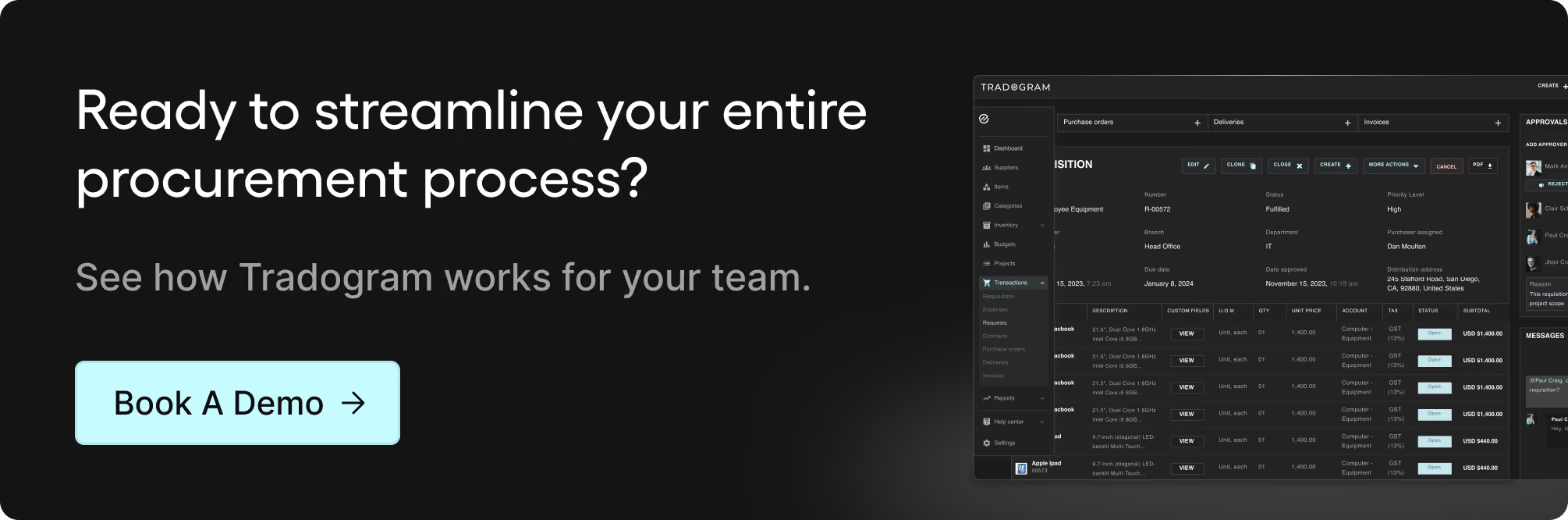
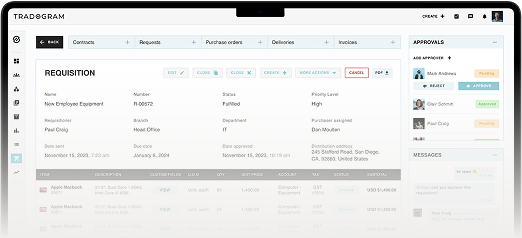
If you are looking for the perfect software solution to enhance your financial planning, then you are in the right place. Tradogram is a robust budgeting software that comes in handy with all the necessary features to ensure financial success.
It offers multilevel spend management, analytics, budget projections, customizable budgets, spending tracking, intelligent budget capping, and automation features. Each and every feature is designed to help you efficiently optimize spending and maximize results.
Contact us to learn more about Tradogram and how it can help your business grow.