
Published
August 23, 2025
| Updated
August 24, 2026

Why procurement improvement stalls when process, people, and technology are handled separately

The Missing Piece in the Procurement Puzzle

Procurement improvement often stalls because the pieces are treated separately: process here, people there, technology somewhere else. This article looks at what connects them, and why unlikely partnerships between functions often produce the biggest gains.

Majdi Sleimen, COO of Tradogram
The Missing Piece in the Procurement Puzzle
Take control of your procurement
Book A Demo

Uncommon partnerships can be a source of brilliance. They're found in unexpected places and are often the combined result of chance, experimentation, and open-mindedness. When these factors unite in a corporate setting, businesses experience multi-sided value that can lead to the discovery of emerging markets, resource sharing, and a higher level of overall performance.

Unique cooperative relationships are developing across all industries. Purchasing departments are beginning to seek out non-traditional suppliers that promote innovation-driven procurement (IDP), or outside-the-box strategies.

CONFOUND YOUR COMPETITION

Any company that involves their suppliers early in the production process practices "open innovation" (also known as co-creation, part of IDP). Firms that include their suppliers in the initial stages of a project have been shown to outperform their competitors. Global procurement demands end-to-end and enterprise-to-enterprise connections.

The challenge of open innovation is to resist a fixed, conventional view of sourcing. For example: a medical technology company or geographical information systems business may have solutions for the dashboard on a car. Are these obvious sources? No. But they may contribute to a large payoff for companies that know you can't explore a new world through old world assumptions.

INNOVATIVE PARTNERSHIPS AT WORK

Here are three examples of innovative businesses that optimized their suppliers' position:

  1. Procter & Gamble connects with external parties for product development - suppliers' research teams work in P&G labs, and P&G researchers work in supplier labs.
  2. A retail chain in India, Reliance Fresh, partners with a prison in Delhi - the inmates make their bakery products.
  3. The Big White ski resort in British Columbia, Canada, hosts 'Big Reds at Big White' with the area's top wineries - guests can participate in a wine tasting program that promotes both the resort and the surrounding wineries.

Although the partnerships behind IDP can seem like a lucky accident, in reality they need to be organized. Procurement teams must be willing to engage with new sectors. They must have both technical and market insight. They must have boundary breaking communication and collaboration skills. A progressive view on internal standards might be the most important factor: after all, an apple had to fall pretty far from its tree to land on Steve Jobs' computer.

Frequently Asked Questions

What is innovation-driven procurement?
Innovation-driven procurement is the practice of seeking suppliers for what they can contribute beyond fulfilling a specification, including ideas, capabilities and approaches the buying organization would not have arrived at alone. It usually means looking outside the obvious supplier pool and engaging suppliers earlier, while requirements are still open. It contrasts with conventional sourcing, which defines the requirement first and then finds the best price for it, and which by design excludes anything the specification did not anticipate.
What do businesses gain from uncommon supplier partnerships?

Unexpected partnerships tend to produce multi-sided value: access to emerging markets, shared resources, and a higher level of overall performance than either party would reach alone. They arise from a combination of chance, experimentation and open-mindedness rather than from a procurement process, which is why conventional sourcing rarely surfaces them. Firms that involve suppliers in the initial stages of a project, an approach known as open innovation or co-creation, have been shown to outperform competitors. The requirement is a willingness to resist a fixed view of who a supplier should be.

Why should suppliers be involved early in product development?

Because most of a product's cost and much of its feasibility is determined during design, and suppliers hold information about materials, manufacturing methods and constraints that designers often lack. Involving them after the design is fixed reduces their contribution to pricing what has already been decided. Early involvement also surfaces buildability and supply problems while changes are still cheap. The trade-off is reduced ability to run a fully competitive process later, which is why it suits strategic relationships rather than every purchase.

How do you find non-traditional suppliers?

Look outside your own industry for organizations solving a comparable problem, since capability often transfers across sectors that do not obviously relate. A medical technology firm or a geographical information systems business may have relevant solutions for an automotive dashboard. Practical routes include industry-adjacent trade events, academic and research partnerships, supplier referrals, and describing the problem rather than the specification when approaching the market. The last is the most useful, because a specification only attracts suppliers who already make that thing.

Written by:

Majdi Sleimen, COO of Tradogram
Co-Founder & COO, Tradogram

Majdi Sleimen is the Co-Founder of Tradogram and a procurement expert with deep experience in source-to-pay processes and procurement optimization. He focuses on helping organizations streamline purchasing workflows, improve control over spend, and adopt more efficient procurement systems through technology-driven solutions.

Take control of your procurement with Tradogram

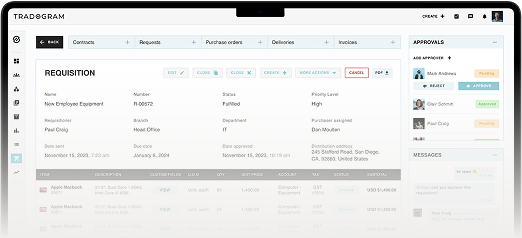
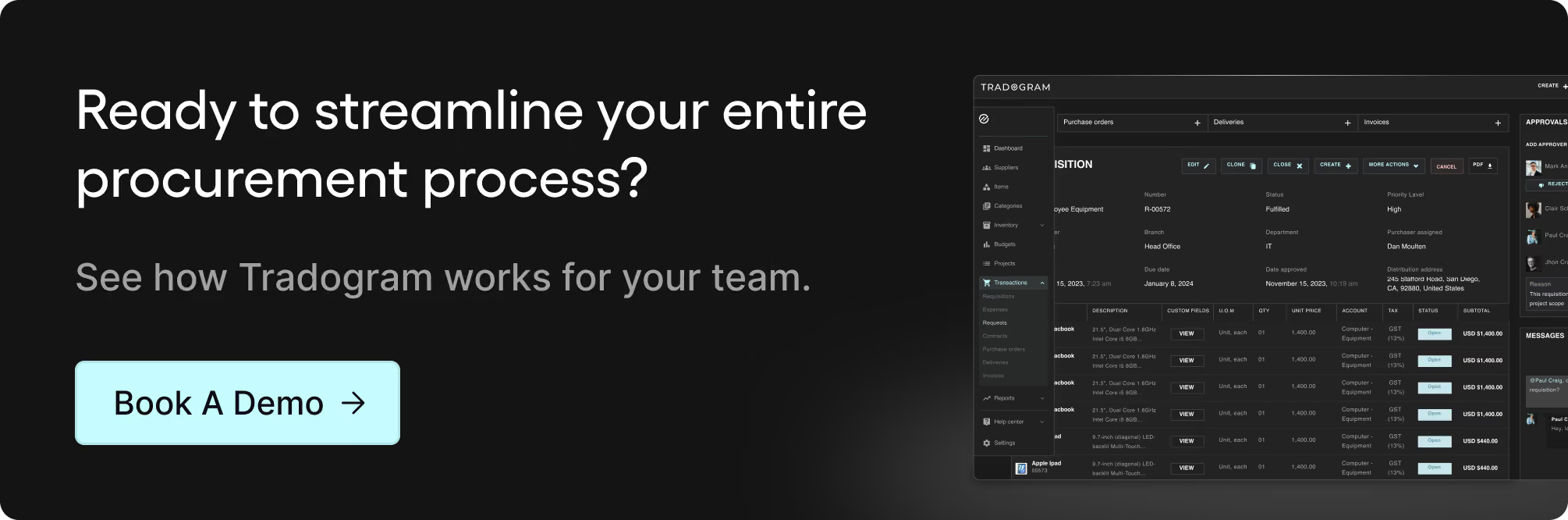
Tradogram requisition dashboard showing an approval workflow Book A Demo