
Choosing the right procurement software can help you transform how businesses manage purchasing, suppliers, and expenses. However, with so many options available in the market, how can you choose the right one?
This article explores procurement software's top 10 must-have features, ensuring your organization gains efficiency, control, and strategic value from its procurement processes. So, let’s dive into it.
Benefits of Using Procurement Software
First, let’s understand the benefits of leveraging procurement software.
Increased Efficiency
Procurement software streamlines processes by reducing manual tasks, minimizing errors, and accelerating workflows.
- Speeds up purchase approvals and order processing through automation.
- Reduces paperwork and administrative burdens for procurement teams.
- Centralizes data, making it easier to access and manage procurement activities.
Cost Savings
By optimizing purchasing decisions and reducing unnecessary expenses, procurement software helps organizations control costs.
- Identifies cost-saving opportunities by analyzing spending patterns.
- Prevents overspending with budget controls and approval workflows.
- Reduces procurement errors that lead to duplicate or incorrect orders.
Enhanced Supplier Management
A structured supplier management system improves vendor relationships, contract negotiations, and performance tracking.
- Maintains a centralized database for supplier information and contracts.
- Tracks supplier performance to ensure quality and reliability.
- Enables easy comparison of vendor pricing and terms for better negotiations.
Improved Compliance & Risk Mitigation
Ensuring compliance with internal policies and industry regulations reduces legal and financial risks.
- Automates compliance checks to prevent unauthorized purchases.
- Maintains audit trails for transparency and accountability.
- Reduces the risk of fraud through approval workflows and three-way matching.
Data-Driven Decision Making
Real-time reporting and analytics provide valuable insights for strategic procurement decisions.
- Offers visibility into spending trends and supplier performance.
- Helps optimize procurement strategies based on data insights.
- Identifies inefficiencies and cost-saving opportunities through analytics.
Enhanced Transparency
A clear and structured procurement process ensures visibility across all transactions, improving accountability.
- Tracks and records every purchase, approval, and payment.
- Provides real-time status updates on orders and supplier performance.
- Ensures all stakeholders have access to accurate procurement data.
Automation
Reducing manual intervention through automation enhances speed, accuracy, and efficiency in procurement.
- Eliminates repetitive tasks like data entry and invoice processing.
- Speeds up procurement cycles with automated approvals and notifications.
- Reduces human errors, ensuring accurate order placements and payments.

Top Features to Look Out for in Procurement Software
PO Management
A robust purchase order (PO) management system streamlines the procurement process by allowing users to create, approve, and track POs in real time. It ensures that purchases follow company policies, reduces manual paperwork, and improves order accuracy.
Supplier Management
Another feature to look out for in procurement software is supplier management tools. Effective supplier management helps businesses maintain strong vendor relationships by providing a centralized platform to track supplier performance, contract terms, and communication history.
Budget and Cost Control
Procurement software with built-in budgeting tools helps organizations track spending, set financial limits, and enforce cost control measures. Businesses can prevent overspending and optimize procurement strategies by monitoring real-time expenditures and providing visibility into financial data.
Approval Workflows
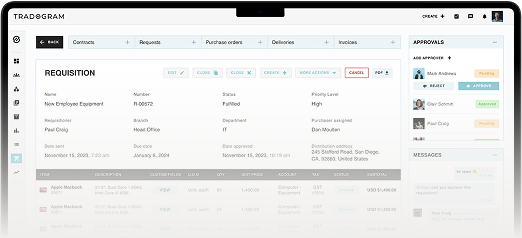
Customizable approval workflows ensure that every purchase request goes through the necessary authorization process before being finalized. Automated approvals reduce delays, improve compliance, and prevent unauthorized purchases. So, before making your final choice in regard to procurement software, make sure it offers this feature. For instance, Tradogram offers robust automation and approval workflow capabilities.
Cloud-Based Storage
A cloud-based procurement system ensures data accessibility from anywhere, allowing teams to collaborate in real-time. It eliminates the need for on-premise servers, reduces IT maintenance costs, and provides better security.
Three-Way Matching
Three-way matching ensures that businesses only pay for ordered and delivered items, reducing discrepancies and improving financial accuracy. So, look for this feature.
Custom Reporting & Analytics
Advanced reporting tools provide insights into spending patterns, supplier performance, and procurement efficiency. Customizable dashboards allow businesses to analyze key metrics, generate real-time reports, and make data-driven decisions to optimize procurement processes.
Inventory Management
A strong inventory management system helps businesses track stock levels, monitor item usage, and automate reordering processes. This feature prevents stock shortages and overstocking, ultimately improving resource management within an organization.
Integration Capabilities
If you are wondering why you you would need an integration, consider manual data entry across several different tools. It's. It is not an enjoyable process. Integration capabilities eliminate manual data entry, reduce errors, and provide a unified view of procurement and financial operations, improving overall efficiency.
Multi-Level User Permissions
With multi-level user permissions, organizations can assign different access levels based on roles, preventing unauthorized actions and maintaining security.
Improve Procurement Management with Tradogram
If you are looking for a robust procurement system to improve your internal processes, then you are in the right place. Tradogram is an all-in-one procurement management software with all the necessary features to help your organization increase ROI and improve cost savings. Contact us to find out what we offer and how we can help you grow.