

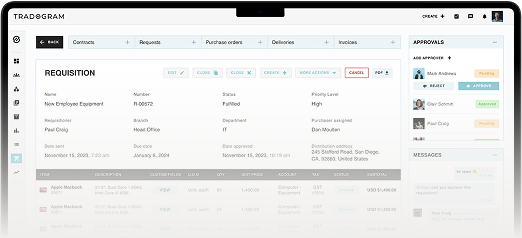
Comparing Tradogram and Fraxion
Choosing the right procurement software can transform how your organization manages spending, suppliers, and purchasing workflows. When evaluating Tradogram vs Fraxion, businesses need a clear understanding of which platform delivers superior functionality, user experience, and long-term value. Both solutions promise streamlined procure-to-pay processes, but significant differences emerge in their flexibility, feature depth, and ease of implementation.
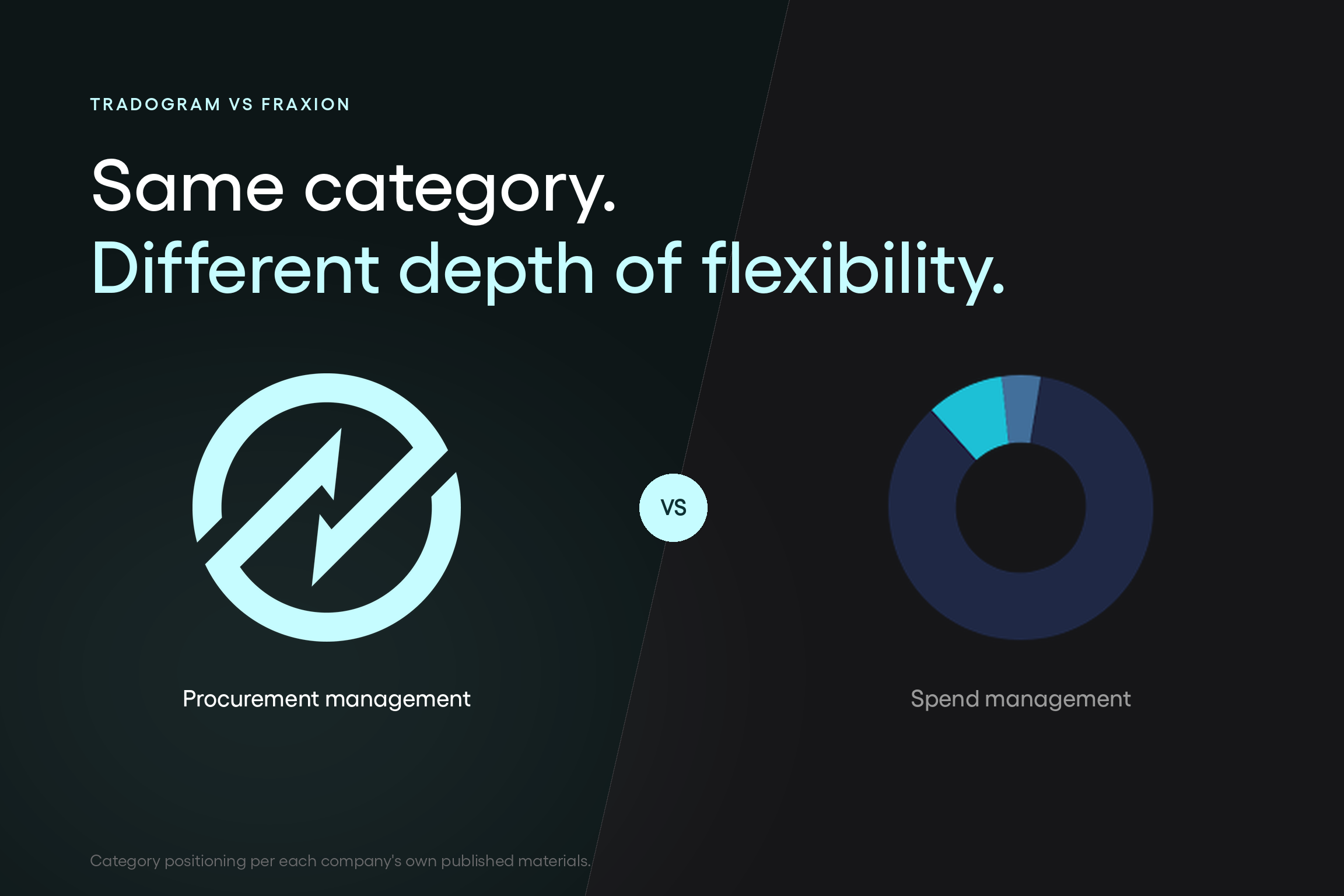
According to Capterra's comparison data, Tradogram consistently outperforms in key areas that matter most to procurement teams: customization options, comprehensive supplier management capabilities, and integration flexibility. While Fraxion offers a solid foundation for spend management, Tradogram's approach prioritizes adaptability to unique business requirements without forcing organizations into rigid workflows.
This comprehensive comparison examines fourteen critical evaluation areas—from initial setup through advanced reporting capabilities. Whether you're replacing spreadsheets or transitioning from another platform, understanding these distinctions helps ensure your procurement investment delivers measurable ROI and scales with your organization's growth trajectory.
Evaluating Flexibility and User Experience
When comparing Fraxion vs Tradogram, flexibility and user experience emerge as critical differentiators that directly impact adoption rates and daily productivity. Tradogram's interface prioritizes intuitive navigation with customizable dashboards that adapt to specific organizational workflows, allowing procurement teams to configure approval hierarchies, automated alerts, and reporting views without requiring extensive IT support. According to Software Advice, users consistently highlight Tradogram's responsive design and minimal learning curve as standout features.
The platform's mobile accessibility ensures procurement professionals can approve purchase orders, communicate with suppliers, and monitor spending from any device—a practical advantage for organizations with distributed teams or field operations. Tradogram's procurement management features include drag-and-drop functionality for requisition creation and one-click vendor comparisons that accelerate decision-making cycles.
Tradogram's flexibility extends to integration capabilities, connecting seamlessly with existing ERP systems, accounting software, and inventory management platforms through API access and pre-built connectors. This adaptability reduces implementation friction and preserves existing technology investments while enhancing procurement visibility across the organization.
Cost-Effectiveness: Pricing Models and ROI
When conducting a Tradogram Fraxion comparison, pricing transparency and return on investment emerge as decisive factors. Tradogram operates on a straightforward subscription model with clearly defined pricing tiers that scale with organizational needs, while alternative solutions often require extensive quote processes before revealing true costs.
The financial advantage becomes apparent through reduced procurement cycle times, which directly impact bottom-line savings. According to comparative analysis, Tradogram consistently receives higher ratings for value relative to price point, with users citing fewer hidden implementation costs and more predictable total cost of ownership.
Organizations typically achieve ROI within 6-9 months through three primary channels: reduced maverick spending through automated approval workflows, decreased supplier management overhead, and lower unit costs through competitive bidding features. One practical approach organizations take is calculating potential savings by multiplying their annual procurement volume by an estimated 8-12% reduction in spend—a conservative benchmark based on automated procurement adoption patterns.
The pricing model flexibility allows growing businesses to start lean and expand functionality as needs evolve, avoiding the common pitfall of paying for unused enterprise features. However, organizations should factor in training time and data migration costs when calculating total implementation expenses.
Supplier Management Capabilities
Supplier relationship management represents a critical differentiator when evaluating Fraxion Spend Management vs Tradogram. Tradogram delivers a comprehensive supplier portal that enables real-time collaboration, automated performance tracking, and centralized vendor documentation. The platform's supplier evaluation framework allows procurement teams to score vendors across multiple dimensions—quality, delivery reliability, pricing competitiveness, and compliance history.
According to comparative analysis, Tradogram's supplier database architecture supports unlimited vendor profiles with custom fields, while maintaining bidirectional communication channels. The system automatically tracks supplier certifications, insurance expirations, and contract renewal dates, triggering alerts before critical deadlines. However, organizations with fewer than 50 active suppliers may find Tradogram's depth of functionality exceeds immediate requirements.
Tradogram's risk management capabilities extend beyond basic scorecarding to include spend concentration analysis and diversification recommendations. The platform generates risk heat maps that identify single-source dependencies, enabling procurement teams to develop contingency strategies proactively. This comprehensive approach positions organizations to navigate supply chain disruptions while maintaining operational continuity and competitive pricing leverage.
Security and Compliance Considerations
Data protection and regulatory compliance represent non-negotiable requirements in modern procurement technology. When evaluating Tradogram vs Fraxion Spend Management, security architecture and compliance frameworks become critical differentiators that impact organizational risk profiles.
Tradogram implements enterprise-grade security protocols including 256-bit SSL encryption, SOC 2 Type II compliance, and GDPR-aligned data handling procedures. The platform maintains secure procurement infrastructure with role-based access controls, audit trails, and multi-factor authentication across all user levels. According to comparison analyses on SourceForge, Tradogram's security documentation provides transparency around data residency and backup protocols.
What distinguishes Tradogram in practice is its comprehensive approach to supplier data protection and transaction security. The platform segregates financial data with encrypted storage, implements automated compliance checks for vendor documentation, and provides detailed activity logs that support internal and external audits. Organizations in regulated industries—including healthcare, finance, and government contracting—benefit from Tradogram's configurable compliance workflows that align with industry-specific requirements like HIPAA or SOX.
However, security requirements vary significantly by organization size and industry. Smaller organizations may prioritize ease of access over complex authentication layers, while enterprises require sophisticated permission hierarchies and integration with existing identity management systems. Tradogram addresses this spectrum through scalable security configurations that adapt to organizational maturity levels without compromising baseline protection standards.
Industry-Specific Benefits
Different industries face unique procurement challenges that require tailored solutions. When evaluating Fraxion vs Tradogram procurement platforms, understanding how each system adapts to specific sector requirements becomes essential for decision-making.
Manufacturing and Production Environments
Manufacturing operations benefit from Tradogram's robust inventory integration capabilities, enabling seamless coordination between procurement activities and production schedules. The platform supports complex bill-of-materials management and just-in-time ordering workflows that minimize carrying costs while ensuring material availability. According to comparative analysis, Tradogram's manufacturing-focused features consistently receive higher ratings for operational efficiency.
Healthcare and Regulated Industries
Healthcare organizations require strict compliance tracking and audit trails. Tradogram provides specialized features for managing medical device certifications, pharmaceutical supplier qualifications, and regulatory documentation. The vendor management framework supports HIPAA-compliant workflows and automated compliance monitoring that healthcare procurement teams require. What makes this particularly valuable is the platform's ability to adapt to evolving regulatory requirements without extensive reconfiguration.
These industry-specific capabilities demonstrate why organizations across diverse sectors trust Tradogram to address their unique operational challenges while maintaining procurement best practices.
Comparison Table: Tradogram vs. Fraxion
When conducting a spend management software comparison Tradogram Fraxion, a side-by-side feature analysis reveals distinct differences in capabilities and approach. According to G2 comparison data, Tradogram consistently outperforms in usability and feature depth.
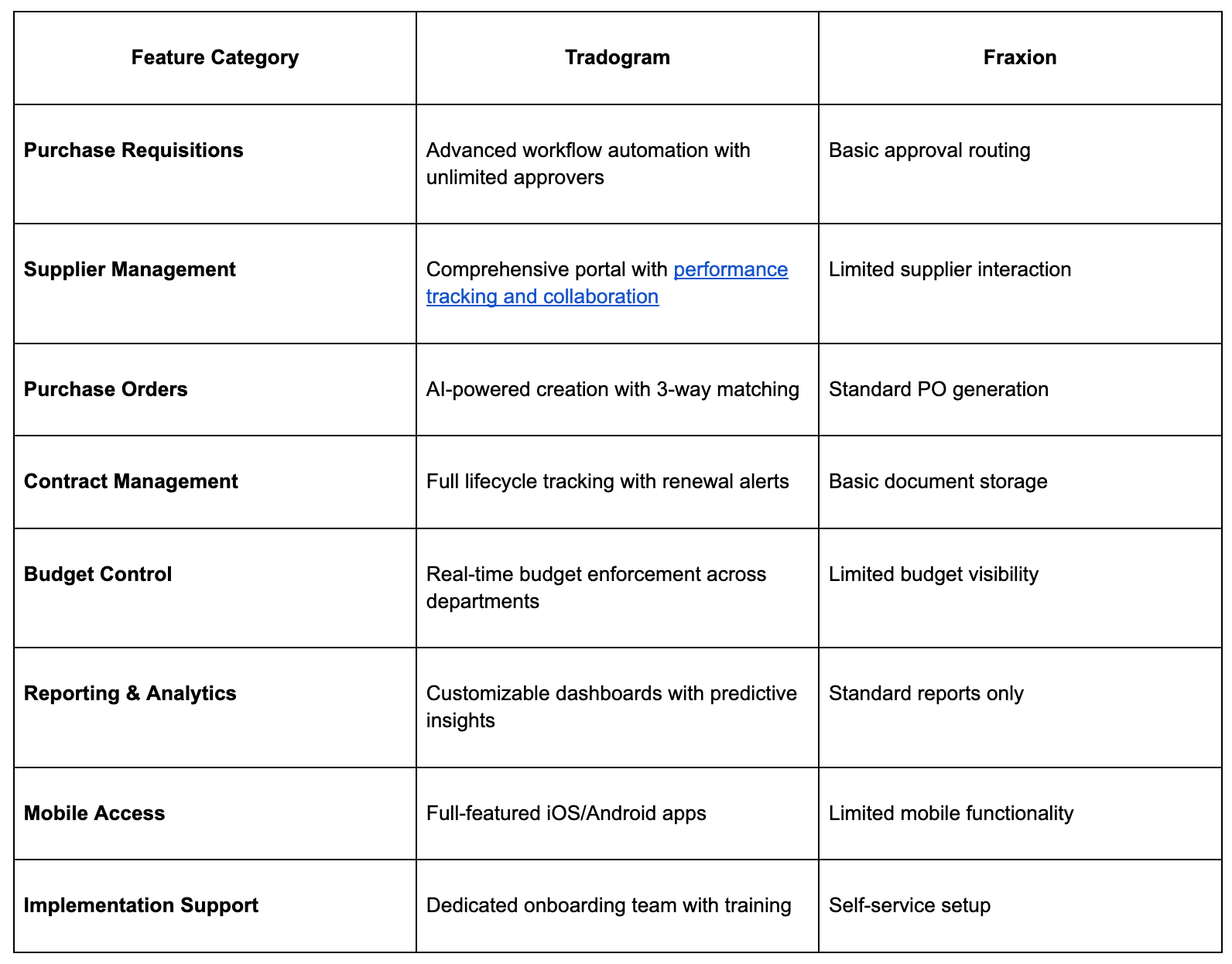
SourceForge analysis highlights Tradogram's superior integration capabilities and scalability, particularly for mid-sized organizations requiring sophisticated procurement workflows without enterprise-level complexity.
Limitations and Considerations
While both platforms offer robust procurement software comparison features, understanding their limitations helps organizations make informed decisions aligned with their specific needs.
Tradogram's Considerations: Organizations new to digital procurement may experience a learning curve during initial implementation. However, comprehensive training resources and dedicated onboarding support minimize transition challenges. The platform's extensive customization options require upfront configuration time, though this flexibility ultimately delivers greater long-term value.
Fraxion's Constraints: According to user reviews on G2, Fraxion's mobile functionality remains limited compared to its web interface, restricting on-the-go approval capabilities. The platform's integration ecosystem, while adequate, doesn't match Tradogram's extensive third-party connectivity options. Some organizations report that Fraxion's supplier collaboration tools require additional modules, increasing total ownership costs beyond base pricing.
Budget-conscious organizations should weigh these trade-offs carefully. While both solutions require investment in training and change management, Tradogram's superior scalability and comprehensive data management capabilities deliver stronger returns as procurement operations expand.
Conclusion: Why Tradogram Is the Superior Choice
When evaluating procurement software comparison Tradogram Fraxion, the evidence consistently points to Tradogram as the more comprehensive solution for organizations seeking scalable spend management capabilities. While both platforms serve the procurement space, Tradogram's deeper feature set and superior integration architecture deliver measurably better outcomes for growing businesses.
Independent reviews across multiple platforms highlight Tradogram's advantages in critical areas: more sophisticated approval workflows, stronger supplier collaboration tools, and broader third-party integrations. Organizations consistently report faster implementation timelines and higher user adoption rates with Tradogram's intuitive interface design.
The platform's robust API infrastructure and modular architecture enable seamless connection with existing ERP and accounting systems—a capability that becomes increasingly valuable as companies scale. For procurement teams managing complex supplier networks and multi-location operations, Tradogram provides the technical foundation and operational flexibility that alternatives struggle to match.
Ready to experience the Tradogram advantage? Book a personalized demo to see how our platform can transform your procurement operations and deliver measurable cost savings from day one.