

Introduction
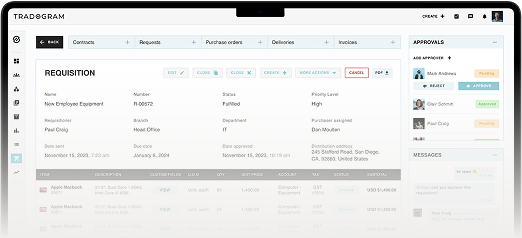
Choosing the wrong procurement platform doesn't just slow down purchasing — it creates compliance gaps, frustrated teams, and budget overruns that compound over time. When evaluating Tradogram vs Procurify, most buyers focus primarily on spend visibility and budget controls. That's understandable. However, modern organizations need platforms that support the full range of sourcing and procurement activities, not just the financial oversight layer.
The procurement software market has matured significantly, and the distinction between tools is no longer simply about who has the cleaner dashboard. What separates effective platforms from adequate ones is how deeply they integrate supplier management, purchase order workflows, approvals, and spend analytics into a single, cohesive experience.
Both platforms serve real organizational needs — and both carry genuine trade-offs worth understanding before committing to a contract.
The side-by-side breakdown that follows will clarify exactly where each platform performs, and where limitations emerge.
Quick Comparison: Tradogram vs Procurify
When evaluating Procurify vs Tradogram, the differences extend well beyond feature checklists. Both platforms address core procurement workflows, but they're built around distinct philosophies that shape how teams actually use them day to day.
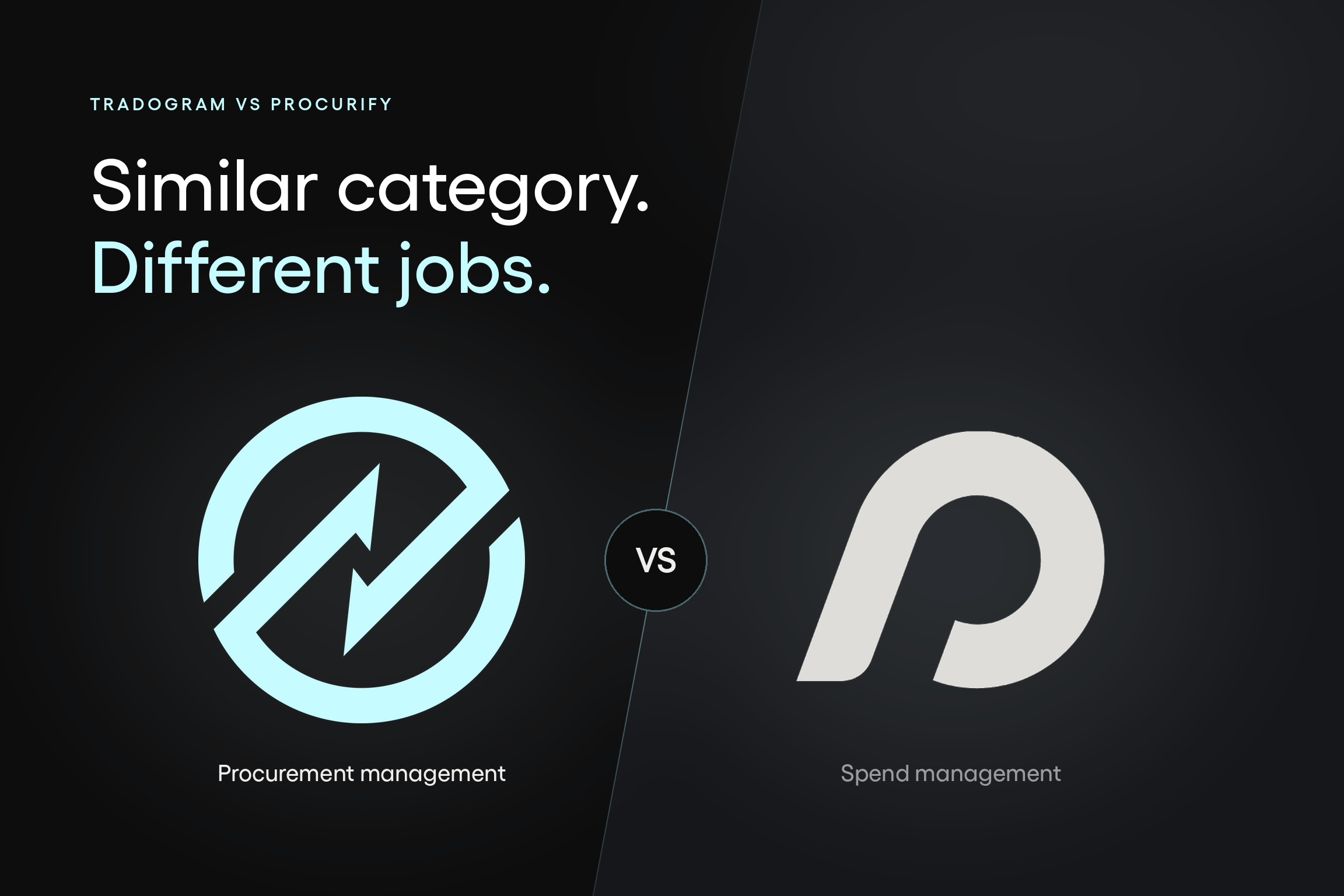
According to GetApp's comparison, Tradogram positions itself as a highly configurable, cost-effective procurement management tool — making it a practical fit for mid-size organizations that need structured purchasing controls without enterprise-level overhead. Procurify, on the other hand, leads with spend visibility and budget management, targeting finance-forward teams that want real-time approval workflows and spending analytics front and center.
In practice, neither platform is a clear universal winner. Tradogram suits organizations prioritizing purchasing structure and vendor management, while Procurify appeals to teams where finance focusing on spend management.
However, a meaningful question emerges from this comparison: does spend tracking alone constitute a complete procurement strategy? That distinction — between managing spending and truly orchestrating procurement — is where the real conversation begins.
The Core Shift: From Spend Management to Procurement Orchestration
Modern procurement teams are discovering that spend management software — however well-designed — solves only part of the problem. Tracking what's been spent is reactive. What growing organizations actually need is the ability to orchestrate procurement from the moment a need is identified to the moment an invoice is reconciled.
This distinction matters more than most buyers realize. Spend visibility tells you what happened. Procurement orchestration gives teams the structure to control what happens next — through approvals, vendor selection, purchase order workflows, and compliance checkpoints that run in sequence, not in silos.
Platforms that centralize the complete procurement lifecycle, not just spending data, reduce maverick purchasing and approval bottlenecks far more effectively than spend-only tools.
In practice, organizations evaluating tools like these two platforms often start by asking "how well does it track spending?" A more useful question is: "how well does it govern the entire purchasing process from request to payment?" According to Tradogram's own guidance, mid-size businesses in particular benefit from end-to-end process control, not just financial dashboards.
That gap — between spend tracking and full procurement governance — is where the most significant platform differences begin to emerge.
The Problem with Spend-Only Tools
Tracking where money goes is valuable. Controlling how purchasing decisions get made in the first place is transformative. This distinction sits at the heart of why many organizations eventually outgrow spend-focused procurement software and start looking for something more comprehensive.
Spend-only tools typically excel at recording transactions, flagging budget overruns, and generating expense reports. What they struggle with is the upstream work — vendor evaluation, requisition workflows, purchase order management, and contract compliance. In practice, teams using spend-centric platforms often patch the gaps with spreadsheets, email chains, or disconnected point solutions.
Procurement without workflow control is just expense reporting with extra steps. The real cost shows up in maverick spending, delayed approvals, and vendor relationships that drift outside agreed terms.
According to comparisons on SourceForge and SelectHub, both platforms reviewed here address workflow functionality — but they prioritize different layers of the procurement cycle. Understanding exactly where each tool focuses its strengths requires a closer look at what genuinely separates them.
Tradogram vs Procurify: The Real Difference
Understanding where these two platforms genuinely diverge requires looking beyond feature lists. Both tools support procurement workflows, but they approach that support from fundamentally different starting points.
Tradogram is built around structured purchasing control. Its emphasis on multi-level approval hierarchies, budget tracking, and supplier management makes it a strong fit for organizations that need disciplined, process-first procurement from day one. The platform is designed to bring order to purchasing before spend spirals out of control.
Procurify, on the other hand, centers its value proposition on spend visibility and real-time budget awareness. It prioritizes ease of adoption and mobile-friendly request flows, making it appealing for teams where decentralized purchasing is already happening and needs guardrails rather than a full rebuild.
The core distinction is philosophical: Tradogram asks how should purchasing decisions get structured? Procurify asks how can we see and manage spend as it happens?
Neither approach is universally superior. However, the right choice depends heavily on your organization's current maturity, team size, and where your biggest inefficiencies live. That distinction becomes far clearer when you examine specific capabilities side by side — which is exactly what the next section addresses.
Feature Breakdown: Where the Differences Matter Most
When comparing these two platforms side by side, the distinctions become clearest at the functional level — specifically where procurement control intersects with financial visibility.
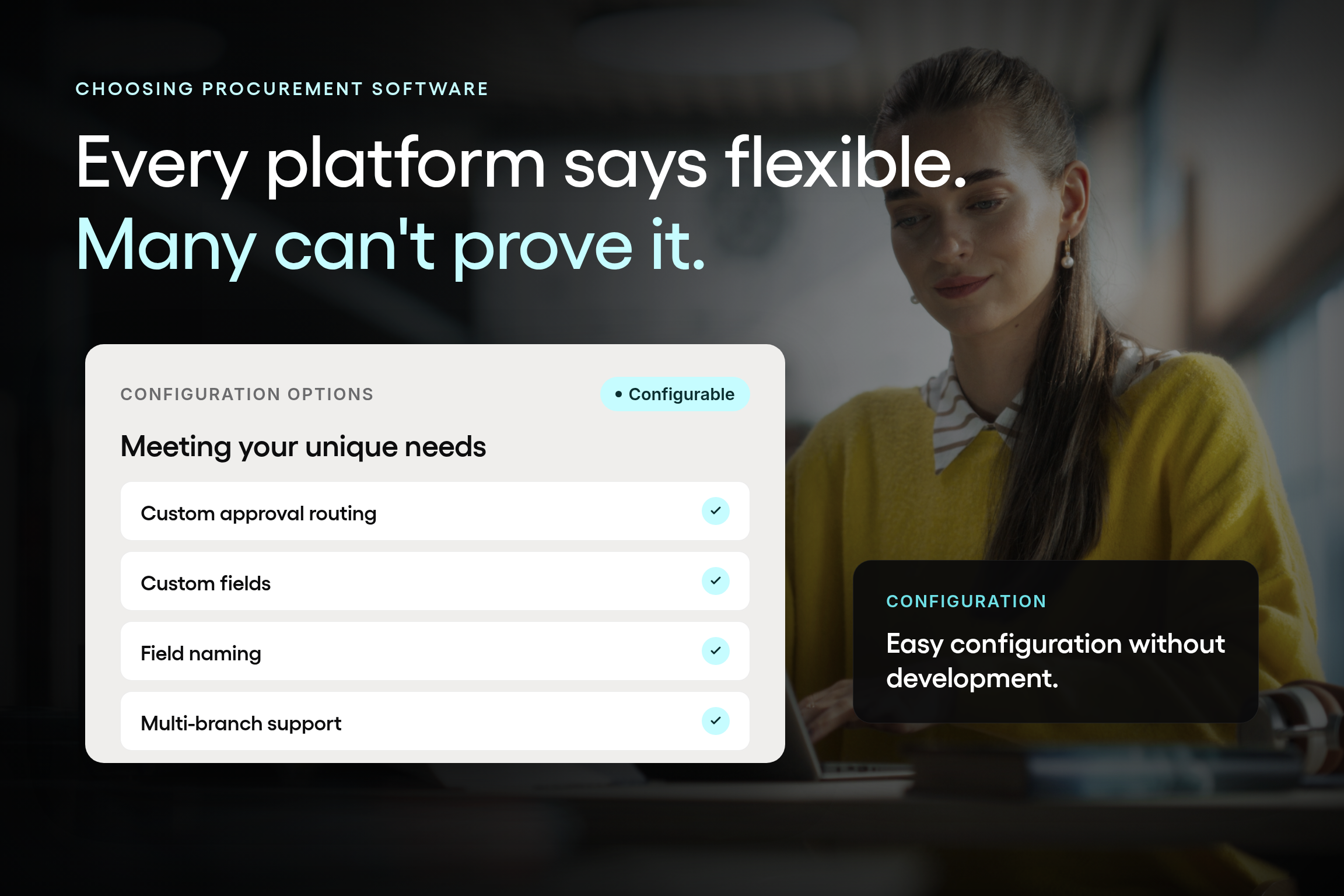
Purchase order management represents one of the sharpest dividing lines. Tradogram delivers structured PO workflows with multi-level approval hierarchies, supplier management, and contract tracking built into its core architecture. In practice, this means procurement teams can enforce compliance at the point of requisition, not just review spending after the fact. The other platform leans more heavily into budget monitoring and real-time spend visibility, making it a stronger fit for finance teams tracking departmental costs.
Other meaningful differences emerge across several dimensions:
A platform that manages purchasing decisions at the upstream stage naturally leads to cleaner, more reliable financial data downstream—an advantage that becomes increasingly important as transaction volume grows and procurement complexity expands. This is where more end-to-end procurement approaches, like Tradogram’s, tend to create stronger long-term consistency across both operational and financial workflows.
That said, neither solution is universally better in every context. The right choice depends on whether an organization’s primary challenge is building structured, scalable procurement processes or improving spend visibility and reporting. However, the gap between procurement execution and spend management often becomes more apparent as companies grow, which is why organizations with more complex needs tend to gravitate toward broader procurement platforms over time.
Why Organizations Outgrow Spend Management Tools
Spend visibility is a critical starting point — but visibility alone doesn't move procurement forward. As organizations scale, the limitations of pure spend management tools become increasingly apparent. What begins as a straightforward need to track budgets and approvals eventually collides with more complex operational demands.
A common pattern is that growing teams hit friction points around supplier relationships first. When vendor data lives outside the purchasing workflow, teams lose negotiating leverage and struggle to maintain compliance. This is precisely where supplier management systems become non-negotiable rather than optional. Centralizing vendor performance, contracts, and communication within one platform isn't a luxury — it's a structural requirement for sustainable procurement.
Spend management tools that lack procurement depth tend to create visibility without control. Organizations can see where money goes but can't effectively influence the decisions driving that spend.
Other pressure points typically include:
Understanding these breaking points in theory is useful — but seeing how they play out across different organization types makes the trade-offs far more concrete.
Real-World Scenario Comparison
Abstract platform comparisons only go so far. Seeing how each tool performs in realistic organizational contexts reveals which budget management tools genuinely fit different operational needs.
Example scenario: A mid-sized nonprofit with 80 employees needs to control departmental spending, enforce approval workflows, and demonstrate fiscal accountability to its board. In this case, the spend-visibility and approval-routing strengths of a spend management platform align naturally with those requirements — real-time dashboards and mobile approvals satisfy stakeholders without overwhelming a lean finance team.
Example scenario: A manufacturing company managing 200+ active suppliers, complex purchase order cycles, and multi-location inventory needs something fundamentally different. Here, procurement-specific functionality — supplier evaluation, contract management, and structured requisition-to-PO workflows — becomes non-negotiable. A spend management platform, however intuitive, leaves critical operational gaps.
Example scenario: A parent company with four regional subsidiaries needs every subsidiary to follow a consistent approval policy while still letting each one manage its own local suppliers and budget. Here, the requirement isn't just spend visibility or purchase order structure individually; it's the ability to configure different approval rules and budgets by entity while still consolidating everything into one report for headquarters. A spend management platform built around one shared budget and one approval structure doesn't map cleanly onto separate legal entities, and a platform without entity-level configuration forces the parent company to choose between a single rigid company-wide process and several disconnected systems it can't see across.
What typically happens is that organizations in the second scenario initially adopt spend management tools for their ease of use, then find themselves working around limitations as volume and complexity grow.
The pattern is consistent: tool fit depends on operational complexity, not company size alone. Understanding exactly where each platform excels — and where each falls short — sets the stage for a clear-eyed look at the trade-offs ahead.
Conclusion: Choosing the Right Tool for Where You're Headed
Visibility is the foundation — but it's not the destination. As this comparison has shown, the core difference between spend management tools and full procurement platforms comes down to what happens after a purchase request is submitted.
Automated approval workflows, structured sourcing, supplier management, and contract oversight aren't premium add-ons. For growing organizations, they're operational necessities.
Key takeaways from this comparison:
The most expensive procurement decision isn't choosing the wrong tool — it's choosing the right tool too late. Evaluate your workflows honestly, map your growth trajectory, and select a platform built for where you're going, not just where you are.