%2520(1200%2520x%2520400%2520px).png)


Indirect spending can quickly spiral out of control and become a huge business expense without proper management set in place. Hidden costs, supplier inefficiencies, and maverick spending can drain your budget and resources that could be invested much smarter.
Consider these five practical tips for optimizing your indirect spend management to keep expenses in check and improve cost efficiency. So, let’s dive into it.
What is Indirect Spend
Indirect spending refers to company purchases that are not directly tied to producing goods or services. These expenses support daily operations but do not contribute to revenue generation.
Examples of Indirect Spend
Indirect spend categories vary from business to business and depend on organizational needs as well as the industry in which your company operates. Typically, indirect spend can account for anywhere from 25% to 40% of the company’s spend.
Indirect spend categories include the following:
- Marketing and Communications
- Human Resources
- Facilities and Security
- Utilities
- Office Supplies
- Travel expenses
- Professional services, including legal, consulting, insurance, etc.
Importance of Managing Indirect Spend
Managing indirect spend within the company is important as it:
- Reduces unnecessary costs and improves budget allocation by identifying and eliminating inefficiencies in procurement.
- Enhances supplier relationships and negotiation power, leading to better pricing, discounts, and service quality.
- Increases financial visibility and compliance, helping businesses track spending patterns and prevent maverick purchasing.
How to Manage Indirect Procurement Spend
To manage indirect procurement spend efficiently, you need to stick to a certain plan and a few tips. Let’s take a more detailed look at the recommendations.
Tip #1 Know Your Spend Categories
Understing where your money goes is the foundation of achieving effective management. So, make sure to dedicate the appropriate amount of time to analyzing your spending and identifying the main categories of indirect spend.
Here are more specific steps to take:
- Identify all indirect spend categories, such as office supplies, software, and professional services, to get a clear overview of expenses.
- Consolidate purchases across departments to negotiate better deals and reduce redundant spending.
- Regularly review and update spend categories to align with business needs and changing supplier relationships.

Tip #2 Know Your Stakeholders
Indirect spending often spreads across multiple departments, making collaboration essential for effective management. Thus, before moving forward, make sure to engage key stakeholders, whether from marketing, sales, or other departments, to ensure transparency and better decision-making.
- Identify key stakeholders involved in procurement, such as finance, department heads, and end-users, to streamline approval processes.
- Communicate procurement policies and guidelines clearly to ensure consistent purchasing behavior across teams.
- Encourage cross-functional collaboration to align procurement strategies with business objectives and operational needs.
Tip #3 Analyze Indirect Spend Data and Patterns
A data-driven approach will be one of your proven partners toward success. Gathering, analyzing, and evaluating data will help you uncover spending inefficiencies and identify opportunities for cost reduction.
- Track and categorize spending patterns to identify trends, recurring purchases, and potential areas of cost savings.
- Use spend analytics tools to gain insights into supplier performance, pricing variations, and contract compliance.
- Regularly review reports to detect maverick spending and take corrective actions to enforce procurement policies.
Tip #4 Create an Indirect Spend Budget
Setting a clear budget for indirect procurement prevents overspending and improves financial planning. A structured approach ensures cost control without sacrificing operational efficiency. Here is how you can achieve a more structured spending plan:
- Allocate budgets based on historical spending data, business priorities, and anticipated needs to maintain financial discipline.
- Implement cost controls, such as approval workflows and purchase limits, to prevent unnecessary expenditures.
- Monitor budget adherence regularly and adjust as needed to accommodate operational changes and market fluctuations.
Tip #5 Set Goals & KPIs
Do not forget about the importance of setting goals and KPIs. Measuring performance over time and aiming for continuous improvement is crucial.
- To assess procurement effectiveness, define measurable KPIs, such as cost savings, supplier performance, and contract compliance.
- Regularly evaluate performance against benchmarks and industry standards to identify areas for improvement.
- Foster accountability by aligning procurement goals with broader business objectives and operational efficiency targets.
A Bonus Tip - Leverage Technology
As a bonus tip, we also strongly encourage you to use technology to be more precise in procurement management software. Investing in procurement technology enhances visibility, control, and automation. Here are a few steps you can take:
- Implement e-procurement software to streamline purchasing workflows, approvals, and supplier management.
- Use AI-driven analytics many tools offer to identify cost-saving opportunities, detect fraud, and improve procurement decision-making.
- Automate reporting and spend tracking to ensure compliance with budgets and policies.
Improve Indirect Spend Management with Tradogram
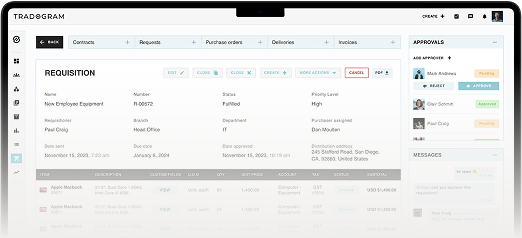
If you are looking for comprehensive spend management software that will help you manage business spending across different categories, then you are in the right place. Tradogram is an all-in-one procurement software that also comes in handy with automated spend analysis tools.
Whether you need to track direct or indirect spend, analyze historical data, or gain real-time insight into spend, Tradogram will help you to stay on top of your resources. Contact us to learn more about how we can help you improve spend management and increase ROI on your procurement initiatives.