

A reliable supply chain is crucial for business success. However, it faces several risks, ranging from fluctuating demand to economic instability. In this article, we’ll explore seven common supply chain risks, their potential impacts, and effective strategies for mitigating them.
Importance of Assessing Supply Chain Risks
Before dicing further into the article, let’s understand why it is important to assess supply chain risks.
Proactively assessing supply chain risks is essential for minimizing disruptions and avoiding financial losses. By identifying vulnerabilities early, businesses can implement measures to prevent costly delays, stockouts, or penalties. A well-managed supply chain also provides a competitive advantage, allowing companies to adapt quickly, improve customer satisfaction, and strengthen their market position.
Most Common Supply Chain Risks
Demand Fluctuations
One of the most common supply chain risks companies face is demand fluctuations. Unpredictable shifts in customer demand can severely disrupt the supply chain. Overestimating demand may lead to excessive inventory, increased storage costs, and wastage while underestimating it results in stockouts and lost sales opportunities.
Accurate demand forecasting, supported by historical data analysis, is key to minimizing these risks and ensuring optimal inventory levels.
Supplier Reliability Issues
Unreliable suppliers can significantly impact supply chain operations, causing delays, quality issues, and production interruptions. To mitigate this risk, businesses should build strong relationships with reliable suppliers, conduct regular performance reviews, and diversify their supplier base.
Economic Risks
Economic factors like inflation, currency fluctuations, and global recessions can inflate costs and reduce purchasing power. Companies can mitigate these risks by negotiating long-term contracts with suppliers and closely monitoring market conditions.
Natural Disasters
Natural disasters, including earthquakes, floods, and hurricanes, can severely disrupt supply chain operations by halting production, damaging infrastructure, and disrupting transportation routes. These events are often unpredictable and can have far-reaching consequences, making it crucial for businesses to be prepared.
Having a disaster recovery plan in place is essential for quick recovery and minimizing the impact of such events. A well-prepared plan helps businesses respond promptly and effectively, reducing panic and allowing for a faster recovery compared to those without a strategy in place. This proactive approach ensures that companies can address issues individually and maintain continuity in the face of unforeseen challenges.
Human Behavior Risk
Human errors, unethical practices, or miscommunication can lead to delays and disruptions. To address this, businesses should implement comprehensive training programs, establish clear communication channels, and conduct regular audits to ensure ethical compliance.
Scope of Schedule Risks
Scope and schedule risks arise when project timelines or deliverables deviate from expectations. These can be caused by poor planning, miscommunication, or unforeseen obstacles. Setting clear goals and realistic timelines is essential for managing this risk effectively.

How to Address Supply Chain Risks
If you incorporate a few strategies, you can effectively address all of the risks mentioned above. Let’s overview these.
Build Strong Supplier Relationships
Strong relationships with suppliers help ensure reliability and flexibility during disruptions. To foster trust and transparency, businesses should:
- Communicate regularly with suppliers
- Conduct supplier evaluations and performance reviews
- Diversify the supplier base
- Establish long-term contracts with clear terms
Develop a Contingency Plan
A well-developed contingency plan helps businesses respond to disruptions like natural disasters or economic volatility. Key components of a solid plan include:
- Identifying critical supply chain areas and creating alternative solutions
- Maintaining a list of backup suppliers and alternative transportation routes
- Establishing an emergency fund for unexpected costs
- Regularly testing and updating the plan
Train the Employees
Training employees in supply chain processes and risk management helps reduce human errors and improve risk identification. A culture of accountability should be fostered to encourage proactive reporting of risks.
Incorporate the Right Technology
It’s essential to implement the right technology to effectively manage your supply chain. The right tools will help you track every aspect of your procurement processes, ensuring smooth operations and better risk mitigation.
For example, procurement software provides essential features like inventory management, supplier management, and budget control. These capabilities allow you to oversee procurement activities and respond to challenges in real-time, ensuring greater efficiency and reduced risks.
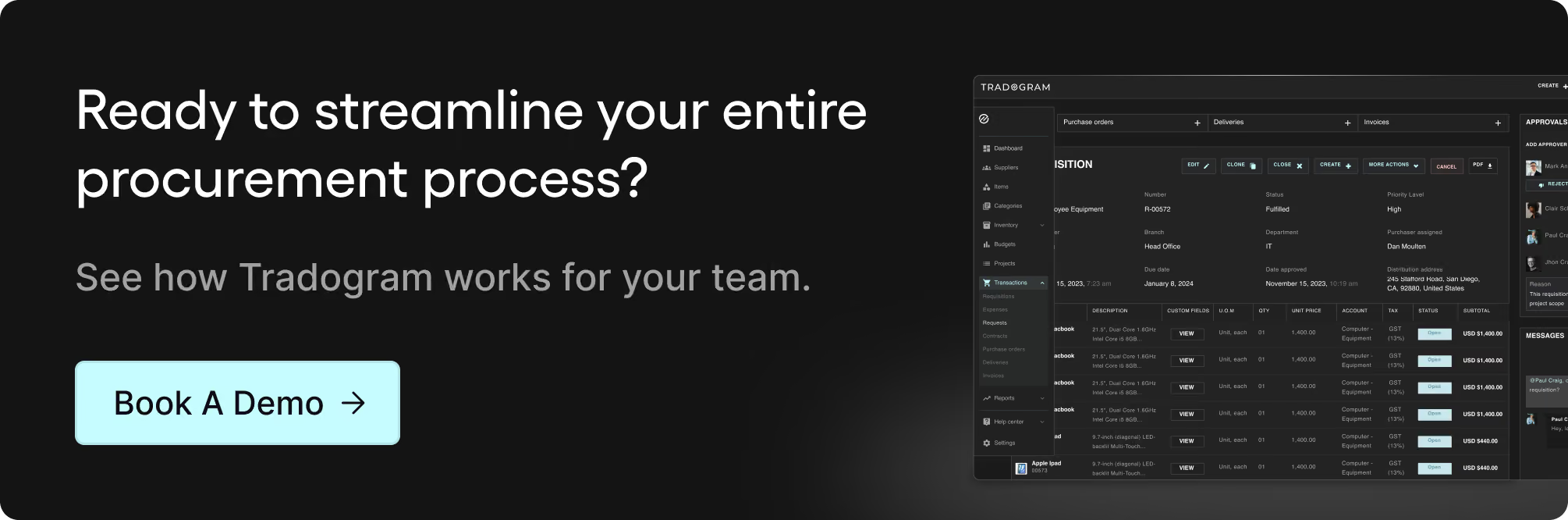
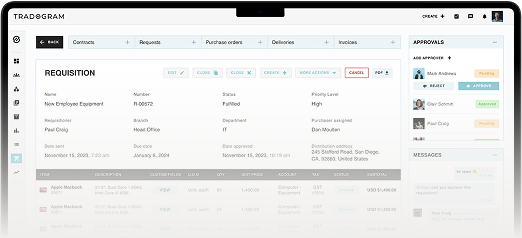
Tradogram is one of the industry-leading platforms for procurement management. This all-in-one solution enables you to automate purchasing, manage inventory, control spending, and streamline your supply chain operations with ease, making it an invaluable tool for effective risk mitigation.
Tradogram - Your Partner in Mitigating Supply Chain Risks
If you’re looking for a comprehensive solution to manage procurement and mitigate supply chain risks, Tradogram is the ideal platform. With its all-in-one procurement management tools, Tradogram helps automate purchasing, control spending, and ensure smooth supply chain operations.
To learn more about how Tradogram can help you manage supply chain risks, contact us today. Our team is ready to assist you.