
If power is considered to be the ability to produce an intended effect, then the concept may be limited to Marvel Superheroes. Thankfully, this blog will broaden the definition of power to include your procurement department, but only after you follow these 5 simple steps for building purchasing power, from the ground up.
The economies of scale that can be generated from amalgamating requisitions make purchasing power an objective for companies of all sizes across a multitude of industries. Procurement has become one of the most significant categories for savings, as it can represent up to 50% of total corporate expenses. That being said, any attempts to use profits to construct a new Google-like office "structure" for employees are taken at your own risk, even if you do obtain the materials with cutting-edge, affordable, cloud-based software.
STEP 1: LAY THE FOUNDATION
Purchasing power can be surprisingly easy to attain with a strong foundation of supplier relationships. A functional communication system for vendors is a necessity - you've secured the very best, now you need to keep them and focus on negotiating costs for products and services in a manner that creates win-win scenarios for both yourself and your vendors.
STEP 2: INSTALL THE FLOOR
You've laid a respectable foundation of suppliers, so what's next? The floor, otherwise known as your internal team of procurement professionals. These are the people who will be doing the "ground level" buying for the organization, so they should function like a harmonious team and understand all processes. Is an approval required for an order? Who has permission to initiate a specific request? Requisitions are being sent collectively as a method for maintaining....WHAT budget?! The answers to these questions and more should be understood by anyone involved with procurement.
STEP 3: FRAME THE WALLS
Once the foundation and floor are in place, it's time to start making some noticeable progress with your purchasing power - the walls. The combined effect of solid suppliers and a strong internal team creates the perfect platform for collaboration, the key to growth, both vertical and operational. Collaboration is critical for purchasing success, as it allows everyone involved in the process to clarify and pinpoint item specifications. Even small adjustments made to an item's quality, quantity, and/or delivery time/place can result in enormous savings. All that's required is collaborative discussions and walls without upper limits.
STEP 4: SET THE ROOF
We just said that walls without upper limits are great - until it starts to rain. Perhaps a roof is a necessary element of building purchasing power after all! Setting the roof is a process that entails combining items from several requisitions and ordering together to lock-in an economy of scale. It's also smart to connect all contracts and create purchasing categories to ensure your requisitions are as accurate as possible - leave no room for duplicate or incorrect orders. When generating requisitions it also helps to use product catalogues, supplier websites, and any other tools that will fine-tune the process.
STEP 5: INSTALL UTILITIES
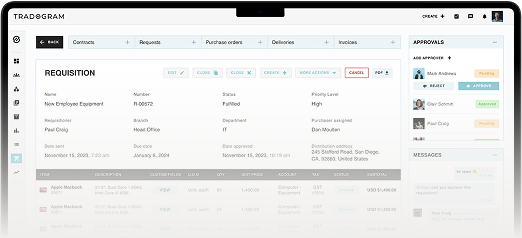
Congratulations, you've successfully constructed purchasing power! But don't forget the most important part - installing utilities. Also known as implementing facilitative, easy-to-use software, purchasing power can be established without such a tool, but the final results will be crippled - no utilities, and your building lacks comfort and functionality. What's the point of going to all this effort if no one wants to visit you? The right technology will promote planning, communication, and control throughout every phase of each transaction, meaning suppliers and team members won't be able to stay away.Keep these steps in mind when determining how to simplify and streamline your purchasing. Reducing ordering costs by implementing collective requisitions is the optimal way to ensure your organization is a force that rivals The Incredible Hulk - strong, durable, and able to leave a legacy. Also capable of massive destruction, but that's another blog.