

Finance wants a purchase price variance figure for the quarter, and it needs to be ready Thursday. The formula takes about 30 seconds to find. Purchase price variance (PPV) is the difference between the price your organization expected to pay for an item and the price it actually paid, multiplied by the quantity purchased.
The harder part shows up in the meeting. Someone asks why packaging came in 9 percent unfavorable, and you realize you're not sure whether that's a supplier problem, a market problem, or a problem with the price someone typed into the budget last October. All three produce the same number on the report. Only one of them is anyone's fault, and only one of them is fixable this quarter.
What purchase price variance means
Purchase price variance compares two prices for the same item: the price your organization planned on, and the actual price paid. Multiply the gap by the quantity purchased, and you get a dollar figure. An unfavorable result means you paid more than planned. A favorable result means you paid less.
The expected price goes by different names depending on where it came from. In a manufacturing environment, it's usually a standard price set during the annual costing cycle. Elsewhere it might be a contracted rate, last year's budget assumption, or a quote someone accepted last spring. The label matters less than the fact that a person chose that number, on a particular date, based on the information available at the time. That detail comes back later, because it's where a surprising amount of variance actually hides.
PPV can be measured on a single purchase or rolled up across a period, a category, a supplier, or a location. Both views are useful, and they answer different questions. A single line tells you what happened on one order. The aggregate tells you whether the same thing is happening over and over.
Procurement and finance teams usually read the same figure for different reasons. Finance is reconciling actual costs against plan and needs to know how the gap affects margin and the next forecast. Procurement needs to know whether the gap points to a supplier, a process, or the market, because only two of those three are worth a phone call. Same number, two sets of next steps.
How to calculate purchase price variance
The formula is short:
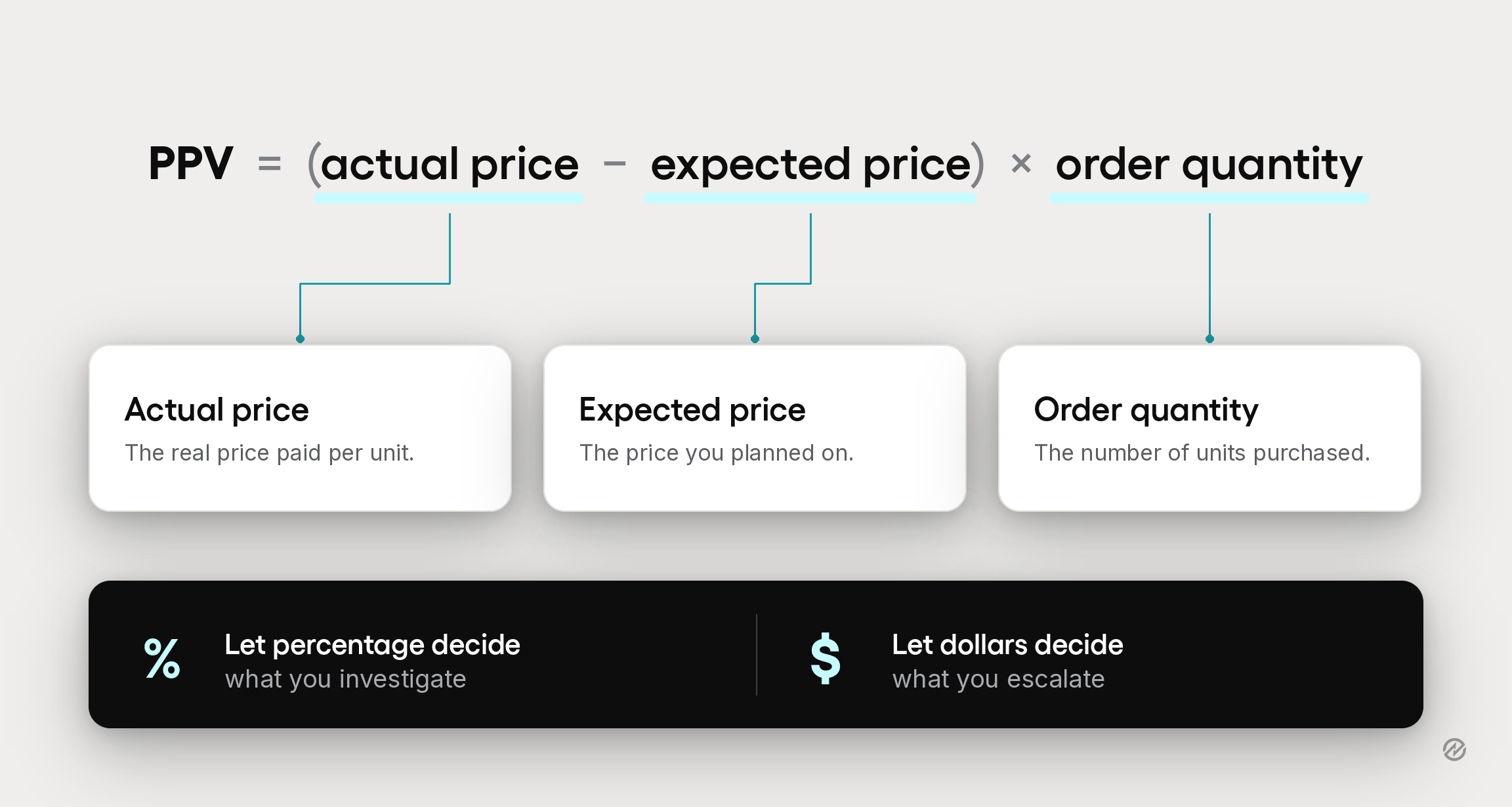
PPV = (actual price minus expected price) x order quantity
Three inputs, and each one deserves a moment:
Actual price is the real price paid per unit, not the list price and not what you were originally quoted.
Expected price is the benchmark you're measuring against, whether that's a standard cost, contracted rate, previous purchase price, or a budget assumption.
Order quantity is the number of units purchased, not the number forecast and not the number consumed.
Get those three right and the arithmetic takes care of itself. Most of the disagreement about a variance figure turns out to be disagreement about one of these three inputs, usually the second.
What goes into the actual price paid
The actual purchase price is the invoiced unit price plus any charge that genuinely changes what a unit costs you. Freight, non-recoverable taxes, and duties usually belong in. So do volume discounts and rebates applied at the time of purchase, since they change the real price paid. What you're after is the actual purchase cost per unit, not the number printed largest on the invoice.
The rule that matters more than the list: whatever you include, include it consistently. If freight is baked into the unit cost on one item and booked separately on another, the total cost comparison between them stops meaning anything. Inconsistent freight treatment across a category is one of the more common sources of variance that looks like a purchasing problem and is actually a data problem. Before you investigate a supplier, confirm you're comparing the same thing apples-to-apples.
Calculating PPV on a single purchase
Here's a running example we'll come back to a few times.
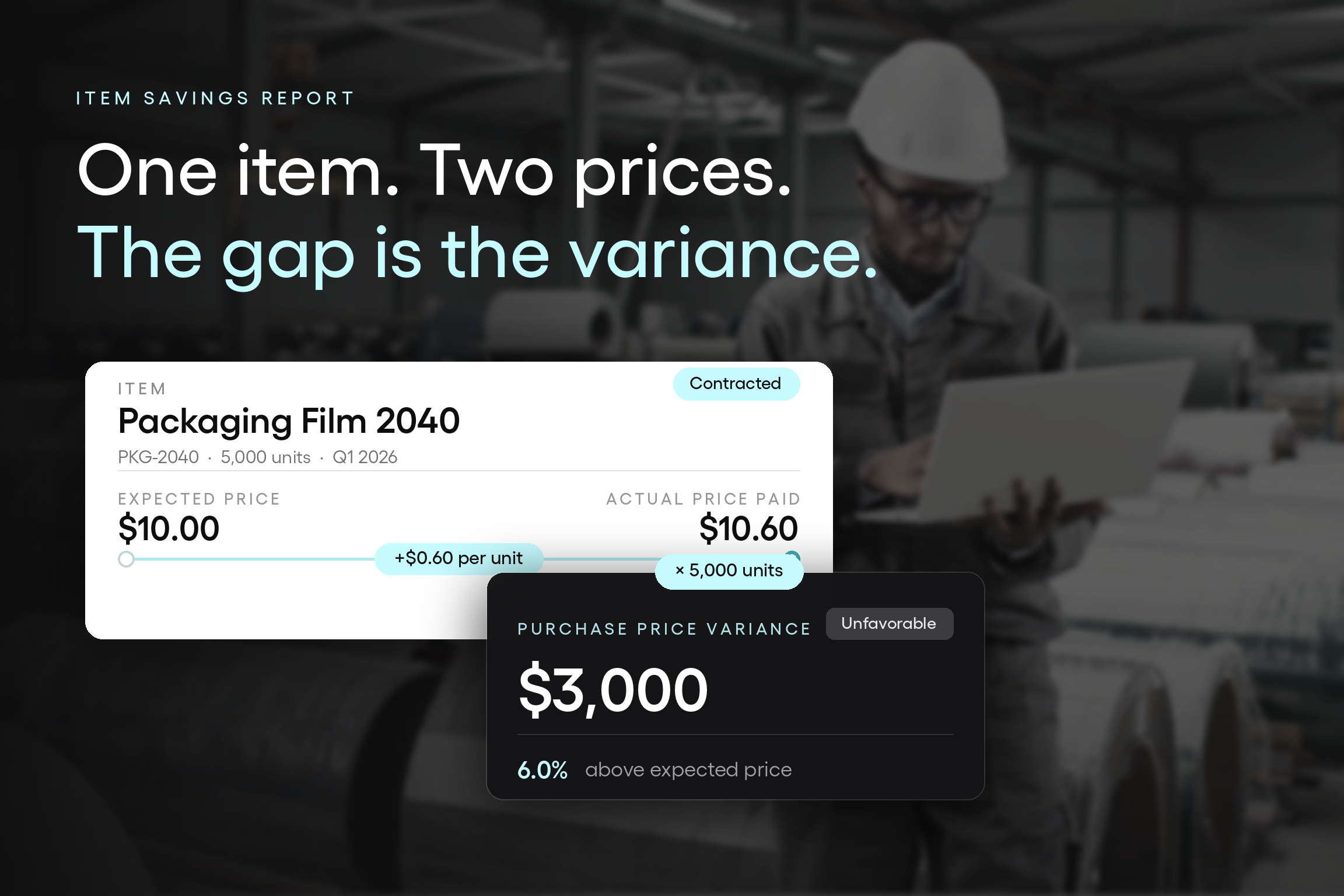
Your organization buys a packaging component. The expected price in your system is $10.00 per unit, set during last year's budget. This quarter, you bought 5,000 units, and the invoiced price came in at $10.60 per unit.
Step one, find the price gap:
$10.60 minus $10.00 = $0.60 per unit
Step two, multiply by the actual quantity purchased:
$0.60 x 5,000 = $3,000
That's $3,000 unfavorable. The organization spent $3,000 more on this item than the plan assumed. Nothing in that $3,000 variance figure tells you why, and if the meeting stops here, the default assumption in the room is usually that somebody negotiated badly. Hold that thought, because in this example that assumption is wrong twice over. We'll take the $3,000 apart later.
Expressing purchase price variance as a percentage
The dollar figure alone can mislead you about how serious something is. So calculate the percentage too:
PPV percentage = (actual price minus expected price) divided by expected price, x 100
For the packaging example: $0.60 divided by $10.00 = 0.06, or 6 percent unfavorable.
Now compare two lines on the same report. A $5,000 variance on a $20,000 order is 25 percent, which means something in that arrangement has changed materially, and nobody caught it. A $5,000 variance on a $500,000 order is 1 percent, which is close to noise. Same dollars, completely different conversations.
A practical way to use both: let percentage decide what you investigate, and let dollars decide what you escalate.
Favorable and unfavorable purchase price variance
An unfavorable purchase price variance means you paid more than expected. A favorable variance means you paid less. That much every source agrees on.
What they don't agree on is which sign goes with which.
Why negative PPV and positive PPV aren't standardized
Some sources subtract the expected price from the actual price, so paying more produces a positive number and favorable PPV shows up as negative. That feels backward the first few times you see it. Almost every other number on a finance report gets better as it climbs, so it's worth saying plainly: a big positive PPV is not a win, and if you're presenting one to a room, lead with that.
That’s probably why others reverse the order, so a positive result means savings and a negative result means your company paid more than it expected to.
Neither approach is wrong. They're just opposite.
Which is a real risk when the number leaves your desk. A $3,000 unfavorable variance is "+$3,000" in one convention and "-$3,000" in the other. Send the second version to someone who reads it the first way, and you've just reported $3,000 in savings on an item that cost you $3,000 more than planned.
One sentence to your controller does it: "For our variance reporting, are we calculating actual minus standard, so unfavorable shows as a positive number?" Ask it once, write the answer into the report header, and label every figure favorable or unfavorable in words rather than trusting the sign to carry the meaning.
Or, if the choice is yours to make, use actual price minus expected price. It matches the accounting convention, where an unfavorable variance is booked as a debit, so your reporting stays consistent with how the entry lands in the ledger.
Where your standard price comes from, and what to use instead
Notice what the calculation section spent its attention on. The actual price got a full subsection on what to include and how to treat freight. The expected price got one line: whatever benchmark you're measuring against.
That's a little bit backward. The actual price has an invoice behind it and a supplier who will confirm it. The expected price is a decision somebody made, and it's the input most likely to be wrong.
If you use standard costing
A standard cost is a predetermined unit cost, set during a costing cycle and stored in your ERP or inventory system. It values inventory until actual costs arrive, and the variance account absorbs the difference. Under US accounting standards, standard costs are acceptable for inventory measurement only when they're adjusted at reasonable intervals to reflect current conditions, so that at the balance sheet date they reasonably approximate cost under a recognized basis such as FIFO or average cost (FASB ASC 330-10-30-12).
Which is the part that quietly slips. The standard assumes someone is updating these. A standard cost nobody has revisited in 18 months isn't a benchmark anymore. It's a historical artifact that generates variance on schedule.
Four baselines to use when you don't
Most growing organizations don't run standard costing, and don't need to. You still need a defensible expected price. Four options, each with a limit worth knowing.
The contracted price is the strongest baseline where a contract exists. It's dated, agreed, and independently verifiable. Variance against a contracted price is really a compliance signal: either someone bought outside the agreement, or the supplier billed something other than what was signed. Both are worth a conversation, and both have a clear owner.
The last purchase price works well for repeat items with no contract. It's easy to pull and it reflects real market conditions. But it drifts. Each purchase resets the benchmark, so a slow climb in supplier pricing looks like a series of small variances instead of one large one. It also encodes past mistakes, since an overpayment last quarter becomes this quarter's target.
The accepted quote fits one-off purchases and project buys. Use the quote your organization actually accepted, not the lowest one received, and keep the sourcing record attached so the basis is documented and dated. Comparing supplier offers through sourcing management software rather than an email thread makes that record easier to produce later.
A published index or category benchmark suits commodity-exposed categories where your own history says more about your timing than about the market. The US Bureau of Labor Statistics Producer Price Index is free and citable. Treat it as directional. It tells you whether a category moved, not what your organization should have paid.
Whichever you use, record which one it is on the item. The basis determines what the variance means, and a report that mixes contracted prices with last purchase prices is measuring two different things in the same column.
How often to refresh the expected price
Refresh with the annual budget at minimum, and sooner when a contract is renegotiated, a supplier changes, specifications change, or an index moves materially in a category you buy from regularly. Historical data helps here, but the date on that data matters as much as the data itself.
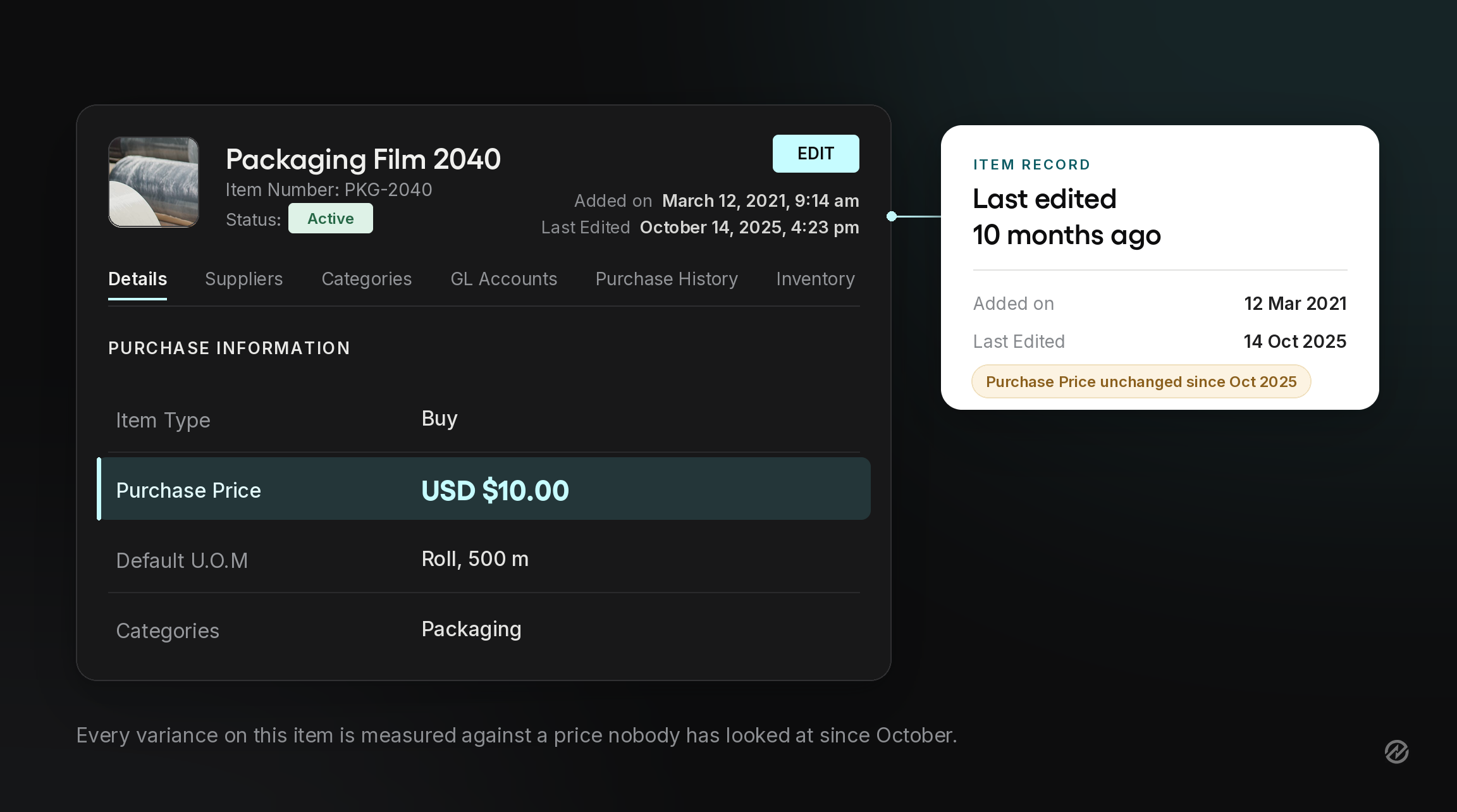
Here's where the packaging example pays off. That $10.00 expected price was set during last year's budget. In March, procurement renegotiated the contract to $10.40 per unit, and nobody updated the item record. So of the $3,000 unfavorable variance, $1,000 was created by the calendar. No buyer caused it, no supplier caused it, and no amount of negotiation will remove it from the report. It's a data maintenance issue wearing a purchasing issue's clothes.
So before you investigate any variance, ask two questions about the expected price: what date was it set, and what was it based on? If either answer is unclear, you're not looking at a purchasing problem yet. Keeping baselines current is the cheapest budgeting and cost control improvement available to most teams.
What causes purchase price variance
Variance shows up for a lot of reasons, and they're not equally interesting. Some point at a decision your organization made. Others point at a market that moved. Sorting them into those two groups before you do anything else saves a great deal of wasted investigation, because only one group responds to effort.
Causes you can influence
Off-contract buying is the most common and the most fixable. Someone needs an item quickly, orders from a familiar supplier or a website, and never sees the negotiated rate that already exists. The contract terms hold, the purchase just didn't use them. In the packaging example, $1,000 of that $3,000 came from exactly this: an order placed outside the March agreement at the supplier's list price rather than the contracted $10.40.
Rush orders carry a surcharge, and the surcharge is usually the smaller half of the cost. Expedited freight, premium pricing for delivery speed, and a supplier who knows you have no alternative all land in the same invoice. That's the remaining $1,000 in our example. Worth noting when it happened: not on the day the order was placed, but a week or two earlier, when nobody flagged that stock was running low.
Fragmented ordering quietly costs more than either. Three departments each ordering the same item separately never reach the volume pricing tier that one combined order would have qualified for. Nobody made a bad decision. The organization just never saw the total. This is where a broader look at cost reduction in purchasing and procurement usually finds the most room.
Two smaller ones round out the list. Specification changes that never reach the item record produce variance against a price for something you no longer buy. And minimum order quantities can force a purchase larger than you need, which shows up as a favorable unit price and an unfavorable outcome once the excess sits in storage.
External factors and market fluctuations you can't control
Then there's the variance nobody in your organization created.
Raw materials move with commodity markets, and if you buy anything downstream of steel, resin, paper, or fuel, those market fluctuations reach your invoices eventually. Suppliers pass through their own cost increases, sometimes with notice and sometimes at renewal.
Exchange rates move against cross-border purchases. Promotional pricing ends, and last year's favorable price variance becomes this year's unfavorable one without a single thing changing on either side. And bargaining position shifts, particularly when demand in a category rises industry-wide, and your volume stops being interesting to a supplier who now has better options.
Price volatility in a category is worth tracking separately from variance in that category. A category where the actual price exceeds the expected price by a different margin every month isn't misbehaving. It's telling you the baseline needs refreshing more often than annually, and possibly that it should be a range rather than a fixed number.
One thing to notice before moving on: this same split applies to favorable variance. A price drop your team negotiated and a price drop the market handed you look identical on the report. Only one of them says anything about how your organization buys.
So before you act on any variance, sort your largest lines into two columns: variance your process created, and variance the market created. The first column is a work list. The second column is context for your next forecast and your next conversation with a supplier, and treating it as a performance problem will only push your team toward categories that are easier to look good in.
How to record purchase price variance in accounting
If your organization runs standard costing, the variance gets its own account and appears in two steps.
At receipt, inventory is debited at the standard cost and goods received not invoiced (GRNI) is credited for the same amount. The goods are on hand, the liability is recognized, and no variance exists yet because no invoice has arrived.
At invoice, GRNI is debited to clear the accrual, accounts payable is credited at the actual amount, and the difference between budgeted or standard costs and the actual purchase cost lands in the purchase price variance account. An unfavorable variance is a debit. A favorable one is a credit.
Say materials are received at a standard value of $24,000, and the invoice arrives at $25,800. At receipt, inventory takes the $24,000 debit against GRNI. At invoice, GRNI clears for $24,000, accounts payable is credited $25,800, and $1,800 is debited to purchase price variance.
Where that $1,800 ends up depends on the inventory. While the goods are unsold, the variance typically sits in inventory. Once they're sold, it follows the goods into cost of goods sold (COGS). Some organizations write the variance straight to COGS when the amount is immaterial.
Here's the part that matters more to most: if your organization uses actual or weighted average costing, none of this applies. There's no variance account, because the actual cost is the recorded cost. The comparison between standard and actual costs is still worth running; it just lives in a report rather than the general ledger.
This describes general practice, not accounting advice. Confirm the treatment with your controller or external accountant, since materiality thresholds and variance disposition policies vary by organization.
PPV and the variances people often confuse it with
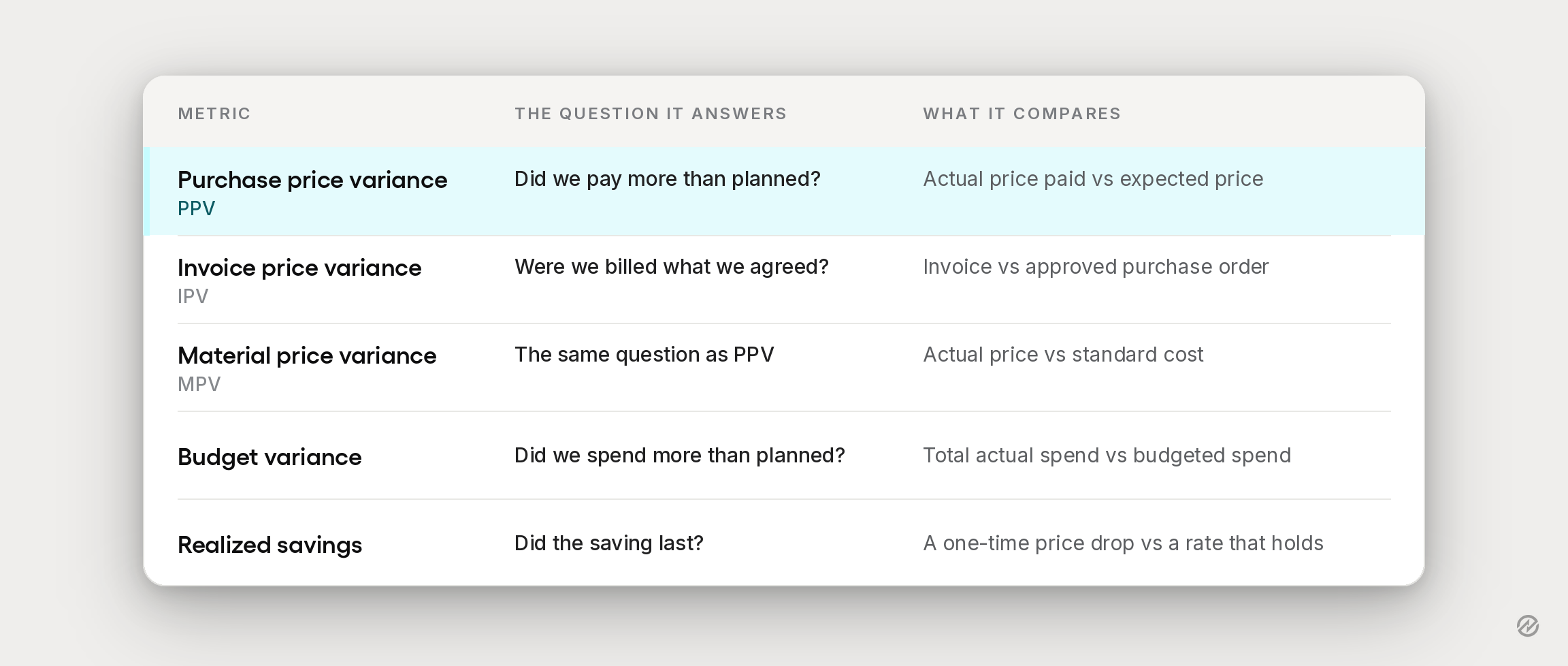
Four terms sit close enough to purchase price variance to get used interchangeably, usually by people in different departments who each assume everyone else means what they mean. The distinctions are worth ten minutes, because two of these measure things you can catch in time to act, and two don't.
Purchase price variance compares the actual price paid against the expected price. That's the number this article has been building.
Invoice price variance (IPV) compares the invoice against the approved purchase order. The purchase order says $10.40 per unit. The invoice says $10.82. That gap is IPV, and it exists because of a billing error, an unapproved change, or a term nobody applied correctly. The practical difference from PPV is timing. Comparing the invoice against the purchase order and the receiving record before payment catches that gap while the money is still in your account, which is what invoice matching software is for. PPV surfaces after the goods arrived and the invoice was paid. You can explain it and prevent the next one, but you can't recover it.
Material price variance (MPV) is the cost accounting term for essentially the same comparison as PPV, and in most conversations the two are interchangeable. The one place they diverge: some organizations measure MPV when materials are issued to production rather than when they're purchased, which shifts both the timing and the quantity in the calculation.
Budget variance compares total actual spending against budgeted spend. It moves with quantity as well as price, so a category can run over budget with perfect pricing simply because the organization bought more than it planned. PPV isolates the price question. Budget variance answers the total cost question. Neither substitutes for the other, and reporting one when someone asked for the other causes a specific kind of meeting nobody enjoys.
Realized savings asks a different question entirely: did a favorable variance actually persist? A negotiated rate that holds for twelve months is realized savings. A one-time promotional price that produced the same favorable number this quarter is not.
Managing and monitoring purchase price variance
A variance figure produced once, for a meeting, tells you almost nothing. The same figure produced monthly tells you where your process leaks. Managing purchase price variance is less about the calculation than about running the same short routine often enough that patterns become visible.
Here's a routine that works without an ERP behind it.
- Confirm the sign convention and the baseline basis before you calculate anything. Does your organization subtract expected from actual, so unfavorable shows as a positive number, or the reverse? And for each item you're about to measure, is the expected price a contracted rate, a last purchase price, an accepted quote, or a standard cost?
- Calculate dollar and percentage variance by item. Not by supplier yet, and not by category yet. Item level is where the data is honest.
- Rank by percentage, then filter by dollars. Percentage tells you which assumptions have broken. Dollars tell you which of those breakdowns deserves attention this month.
- Slice the same PPV data by category, then by supplier, then by location or department. Category first, because that's where patterns live. A single supplier line that looks alarming is usually a symptom of something happening across a whole category, and if you start at the supplier you'll find yourself renegotiating with someone who isn't the cause.
- Check contract compliance on your largest unfavorable lines. For each one, ask whether a contract existed and whether the purchase used it. This single question resolves more variance than any other, and it resolves it into a process fix rather than a negotiation.
- Tag every favorable variance as repeatable or one-time. A renegotiated contract rate will still be there next year. A promotional price, a one-off bulk buy, or a favorable exchange rate will not. Both look identical on the report, so tag them while you're in the data. Reconstructing it three months later means reopening every purchase order.
- Agree on actions and owners. Off-contract buying belongs to whoever owns the request process. Market movement belongs in the next forecast. A stale baseline belongs to whoever maintains item records, and it takes about four minutes to fix.
How often should you run purchase price variance reports?
Monthly, alongside the close, suits most teams. That's frequent enough to catch a pattern in its second or third month rather than its ninth, and it fits the rhythm finance already works to.
Categories with real price volatility deserve more attention, and the trigger should be a price change rather than a date. If a supplier issues a notice or an index moves materially, look at the affected items then, not at month end.
Quarterly is the right cadence for the wider view: category trends, supplier performance, contract compliance rates, and whether your baselines are still defensible. That's the review where market trends matter and individual line items don't. Running that analysis from procurement reporting rather than a rebuilt spreadsheet is what makes the difference between a routine your team keeps and one that quietly stops after March.
One caution on the whole exercise. PPV is a procurement performance signal, not a procurement performance rating. Used as a rating, it teaches people to avoid volatile categories and to make purchasing strategies look good on one metric at the expense of everything else.
Where purchase price variance stops being useful
PPV measures price. That's the whole scope, and it's worth stating plainly because the number gets asked to carry weight it was never built for.
It says nothing about whether the goods arrived on time, whether they met specification, whether the supplier answered the phone when something went wrong, or whether the item lasted as long as the cheaper alternative it replaced. A supplier can post a beautiful favorable variance for three quarters running and still be the most expensive relationship in your portfolio once you count the failed deliveries and the rework.
Here's the failure mode I'd watch for. An item carries a volume discount at ten months' supply. A buyer places the order, hits the tier, and books a genuinely favorable variance that will look excellent on the quarterly report. The item has a six-month shelf life. Four months of stock will be written off, storage was paid for the whole time, and cash sat in a warehouse until it didn't. Every number in that decision was defensible. The outcome was a loss.
So pair PPV with metrics that see what it can't: total cost of ownership (TCO), on-time delivery, quality acceptance rates, and supplier performance over the length of the relationship. PPV is a good first question and a poor last one.
Cost savings, cost avoidance, and why a favorable PPV doesn’t always fit these labels
A favorable variance is a price outcome. It tells you what you paid relative to a number somebody wrote down. Whether it counts as cost savings depends on something the report can't show you: whether it survives.
Cost savings are reductions that carry into the next budget. A renegotiated rate, a consolidated order pattern that reaches a better pricing tier permanently, a specification change that costs less to buy every time. Your finance team can plan around these.
Cost avoidance is a cost that didn't materialize. A supplier announced an eight percent increase, and you negotiated it to three. Nothing got cheaper, so it may not produce favorable variance at all, and against a stale baseline it will read as unfavorable while representing a real win. Paying more now for a service contract that prevents a larger repair later works the same way.
Which is why the repeatability tag from the monitoring routine matters. Report repeatable and one-time favorable variance separately, and report cost avoidance in its own line with the counterfactual written next to it. Cost efficiency shows up in the pattern, not in any single quarter's variance figure. A favorable variance you can't repeat isn't a cost-saving strategy. It's a nice quarter.
The variance you can actually prevent
A price gets recorded five times before it reaches your variance report.
- At the request it's an intention, with nothing committed.
- At the quote, it's an offer, still open to challenge.
- At the approved purchase order, it becomes a commitment, and that's the last point where a decision changes anything.
- At receipt, it's history.
- At the invoice, it's a payable.
Variance analysis happens after step five. Nearly all of the variance worth preventing was created before step three. That's the gap this article has been circling, and closing it doesn't require better analysis. It requires the expected price to be visible earlier.
Three changes that move the decision upstream
Put the current contracted price on the request form for your highest-variance categories. When the person raising a request can see that the item is contracted at $10.40, ordering from a familiar supplier at list price stops being an easy mistake to make.
Route requests above a threshold to the budget owner before the order exists. Approval after commitment is documentation. Approval before commitment is cost control.
Match the invoice against the purchase order and the receiving record before payment. This won't touch PPV, but it catches invoice price variance while the money is still yours.
How this looks in Tradogram
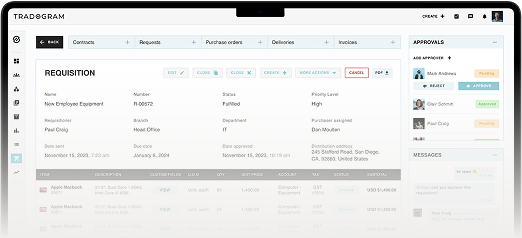
Tradogram stores a Purchase Price on every item in the database, which functions as the expected price. It acts as the standard cost or list price the system uses for default pricing, sourcing comparisons, and performance tracking.
That single field does three things worth knowing about.
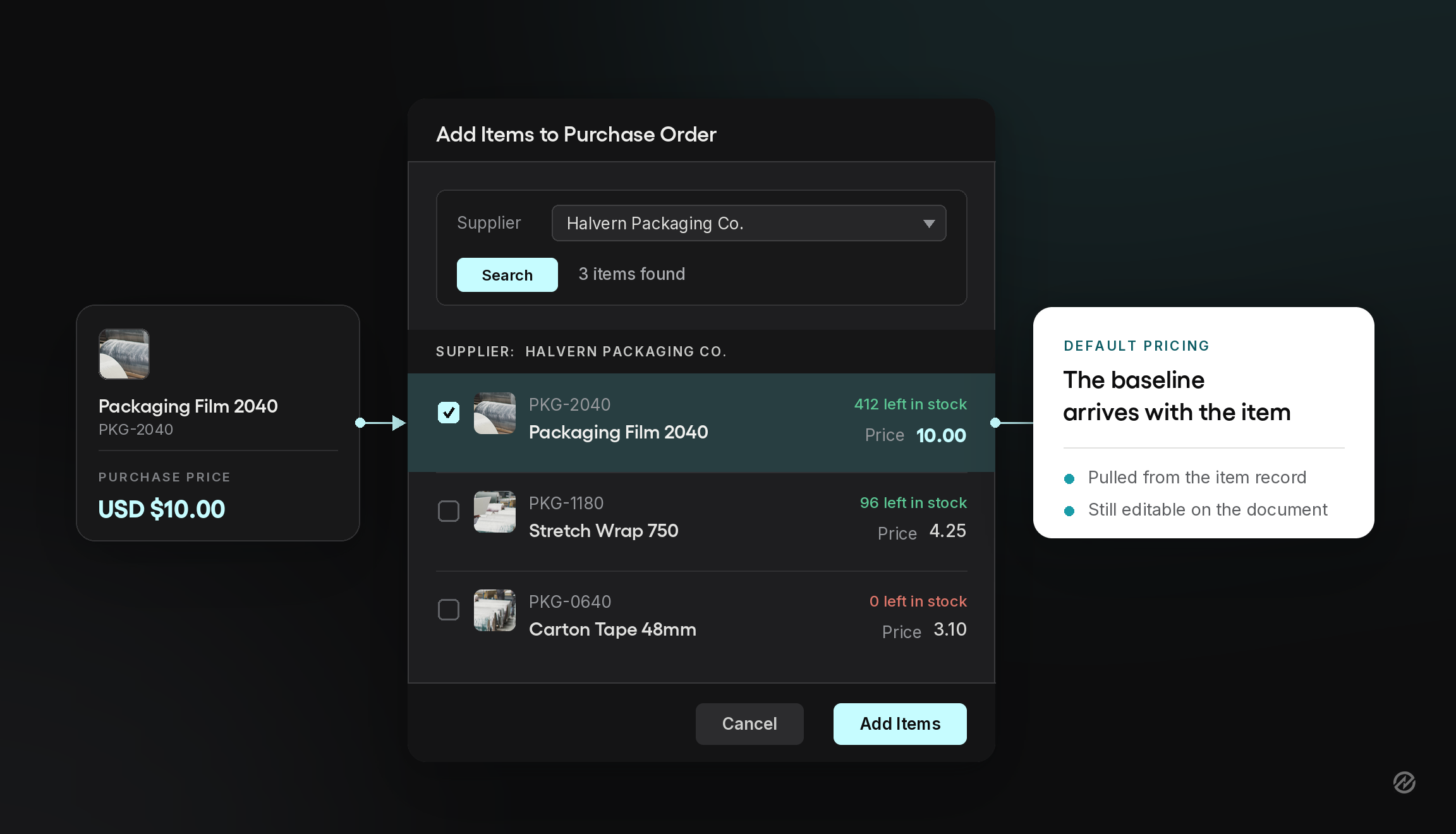
It auto-populates on requisitions, purchase orders, and expenses, so the baseline appears in front of the person raising the request rather than in a report someone reads later. The price can still be changed on the document, which is the point: the field informs the decision instead of blocking it, and someone who overrides a $10.40 benchmark at least did so knowingly.
On a request for quotation (RFQ) or request for proposal (RFP), it calculates an internal Target Value for the sourcing event, visible only to your team, and the Purchase Price appears in the comparison table alongside incoming supplier offers as a reference point for how competitive each bid actually is.
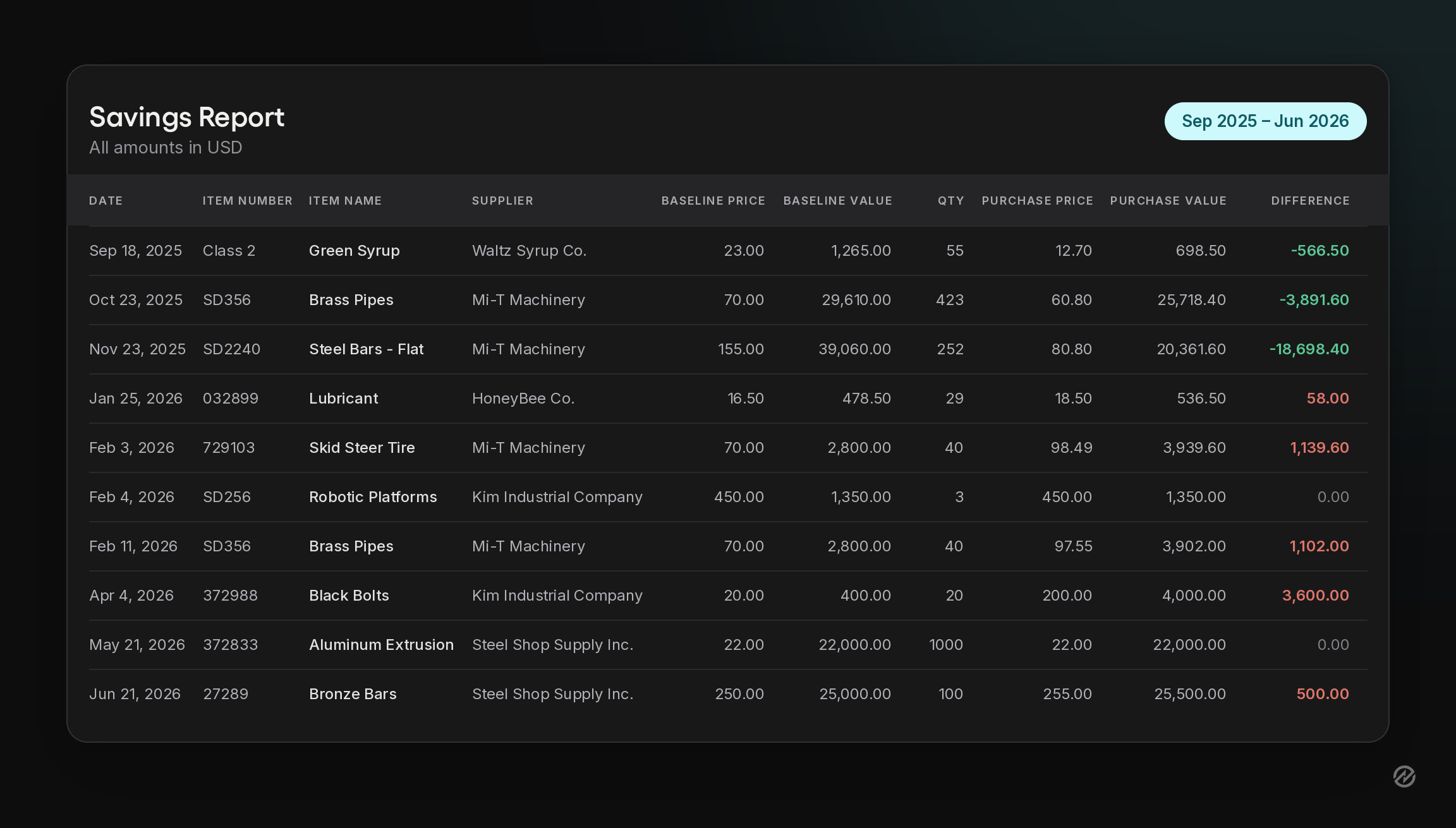
And it drives the Item Savings Report, which compares the purchase order price actually paid against the established Purchase Price and reports the difference as savings or overspend. That is a purchase price variance calculation, item by item, without a manual reconciliation. You can read more about how the Purchase Price field works in the Tradogram knowledge base.
Start with the baseline, not the buyer
A variance figure is a scoreboard, not a lever. Before you act on one, work out how much of it your buying created and how much your baseline created. Those questions have different answers, different owners, and only one of them can be resolved this quarter.
The reflex is to look at the supplier. Check the date on the expected price first. It's faster, it's free, and it's wrong often enough to be worth the two minutes.
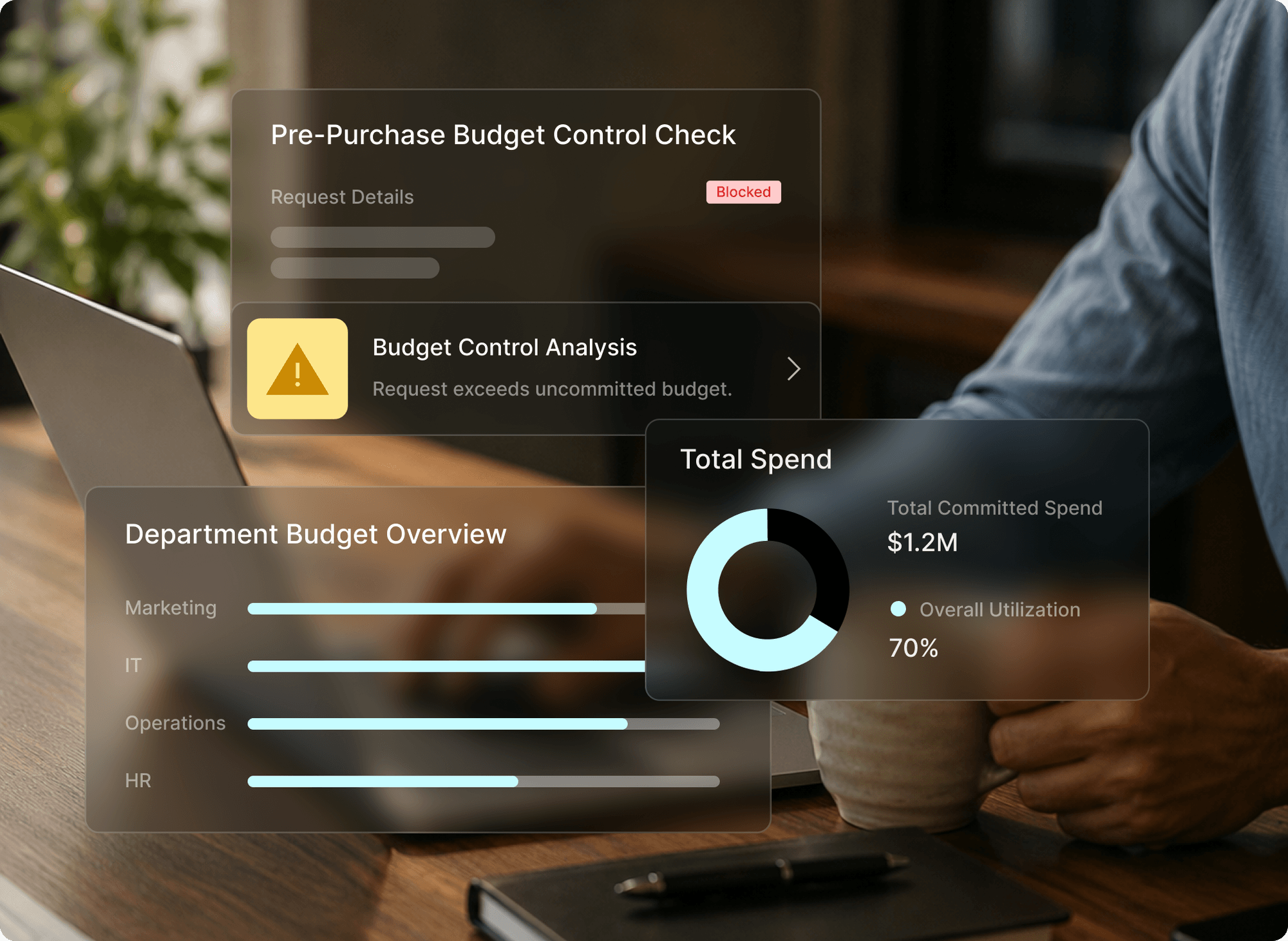
See how Tradogram compares what you paid against your benchmark price on every item in the Item Savings Report, so purchase price variance shows up as a number your team can act on rather than one you rebuild each quarter. Explore budget and spend control.