
An effective procurement process is vital to any organization, including primary schools and the higher education sector. However, this process can be more complex than it sounds, especially when using manual procurement practices. This is because the procurement of goods and services goes far beyond just purchases. There are numerous factors involved in successful, cost-effective procurement. That is why procurement professionals, like chief procurement officers, are typically hired to conduct these practices due to their in-depth expertise on the subject. Many industries in the public sector, including schools, face challenges that prevent them from implementing an efficient process of procurement in education. This blog is an evaluation of common challenges faced by the procurement department in educational institutions and some of the best practices to combat these issues.
1. Complying with countless regulations
Specific public procurement guidelines and legislations bind academic institutions throughout the world. Any procurement in the education industry needs to comply with these legislations and all their directives, which can be challenging to keep up with. When budgets and spending limits are introduced, this creates even more problems. According to the National Association of Educational Procurement (NAEP), the main goal for academic institutions in 2021 and the near future is to save money and improve their budgeting processes. For this, a strategic plan will need to be put into place.
2. Bad Spending Habits
NAEP estimates that approximately 91% of spending in educational institutions goes to the top 20% of vendors. This is because educators who double as purchasing managers will frequently purchase from the same vendors to save time and get back to teaching, but they may be missing suppliers with the best value. Another issue is maverick spending. During the procurement process, contracts are drawn up between stakeholders to help build a mutually profitable, long-term relationship. Maverick spending refers to purchasing or acquiring outside of those agreements. Effective contract management and supplier management make purchasing inputs simpler and more cohesive, but maverick spending results in higher costs and strained vendor relationships. An astounding 38% of purchases in academic institutions are made using pCards. Not only do they lead to a lack of cohesive sourcing approval processes, but it also means that internal organization is neglected, and spending becomes nearly impossible to track.
3. Poor Collaboration
Schools and higher education institutions also tend to spend in institutional silos instead of utilizing cross-departmental collaboration. This means even more paperwork to track, and it increases the chance of spending waste. Institutional silos also include ‘turf’ wars where different departments fight for a share of limited budgets, personnel, and control.

How to solve these problems
Modern problems require modern solutions. So, the easiest way to solve challenges that come with traditional procurement methods is to implement procurement automation technology. Procurement software is the easiest way to organize your procurement process, and different packages offered by e-procurement suppliers suit various budgets. Digital Procurement Systems can help with:
- Supplier and Stakeholder Management
- Strategic Sourcing Management
- Budget and Contract Management
- Automated Approval Workflows
- Creating and approving purchase orders
- Inventory Tracking
- Improved collaboration
- Improved organization
- Improved Purchase Requisition Processes
- Improved Transparency
- Manage cost savings and budgets
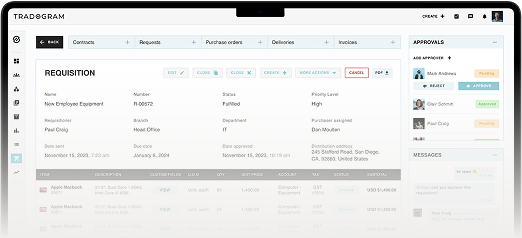
Typically, maverick spending results from organizations using overly complex or severely limited procurement tools that complicate the process too much. Using a centralized procurement system like Tradogram allows you to simplify your process of procurement in education and eliminate maverick spending. Tradogram comprehensive list of features and capabilities also allows you to set role-based user permissions, giving each employee a set task and pre-established permissions. Because users are assigned their roles in accordance with a purchasing workflow, they will only be able to see features enabled on their accounts. This eliminates clutter, safeguards specific data, and provides spend visibility. To try Tradogram today, register a free account. Alternatively, contact us for more information or schedule a live demonstration.