

Every dollar allocated to procurement should yield measurable value—yet many organizations find it challenging to quantify their purchasing team's financial impact. Understanding the procurement ROI formula can transform procurement from a mere cost center into a strategic driver of profitability, highlighting how purchasing decisions directly affect your bottom line.
Return on investment in procurement assesses the financial gains your organization achieves relative to your investment in the procurement function. By tracking the right metrics, you unlock insights that justify investments in technology, staff training, and process improvements. More importantly, you can pinpoint which procurement activities provide the highest returns and which consume resources without proportional benefit.
Importance of Calculating Procurement ROI
Without precise ROI measurement, procurement teams operate blindly—unable to justify budgets, optimize spending, or demonstrate strategic value to leadership. The roi formula transforms purchasing from a cost center into a quantifiable contributor to bottom-line performance.
Organizations that monitor procurement ROI gain three critical advantages: they identify which vendors and contracts yield genuine savings, they secure executive buy-in for process improvements, and they prioritize resources toward high-impact opportunities. According to Best Practices for Using a Procurement Software Effectively, companies with mature procurement analytics achieve 8-12% better cost outcomes than those relying solely on intuition.
Beyond cost savings, ROI calculations reveal hidden inefficiencies—delayed approvals, maverick spending, and supplier risks that undermine profitability. These insights enable data-driven negotiations and strategic sourcing decisions that enhance value over time, making avoiding common pitfalls essential for sustainable results.
How to Measure Procurement ROI?
Measuring procurement ROI involves comparing the financial gains from procurement activities against the total costs invested—a straightforward formula that reveals whether your purchasing function creates value or drains resources. The basic calculation divides net benefits by costs, then multiplies by 100 to express it as a percentage: (Net Benefits ÷ Total Costs) × 100.
For example, a company investing $50,000 in purchase-to-pay improvements and generating $150,000 in annual savings through reduced cycle times and error elimination yields a 200% ROI. This indicates that every dollar spent returns three dollars in value. The complete procurement process includes both direct savings (lower unit prices, volume discounts) and indirect benefits like faster processing and improved supplier relationships.
Accurate measurement depends on tracking the right inputs: total procurement costs include software subscriptions, staff salaries, training expenses, and operational overhead. Benefits encompass cost reductions, process efficiency gains, risk mitigation value, and supplier performance improvements—each quantifiable when properly documented.
Key Components of Procurement ROI
Understanding procurement ROI meaning extends beyond simple cost reduction—it encompasses the full spectrum of value created through strategic sourcing, supplier relationships, and process optimization.
The fundamental components break into two categories: benefits realized and costs invested. Benefits include hard savings (price reductions, contract renegotiations), soft savings (efficiency gains, risk mitigation), and cost avoidance (preventing price increases, minimizing stockouts). On the cost side, organizations must account for technology investments, staff salaries, training expenses, and operational overhead. According to procurement performance research, businesses that track these components systematically achieve 15-20% higher ROI than those relying on intuition alone.
However, not all benefits carry equal weight in ROI calculations. Hard savings directly impact the bottom line and remain easiest to quantify—a 10% price reduction on office supplies translates immediately to budget relief. Soft savings prove more elusive: How do you value three hours saved weekly through automated purchase orders? One practical approach is converting time savings into labor cost equivalents, though this requires careful documentation to avoid inflating results.
The accuracy of tracking procurement metrics directly determines ROI reliability. Organizations that segment costs by category (direct materials, indirect spend, services) and attribute savings to specific initiatives build more credible business cases. This granular visibility becomes essential when justifying future investments or defending procurement budgets during economic downturns.
Spend Analysis
Comprehensive spend analysis transforms raw procurement data into actionable intelligence by revealing exactly where money flows within your organization. This systematic examination of purchasing patterns tracks every dollar spent across categories, suppliers, and departments—creating the foundation for accurate ROI calculations. When organizations analyze spending trends over quarters or fiscal years, they can identify cost reduction opportunities that directly impact the bottom line.
Modern procurement performance indicators rely heavily on granular spend visibility to measure success. Organizations tracking spend by category typically uncover 8-15% in hidden savings opportunities—amounts that dramatically improve ROI calculations when redirected through strategic sourcing initiatives. However, spend analysis extends beyond simple cost tracking; it reveals supplier concentration risks, maverick spending patterns, and contract compliance gaps that erode value over time.
The transition from manual spreadsheets to automated spend analysis tools marks a pivotal shift in procurement maturity—one that naturally leads to more sophisticated process improvements throughout the organization.
Approval Workflows and Team Productivity
Streamlined approval workflows directly impact procurement ROI by eliminating bottlenecks that delay purchases and frustrate teams. Organizations relying on manual approval processes—emails, paper forms, or spreadsheet tracking—typically experience approval cycles lasting 5-10 days for routine purchases. This delay cascades into higher carrying costs, missed early payment discounts, and reduced team productivity as procurement professionals chase signatures rather than focusing on strategic sourcing.
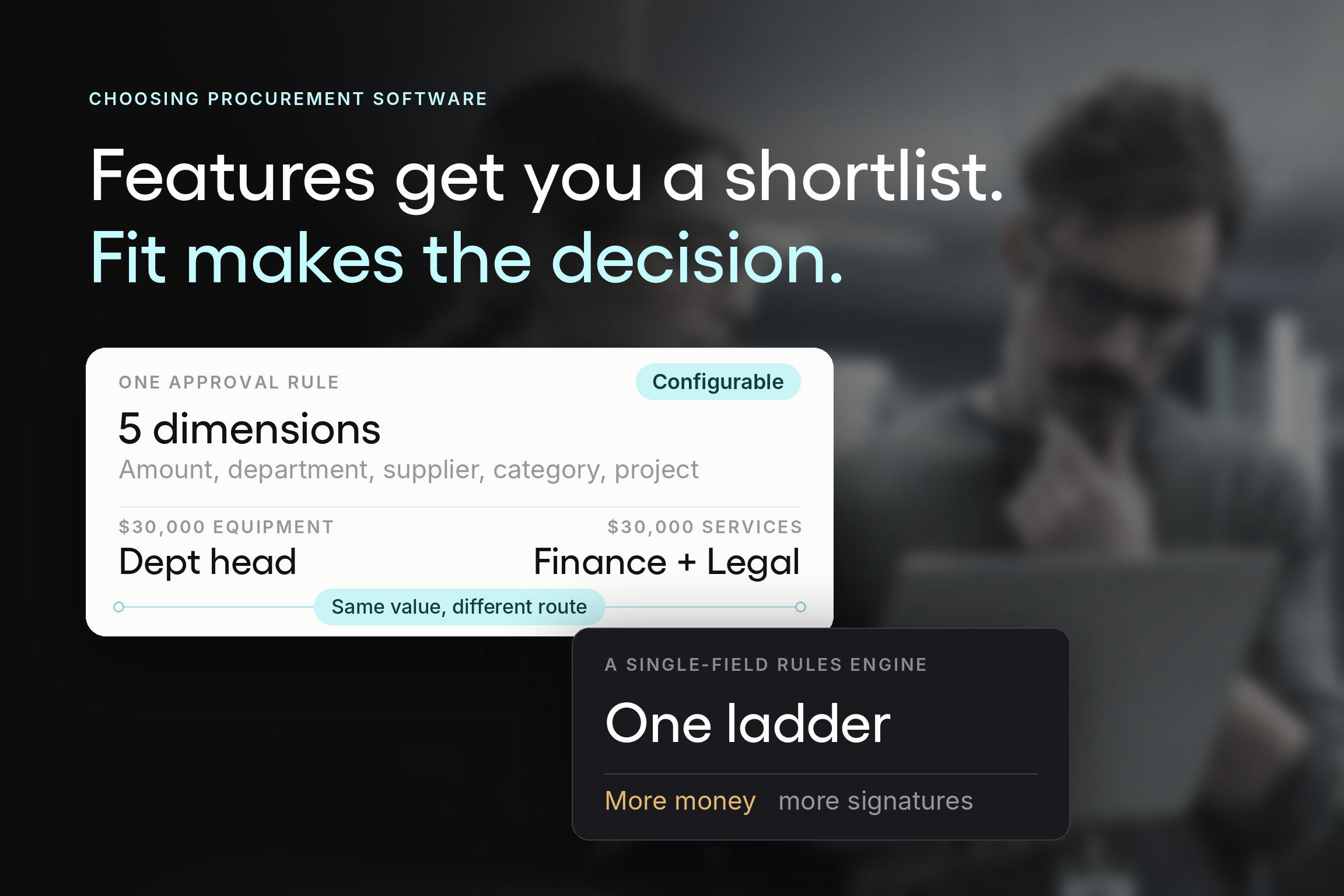
Automated approval workflows transform this dynamic by routing requests based on predefined rules: purchase amount, category type, or department budget authority. The productivity gains are substantial—teams can process 3-4 times more requisitions with the same headcount while maintaining compliance. A streamlined process also reduces errors; when approval paths are clear and automated, duplicate orders and unauthorized spending drop significantly.
Tracking workflow efficiency becomes essential for calculating ROI impact. Key metrics include average approval time, number of touchpoints per requisition, and percentage of requests approved on first submission. Many procurement teams maintain a procurement KPIs cheat sheet covering workflow metrics alongside traditional cost savings indicators. However, productivity gains often remain invisible without deliberate measurement—quantify hours saved, faster cycle times, and reduction in manual follow-ups.
The ROI extends beyond speed. Clear supplier management processes mean vendors receive purchase orders faster, strengthening relationships and improving delivery reliability. What typically happens is improved approval efficiency creates a ripple effect: faster procurement cycles, better supplier performance, and teams freed to focus on value-adding activities rather than administrative tasks.
Technology
Modern procurement software directly amplifies procurement performance by automating manual tasks, reducing errors, and providing real-time visibility into spending patterns. Organizations replacing spreadsheets and email chains with dedicated platforms typically see 30-40% faster approval cycles and measurably better vendor compliance. The right technology stack transforms procurement from a cost center into a strategic function that delivers consistent, trackable returns across every purchase cycle.
However, technology alone doesn't guarantee ROI—implementation quality matters significantly. Procurement mistakes to avoid include deploying systems without proper training or trying to force workflows into rigid software configurations. What typically happens is that teams either abandon the new system or create workarounds that negate efficiency gains.
When calculating technology's ROI contribution, compare the sum of subscription costs, implementation expenses, and training hours against quantifiable benefits: reduced processing time, fewer maverick purchases, improved contract compliance rates, and lower administrative overhead. Organizations that approach software selection strategically—matching features to actual workflow needs rather than chasing feature lists—consistently achieve payback within 12-18 months while building the foundation for faster cycle times ahead.
Procure-to-Pay Cycle Time
The procure-to-pay cycle time measures the duration from purchase requisition to final payment, serving as a critical procurement KRA that reveals operational efficiency. Organizations tracking this metric discover bottlenecks that inflate costs and delay project timelines.
A typical P2P cycle involves requisition approval, vendor selection, purchase order creation, goods receipt, invoice processing, and payment execution. Each step adds time—and reducing unnecessary delays directly improves cash flow management while strengthening vendor relationships. When payments arrive consistently on time, suppliers often offer better terms and prioritize your orders during high-demand periods.
To calculate cycle time, track the average number of days between requisition submission and payment completion. Organizations with automated workflows typically achieve 5-7 day cycles, while manual processes stretch to 15-30 days. Reducing cycle time by just 10 days can unlock significant working capital, particularly for organizations processing hundreds of purchase orders monthly.
Sourcing Cycle Time
Sourcing cycle time tracks the duration from identifying a need to selecting and onboarding a supplier, revealing how efficiently procurement teams execute strategic supplier decisions. This metric directly impacts procurement performance management by showing whether organizations can quickly capitalize on market opportunities or remain trapped in prolonged evaluation cycles. Organizations with streamlined sourcing processes typically complete full cycles in 30-60 days, while complex categories may extend to 90-120 days depending on requirements and supplier availability.
Reducing sourcing cycle time without compromising supplier quality creates competitive advantages through faster time-to-market and improved responsiveness to business demands. Organizations achieve this balance by implementing structured supplier evaluation frameworks that standardize supplier assessments while maintaining thoroughness, and by maintaining pre-qualified supplier pools for common categories.
Compliance Rate
Compliance rate measures the percentage of procurement transactions that follow established policies, procedures, and approval workflows, directly impacting risk management and cost control. A low compliance rate often signals maverick spending—purchases made outside approved channels that bypass negotiated contracts and preferred suppliers. When procurement teams track this metric in an ROI calculator, they can quantify the financial impact of non-compliant purchases, which typically cost 15-20% more than contracted rates according to procurement compliance research.
Calculate compliance rate by dividing compliant transactions by total transactions, then multiplying by 100. However, what typically happens is that organizations discover hidden non-compliance when they implement automated approval workflows and spend tracking. The gap between perceived and actual compliance often reveals significant savings opportunities through better policy enforcement and user training on procurement systems.
Supplier Lead Time
Supplier lead time measures the duration between placing a purchase order and receiving deliverable goods or services, serving as a critical indicator of supply chain responsiveness and operational planning accuracy. Understanding this metric is essential when calculating procurement ROI, as lead time directly affects inventory carrying costs, production schedules, and customer satisfaction levels.
Lengthy lead times often signal the need to explore additional suppliers or negotiate improved delivery terms. According to Procurement Metrics That Every Business Should Track, consistent monitoring of supplier performance helps identify bottlenecks before they escalate into costly production delays or stockouts.
This metric becomes particularly valuable for construction projects where material delivery timing can significantly impact project timelines and labor costs. The relationship between lead time predictability and overall procurement efficiency reveals opportunities to optimize working capital through better demand forecasting and supplier coordination. Shorter, more reliable lead times reduce safety stock requirements while improving cash flow—both of which directly enhance your bottom-line ROI.
Supplier Defect Rate
Supplier defect rate tracks the percentage of received goods or services that fail to meet quality specifications, representing a critical factor when calculating procurement ROI. This metric directly affects your bottom line through warranty claims, product returns, production delays, and customer satisfaction issues.
To calculate supplier defect rate, divide the number of defective units by total units received, then multiply by 100. A supplier consistently delivering defect rates above 2-3% typically signals quality control problems that warrant immediate attention or supplier replacement. Procurement Metrics That Every Business Should Track emphasizes monitoring this data to identify patterns before they escalate into costly disruptions.
Organizations managing technology procurement face particularly steep consequences from defective components—a single faulty part can halt entire production lines or compromise final product integrity. What typically happens is that companies underestimate hidden costs: rework labor, expedited shipping for replacements, and damaged customer relationships often exceed the original purchase price by 300-500%.
However, defect rate analysis shouldn't automatically trigger supplier termination. Look deeper at root causes—miscommunication about specifications, inadequate inspection protocols, or unrealistic pricing pressures often contribute to quality issues. Strategic suppliers demonstrating consistent improvement trajectories can become valuable long-term partners when given constructive feedback and fair pricing that supports quality investments.
Vendor Availability
Vendor availability measures a supplier's capacity to fulfill orders consistently and respond to demand fluctuations, directly impacting procurement continuity and total cost calculations. When preferred vendors cannot meet order requirements—whether due to capacity constraints, geographic limitations, or resource shortages—procurement teams face forced decisions that erode ROI. Organizations often resort to expedited shipping, premium pricing from secondary suppliers, or production delays that cascade through operations.
A practical approach is tracking vendor response rates during peak demand periods and supply chain disruptions. Companies with diverse supplier portfolios typically maintain 15-20% higher operational continuity during market volatility compared to those dependent on single-source relationships. However, balancing supplier diversity against relationship depth requires careful evaluation—spreading orders too thin can diminish negotiating leverage and increase administrative overhead.
Vendor availability directly influences the total cost of procurement beyond unit pricing. Last-minute sourcing alternatives frequently carry 25-40% price premiums, while production stoppages from unavailable materials create exponentially larger losses. Strategic procurement teams evaluate not just current availability, but projected capacity under various demand scenarios, establishing backup arrangements before supply constraints emerge.
Calculate Procurement ROI using our software
Procurement software transforms ROI calculations from manual spreadsheet exercises into automated, real-time analytics. Modern platforms continuously track both hard and soft costs while measuring efficiency gains across the entire procurement lifecycle.
When evaluating an ROI example, procurement technology captures baseline metrics before implementation—such as average purchase order cycle time, supplier onboarding duration, and manual processing hours—then measures improvements post-deployment. This data-driven approach eliminates guesswork and provides concrete evidence of value creation.
The software automatically aggregates cost savings from negotiated contracts, volume discounts, and supplier consolidation while simultaneously tracking reduced labor hours, eliminated duplicate orders, and faster approval workflows. Real-time dashboards display procurement ROI metrics alongside trend analysis, helping teams identify which strategies deliver the strongest returns and where optimization opportunities exist.
However, technology alone doesn't guarantee results. Organizations must establish clear baseline measurements, define success metrics aligned with business objectives, and ensure team adoption through proper training. The transition from manual to automated ROI tracking often reveals hidden inefficiencies—like maverick spending or redundant vendor relationships—that significantly impact the bottom line but remain invisible in traditional processes.
Common Challenges in Calculating Procurement ROI
Despite understanding the roi meaning and basic calculation methods, procurement teams face significant hurdles when measuring actual returns. Data fragmentation remains the most common obstacle, as cost information often lives across disconnected systems—ERP platforms, invoicing tools, contract repositories, and vendor databases. This fragmentation makes comprehensive cost tracking nearly impossible without extensive manual consolidation.
Attribution complexity creates another substantial barrier. When multiple initiatives run simultaneously, isolating which improvements stem from procurement versus operational changes becomes unclear. For instance, reduced product defects might result from better vendor selection, improved quality control processes, or enhanced manufacturing techniques. Procurement mistakes like failing to establish clear baseline metrics compound this challenge, making before-and-after comparisons unreliable.
Intangible benefits prove particularly difficult to quantify. Risk mitigation, supplier relationship improvements, and brand reputation enhancements deliver substantial value yet resist traditional monetary measurement. A common pattern is teams focusing exclusively on hard cost savings because they're easier to document, systematically undervaluing strategic procurement contributions.
Time lag between implementation and measurable results further complicates ROI calculations. Supplier development programs or process improvements may require 12-18 months before delivering quantifiable returns, while finance teams expect quarterly performance justification. This disconnect creates pressure to demonstrate immediate results that don't yet exist.
Steps on Calculating Procurement ROI
Breaking down ROI calculation into systematic steps transforms complex financial analysis into manageable tasks. The process begins with defining your measurement period—typically quarterly or annually—and establishing baseline metrics before any procurement initiatives. Start by identifying all costs associated with procurement activities, including software licensing, labor hours, training, and implementation expenses.
Next, quantify your financial gains systematically. Document hard savings like negotiated price reductions and volume discounts first, as these appear directly on invoices. Then calculate soft savings such as reduced processing time, improved compliance rates, and lower error frequencies. Track percentage improvements in cycle times—a 30% reduction in purchase order processing directly translates to labor cost savings.
Finally, apply the standard formula: subtract total procurement costs from total gains, divide by costs, and multiply by 100. However, the calculation doesn't end there. Compare results across different categories, suppliers, and time periods to identify trends. This comparative analysis reveals which procurement strategies deliver the strongest returns and where adjustments may be needed to optimize performance going forward.
Align Metrics
Successful ROI measurement requires synchronizing procurement metrics with broader organizational objectives. When your procurement KPIs directly support company-wide goals—whether revenue growth, cost reduction, or operational efficiency—you create meaningful connections between departmental performance and business outcomes. This alignment ensures that stakeholders understand how procurement contributions translate into strategic value rather than viewing them as isolated cost center activities.
Start by mapping each tracked metric to specific business priorities. For example, if your organization prioritizes cash flow management, emphasize metrics like payment terms optimization and early payment discount capture. If innovation drives your strategy, focus on supplier collaboration metrics and new product introduction timelines. What typically happens is that misaligned metrics generate impressive-looking reports that executives ignore because they don't answer their priority questions—a common pattern that undermines procurement's credibility and resource allocation.
Review your metric framework quarterly to ensure continued relevance. Business priorities shift, market conditions change, and procurement's role evolves. Metrics perfectly aligned today may become irrelevant tomorrow. This systematic review process helps maintain stakeholder engagement and positions your ROI calculations as dynamic business intelligence rather than static historical reporting, setting the foundation for consistent communication that drives decision-making.
Communicate Results Consistently
Regular reporting transforms procurement ROI from abstract calculations into actionable intelligence that drives organizational change. When stakeholders receive consistent updates on procurement performance, they develop confidence in the data and become invested in continuous improvement initiatives.
Establishing a standardized reporting cadence—whether monthly, quarterly, or aligned with business cycles—ensures everyone stays informed about procurement's financial impact. These updates should present ROI metrics in formats tailored to different audiences: executives need high-level dashboards showing cost savings and efficiency gains, while operational teams require
Maximize Procurement ROI with Tradogram
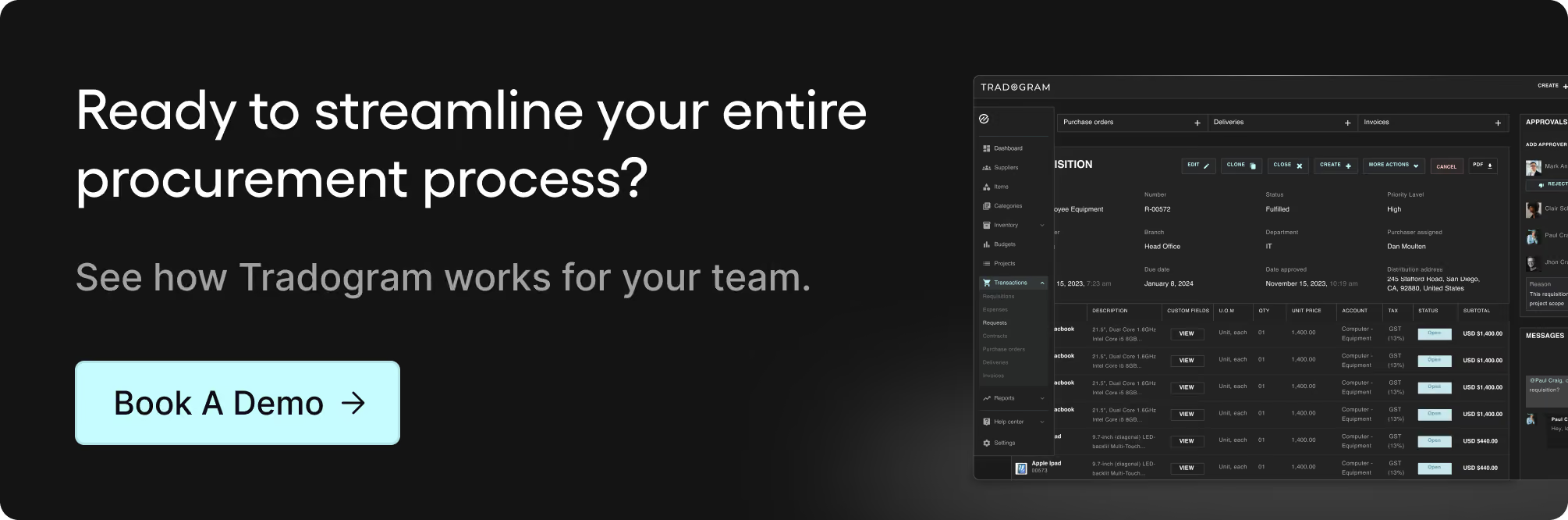
If you are looking for the best e-procurement solution to manage your procurement and maximize ROI efficiently, then you are in the right place. Tradogram is an all-in-one procurement platform that comes in handy with all the features necessary to scale.
The platform offers features for automating procurement processes, managing inventory, tracking and managing supplier relationships, and gaining 100% spend visibility. To find out more about how Tradogram can help your procurement department get more returns on investments, schedule a demo with us.