
In today’s fast-paced business environment, data is a key driver of success—and procurement is no exception. Real-time data in procurement offers a range of benefits, driving higher ROI and supporting business growth.
In this article, we’ll explore the significance of real-time data in procurement and how it can enhance your procurement process. Let’s dive in!
What is Real-Time Data?
Before diving further into the article, let’s clarify the definitions. So, what is real-time data?
Real-time data refers to information that is collected, processed, and delivered instantly, providing up-to-the-minute insights without delays. Unlike traditional data, which is updated periodically, real-time data ensures that procurement teams have the most accurate and current information available for decision-making.
That is what makes real-time data a necessary and valuable tool in the arsenal of any procurement team. In a fast-paced business environment, up-to-date data is essential for making informed decisions quickly.
Benefits of Real-Time Data in Procurement
Now that we understand what real-time data is, let’s look at the key benefits it brings to procurement.
Enhanced Decision-Making
Real-time data empowers procurement teams to make faster, more informed decisions. In a nutshell, real-time procurement data will provide you with:
- Up-to-date insights that help you make quick decisions.
- Accurate demand forecasting to minimize overstock and stockouts by responding to sales trends in real-time.
- Market trend analysis to adjust strategies based on supplier changes, price fluctuations, and demand shifts.
For example, a procurement manager in the fashion industry can use real-time data to track fabric trends and adjust purchasing decisions to meet rising demand, ensuring they stay ahead of market trends.
Improved Supply Chain Visibility
Real-time procurement data also contributes to improved supply chain visibility by providing:
- Real-time inventory tracking, helping to prevent stock shortages or excess inventory.
- Instant supplier updates to address delays, quality issues, or changes in delivery schedules.
- Proactive identification of bottlenecks, ensuring that issues are addressed before they disrupt production.
For instance, if a shipment is delayed, real-time alerts allow you to quickly find a backup supplier, preventing production delays.
Increased Cost Efficiency
Real-time data enables procurement teams to improve cost efficiency by:
- Instant access to price changes, allowing for better negotiations with suppliers when market conditions shift.
- Reduction of waste through accurate demand planning, avoiding over-purchasing.
- Improved spend analysis that highlights opportunities for cost savings.
For example, if fuel prices drop unexpectedly, real-time data allows logistics companies to purchase fuel in bulk, saving on transportation costs for the upcoming quarter.

Improved Supplier Collaboration
Real-time data fosters better communication and collaboration with suppliers, leading to:
- Shared data that streamlines communication, reducing misunderstandings and delays.
- Automated order updates, enabling quick adjustments to purchase orders and enhancing flexibility.
- Transparency in supplier performance, which builds accountability and strengthens partnerships.
A strong supplier relationship is crucial for success. For example, if you need to meet urgent demand, a supplier who is kept in the loop with real-time data will be more likely to adjust delivery schedules to meet your needs.
Better Risk Mitigation
Real-time data also plays a crucial role in mitigating procurement risks by:
- Detecting irregularities in transactions, reducing the chances of fraud or errors.
- Monitoring compliance to ensure procurement activities align with industry and regulatory standards.
- Real-time risk assessments that identify vulnerabilities in the supply chain, allowing for swift corrective actions.
For instance, if a shipment fails to meet safety standards, real-time data allows you to stop the order from being processed, preventing costly recalls.
Enhanced Forecasting and Accuracy
Real-time procurement data will also help to enhance forecasting accuracy. Essentially, it will facilitate the following:
- Data-driven trend analysis that helps forecast demand, reducing the risk of stockouts or overstocking.
- Aligning procurement with market fluctuations, improving budgeting and planning.
- Scenario analysis using real-time data to anticipate potential supply chain challenges.
Leverage Real-Time Procurement Data with Tradogram
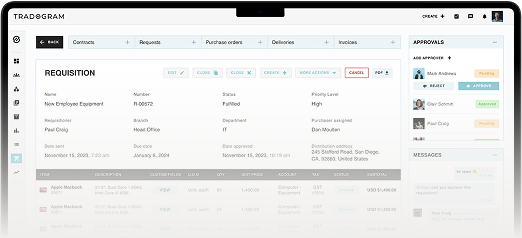
Looking for the best way to access and leverage real-time procurement data? Tradogram is an all-in-one procurement solution that helps you track, analyze, and use real-time data effectively.
Tradogram’s robust spend analysis tools can help eliminate unplanned expenses, uncover hidden costs, and drive cost savings that positively impact your bottom line.
To learn more about how Tradogram can help optimize your procurement process, contact us today. Our team is ready to assist you in growing your business.