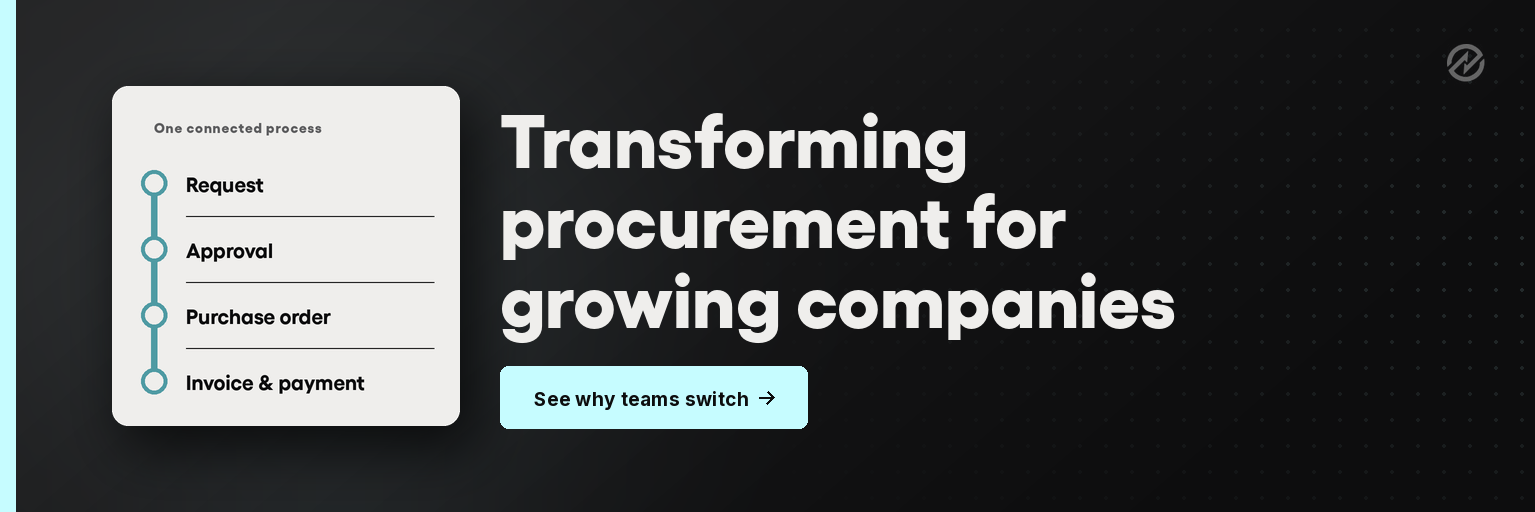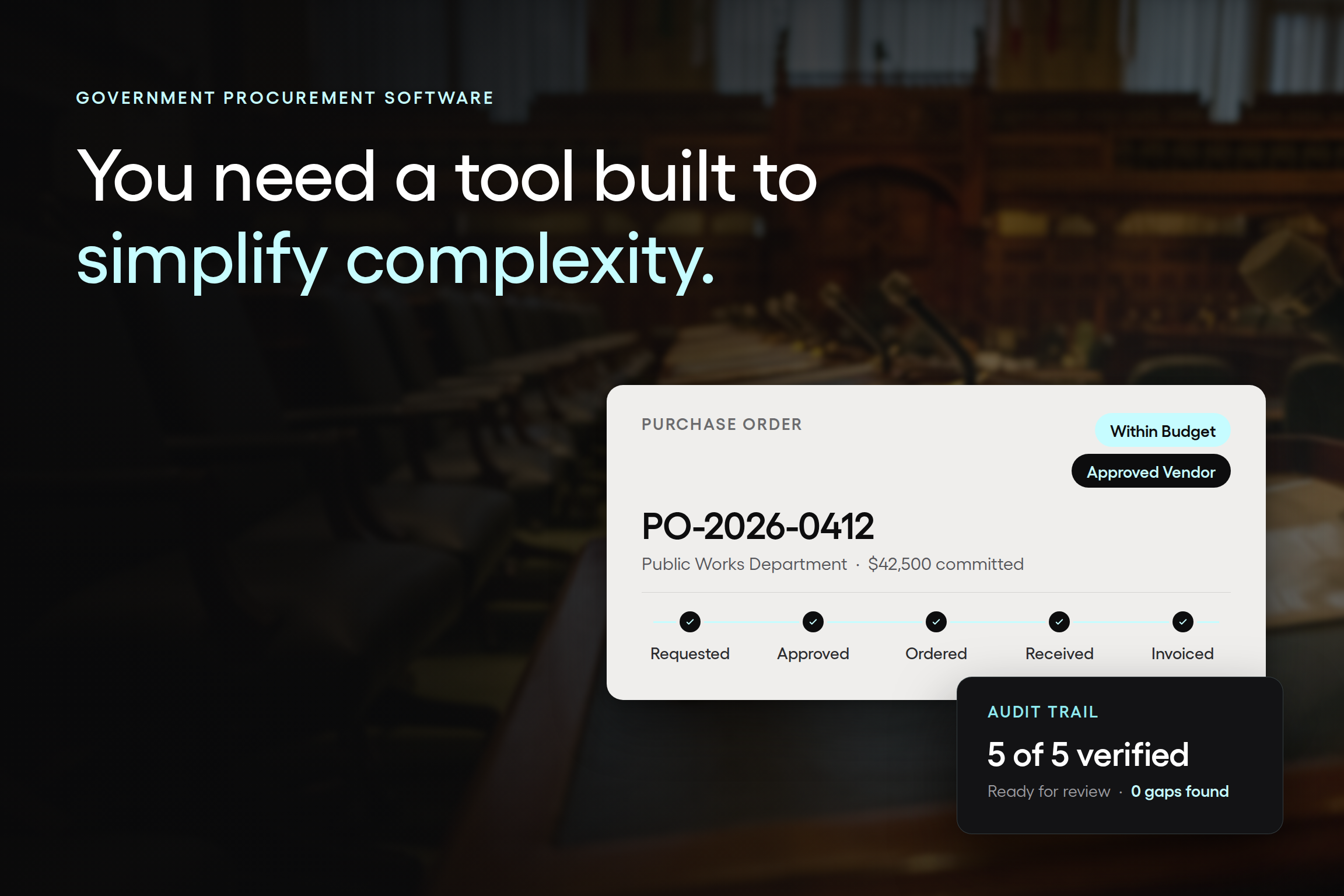

Most organizations already have a procurement process. It just isn't written down anywhere, and it changes depending on who's doing the buying.
That holds up until it doesn't. A request sits in someone's inbox for a week because no one agrees on who signs off on purchases over $5,000. A department orders from a supplier that most departments stopped using last year. An invoice arrives for goods nobody remembers receiving, and accounts payable loses an afternoon working out whether to pay it. None of these are dramatic failures. They're the ordinary running costs of a process that lives in people's heads rather than in a documented workflow.
The fix isn't more control for its own sake. It's knowing what each stage of the procurement process is meant to produce, who owns it, and what has to be settled before the work moves forward. Once that's clear, most of the delays turn out to be structural rather than functional.
This guide walks through all nine steps, grouped into the three stages of the procurement cycle: sourcing, purchasing, and payment. You'll see what happens at each step, who's involved, where the process typically stalls, and how it must change as an organization adds departments, locations, or subsidiaries.
What is the procurement process?
The procurement process is the sequence of steps an organization follows to identify a need, choose a supplier, order goods or services, receive them, approve the invoice, and pay. It runs from the first recognition that something is required through to a closed, documented transaction.
The first section and the final stretch are what separate procurement from purchasing. Purchasing covers the transactional work of buying, from placing the order through to paying for it. The procurement process starts a step earlier, with the decision about what is needed and who should supply it, and it closes only once the transaction is documented, because the organization must be able to show what was ordered, what arrived, what it cost, and who approved it.
Procurement is also a business function, not only a process. The function covers the people, policies, and systems involved in buying. The process is the repeatable path a single purchase follows through them. Much of the confusion around this topic stems from writing that uses the two terms interchangeably.
The scope is broader than most teams expect when they first sit down to document it. A complete procurement process covers:
- identifying and specifying a business need
- raising and approving a purchase requisition
- researching and evaluating potential suppliers
- negotiating price, delivery schedules, and payment terms
- issuing a purchase order
- receiving and inspecting the goods or services
- matching the invoice against the order and the receiving record
- approving the invoice and releasing payment
- keeping records and reviewing supplier performance
Not every purchase runs through every step at full depth. A repeat order of office supplies from an approved supplier skips most of the sourcing work. A three-year contract for a manufacturing component uses all of it, plus a formal RFQ or bidding process. The steps stay the same. The rigor scales with the value and the risk of what you're buying.
One clarification worth noting, because it turns up constantly in procurement articles: the procurement process does not require competitive bidding. Competitive bidding is one sourcing method among several. It's typically mandatory in public-sector procurement and in organizations whose policies set a bid threshold. Private sector teams use it selectively, and treating it as a universal requirement is how procurement gets a reputation for slowing things down.
The three stages of the procurement cycle
The procurement cycle is the full path a purchase takes from identifying a need to closing the transaction, organized into three stages: sourcing, purchasing, and payment. Each stage ends with a document or a decision that the next stage depends on, which is why a gap in one stage tends to surface as a problem in the next one.
It's called a cycle rather than a sequence for a reason. The final stage produces information about what the supplier actually charged, whether they delivered on schedule, and whether what arrived matched the specification. That information is what should shape the next sourcing decision. Teams that treat procurement as a straight line from request to payment quietly discard it, then re-evaluate the same suppliers from scratch a year later using nothing but memory and the current price list.
Stage 1: Sourcing
Sourcing covers everything that happens before a commitment exists. The business need gets identified and specified, a purchase requisition is raised and approved internally, and potential suppliers are researched and compared.
The stage produces two things: internal permission to spend, and a shortlist of suppliers who can meet the requirement. Both matter. Skipping the first is how maverick spend starts. Skipping the second is how organizations end up with a supplier nobody evaluated and a price nobody benchmarked.
Sourcing is usually owned by the requesting department, in collaboration with the procurement team, with a budget owner or manager providing approval.
Stage 2: Purchasing
Purchasing turns the approved requirement into a commitment. Terms are negotiated, a purchase order is issued to the chosen supplier, and the goods or services are received and inspected against the order.
This is the stage where the organization's money becomes committed rather than merely planned, which is why the purchase order matters so much. It's the first document that ties a specific supplier, price, quantity, and delivery date together in a form both sides agreed to.
Ownership shifts here toward procurement and whoever physically receives the delivery, which in many organizations is a warehouse, site, or office manager rather than anyone in the procurement function.
Stage 3: Payment
Payment closes the transaction. The invoice is matched against the purchase order and the receiving record; discrepancies are resolved; the invoice is approved; payment is released; and the records are filed.
Accounts payable owns most of this stage, but they can only do it well if the previous two stages produced clean records. An invoice with no matching purchase order forces AP to reconstruct the purchase history from email or chat threads, which is where a meaningful share of month-end delays comes from.
Why different procurement guides count a different number of steps
You'll find procurement described as five stages in one article, seven in another, and nine in a third. The disagreement is about perception and presentation, not about the work. Everyone is describing the same path. The count changes depending on how finely you split it.
A five-step version usually merges need identification, requisition, and supplier selection into a single sourcing block. A nine-step version separates them because each one has a different owner and produces a different output.
For a written purchasing policy, the more granular version is more useful. If a step has its own owner, its own output, and its own point where the process can stall, it deserves to be named. That's why this guide uses nine.
The practical advice is simpler than the debate suggests: pick one count and use it everywhere, in your policy, your onboarding material, and your system configuration. Teams that describe the process one way in training and another way in practice create ambiguity exactly where they were trying to remove it.

The 9 steps of the procurement process
The nine steps below follow a single purchase from the moment someone recognizes a need through to a closed record. For each one, the useful question isn't just what happens. It's who owns it, what must be settled before the purchase can proceed, and where the process tends to stall when that thing isn't settled.
Step 1: Identify and specify the business need
The process starts when someone recognizes that the organization needs something it doesn't currently have. That might be a restock triggered by inventory management, a new project requirement, a failing piece of equipment, or a service contract coming up for renewal.
Recognizing the need is the easy part. Specifying it is where the work is. A request for "new laptops" tells procurement almost nothing. A request for twelve laptops with a defined specification, needed by a given date, for a named team, with a budget line attached, can actually be sourced.
Who's involved: the requesting department, usually with input from whoever owns the relevant budget.
Settle before moving on: what exactly is needed, how much, by when, and which budget it comes from.
Where it stalls: When requirements are vague, procurement has to send the request back for clarification; the requester interprets that as procurement being obstructive, and a week disappears. This is the single easiest step to fix, and the one most organizations skip, because the cost of doing it badly shows up two steps later where nobody connects it back.
Step 2: Raise and approve the purchase requisition
A purchase requisition is an internal request for permission to buy. It is not a purchase order, and confusing the two causes real problems. A requisition asks the organization; a purchase order tells the supplier. Nothing has been committed to anyone outside the business yet.
The requisition captures the specification, quantity, estimated cost, budget code, and any preferred supplier, then routes to whoever has authority to approve spend at that level. In most organizations, that authority is tiered, so a $500 request and a $50,000 request follow different paths.
Who's involved: the requester, then one or more approvers, typically a department manager, a budget owner, and finance above a defined threshold.
Settle before moving on: whether the spend is approved, and whether budget is actually available rather than merely allocated.
Where it stalls: Requests sit with approvers who are traveling, on leave, or simply unaware the request exists. Nobody knows who's holding it, so nobody chases it, and the delay only becomes visible when the requester escalates.
A purchase requisition system removes most of that by giving requesters a consistent form that collects the required information up front, so approvers aren't asking basic questions before they can decide. Configurable approval workflows then route each request automatically based on rules the organization sets, such as amount, department, location, or project. The practical effect is that purchasing policy is applied consistently every time, without anyone manually deciding where each request should go, and the request's current position is visible to the person waiting on it.
Ashesi University reduced purchase order processing from two to three business days to under two hours after digitizing this part of the process, alongside a reported 15% cost reduction.
Step 3: Research and evaluate potential suppliers
With internal approval in hand, procurement identifies who can meet the requirement. For a repeat purchase from an approved supplier, this step is brief. For a new category, a high-value contract, or a supplier the organization hasn't used before, the process involves market research, a formal request for quotation, and a structured comparison.
The comparison is where teams get sloppy. Price is easy to compare and rarely the whole picture. A defensible supplier evaluation weighs price against delivery reliability, quality and defect history, financial stability, capacity to scale with your volume, compliance and certification requirements, and the administrative workload the supplier creates for your team. Three quotes is a reasonable default for a significant purchase, but three quotes compared on price alone is worse than one supplier chosen deliberately.
Who's involved: procurement specialists, with technical input from the requesting department on anything with a specification they understand better than procurement does.
Settle before moving on: which supplier, on what evaluation criteria, and whether those criteria were recorded. If you can't explain the choice six months later, the process didn't work, regardless of the outcome.
Where it stalls: Suppliers respond on their own schedule, and without a stated deadline in the request, the process runs at the pace of the slowest respondent. Setting a response date in the RFQ and moving forward without late replies is normal practice, not rudeness.
For organizations that buy repeatedly in the same categories, this step is also where a maintained vendor management record starts to pay off. Evaluating a supplier once and keeping the results means the next purchase in that category starts from evidence rather than from scratch.

Step 4: Negotiate terms with the supplier
With a preferred supplier identified, the terms get settled. Price is the obvious one and usually the least negotiable, particularly with a large supplier and a small order. The pricing terms are where a mid-market buyer has more room than they expect.
Payment terms affect cash flow directly. Moving from payment on receipt to net 30 or net 45 changes how long the organization holds its own money, and suppliers will often concede on timing more readily than on unit price. Delivery schedules matter for anything that feeds production or a project deadline. For services, a service level agreement defines what "delivered" actually means, which is the difference between a disappointing supplier and a supplier you have grounds to hold to account.
Volume commitments, price validity periods, and what happens when something arrives damaged or late all belong in this conversation too. So does the question of how much administrative work the arrangement creates for your team, which rarely appears in a quote and consistently shows up in the true cost.
Whatever gets agreed needs to be in writing before anything is ordered. A verbal agreement on lead time is worth very little in the conversation that follows a missed delivery.
Who's involved: procurement leads, with finance weighing in on payment terms and legal review for higher-value or longer-term agreements.
Settle before moving on: unit price, payment terms, delivery schedule, what happens if delivery is late or quality is wrong, and how long the pricing holds.
Where it stalls: Procurement negotiates a deal, then discovers that the payment terms require finance sign-off or that the contract length exceeds their signing authority, and the agreement goes back into the queue. Knowing the limits before the conversation starts prevents most of it.
For agreements that renew, this is also the point at which the terms should be recorded, with a date attached. Contract management that keeps agreements, renewal dates, and pricing together prevents the common outcome of a contract auto-renewing on terms nobody has reviewed in three years.
Step 5: Issue the purchase order
The purchase order converts the approved requisition and the negotiated terms into an instruction to the supplier. It states what is being bought, in what quantity, at what price, on what delivery date, and under which terms, and it carries a unique number that every later document references.
This is the step where planned spend becomes committed spend, and that distinction matters more than most teams treat it. A department can look comfortably within budget while holding approved purchase orders that have not yet been invoiced. The money is gone; it just hasn't left yet. Organizations that track commitments alongside actuals gain a much more accurate view of their remaining budget.
The purchase order number is also what makes the rest of the process work. Receiving records reference it. Invoices reference it. Three-way matching in step 7 is only possible because it exists. A purchase made without one is a purchase that accounts payable will later have to reconstruct from memory and email.
Who's involved: procurement issues the order. Finance needs visibility of the commitment.
Settle before moving on: that the purchase order reflects what was actually negotiated, that it has been sent to and acknowledged by the supplier, and that the commitment is recorded against the correct budget.
Where it stalls: In organizations that rely on spreadsheets and email, the information from the requisition is retyped into the purchase order, introducing errors that surface during invoice matching weeks later, when the original context has faded.
Purchase order management software addresses that directly by generating the order from the approved requisition rather than from a blank form. Information is carried forward rather than retyped; the order remains linked to the request that authorized it, and the commitment is recorded against the budget when the order is issued rather than when the invoice arrives. Technical America reduced purchase order processing time from 2 to 8 hours to under 2 hours, with roughly 25% in purchasing cost savings reported.
Step 6: Receive and inspect the goods or services
When the delivery arrives, someone checks it against the purchase order. Quantity, specification, condition, and completeness. For services, the equivalent is confirming that the work was performed to the standard described in the agreement.
This step is routinely treated as a formality, and it's the one that quietly determines whether the payment stage goes smoothly. A short delivery that gets signed for without being counted becomes a discrepancy accounts payable discovers when the full invoice arrives, at which point resolving it means contacting a supplier about a shipment that landed a month ago. Damage found at the dock is a straightforward conversation. Damage found in week four is an argument.
The person doing the receiving is often not in the procurement function at all. It's a warehouse supervisor, a site manager, or whoever happened to be at reception. That's fine, provided they know what was ordered and have somewhere to record what actually arrived. Both of those conditions fail regularly.
Partial deliveries need particular care. Recording that six of twelve items arrived, with the balance outstanding, keeps the purchase order open and the expectation visible. Marking it received in full because most of it turned up creates a problem for someone else later.
Who's involved: whoever physically receives the delivery, with the requesting department confirming that what arrived meets the requirement.
Settle before moving on: what quantity was received, whether it matched the specification, whether anything was damaged or missing, and whether the supplier has been notified of any discrepancy.
Where it stalls: With the record. Not the inspection itself, but capturing the result somewhere accounts payable can find it. Verbal confirmation to a colleague is not a record of receipt.
For organizations holding stock, this step also feeds inventory management, since received goods update stock levels that step 1 of the next cycle depends on.
Step 7: Match the invoice against the order and receiving record
When the supplier's invoice arrives, accounts payable compares three records: the purchase order, the receiving record, and the invoice itself. This is three-way matching, and it exists to answer one question before money moves. Are we being billed for what we ordered and actually received at the price we agreed to?
Most discrepancies fall into a few categories. The unit price on the invoice doesn't match the purchase order. The quantity billed exceeds the quantity received. An invoice arrives without a purchase order, which usually means someone bought something outside the process. Each of these is cheap to resolve at this point and expensive to resolve after payment.
Not every difference needs to stop a payment. Most organizations set tolerance thresholds, so a variance of a few dollars or a small percentage passes automatically, while anything larger is routed to a person. Setting those thresholds sensibly matters. Too tight and accounts payable spends its week on rounding differences. Too loose and genuine overbilling passes unnoticed.
This step is also where procurement most directly meets its compliance obligations. Being able to show that a purchase was authorized, ordered, received, and billed consistently is what an auditor asks for, and in regulated sectors it's often a formal requirement rather than good practice. Ensuring compliance is far easier when records are connected as they are created rather than assembled afterward.
Who's involved: accounts payable, with procurement resolving purchase order discrepancies and the receiving location confirming what arrived.
Settle before moving on: that all three records agree, or that any discrepancy has been resolved with the supplier and the resolution documented.
Where it stalls: Missing receiving records. The invoice is there, the purchase order is there, and nobody wrote down what turned up. Accounts payable then spends time chasing a confirmation that should have taken thirty seconds at the loading dock.
Automated three-way matching removes most of that work by comparing the three records as soon as the invoice is captured, then routing only the exceptions to a person. Clean matches are processed without intervention, and the team's attention goes to the invoices that genuinely need a decision. Ohio Hills Health Services moved purchase order processing from more than five business days to a few minutes, reporting procurement costs down by more than 10%.
Step 8: Approve the invoice and release payment
With the records matched, the invoice goes for approval and payment is scheduled. The approval confirms that the verification in step 7 was completed and that the organization accepts the liability, which is why it should be signed by someone other than the person who raised the original request.
Payment timing is a genuine decision rather than an administrative default. The agreed terms set the outer boundary, and the organization chooses where inside that window to pay. Some suppliers offer a discount for early settlement, which is worth taking when cash position allows and worth declining when it doesn't. Paying late without agreement damages a supplier relationship that took real work to build, and in some jurisdictions it carries statutory interest. Paying everything on the day it arrives gives away cash-flow flexibility for nothing.
Invoice approval is also where a separate approval workflow usually becomes necessary. The approval authorizing the requisition in step 2 addressed a different question: whether to spend the money at all. This one confirms the spend happened as authorized. Organizations that collapse the two tend to discover that no one is verifying invoices because everyone assumes the earlier approval covered it.
Who's involved: accounts payable, an approver with authority at that value, and finance for payment scheduling.
Settle before moving on: that the approval is recorded against the invoice, that payment is scheduled within the agreed terms, and that the transaction is coded to the correct budget and cost center.
Where it stalls: Invoices sitting unapproved in an individual's queue while payment terms run down. The supplier chases, procurement fields the call, and the delay becomes visible only after it has already caused a problem.
Step 9: Record the transaction and review performance
The final step keeps the complete record and turns it into something useful. The requisition, approvals, purchase order, receiving record, invoice, and proof of payment belong together as a single, connected history of the purchase, retained for as long as your retention policy and any applicable regulatory requirements require.
That's the compliance half. The other half is what makes this a cycle rather than a queue.
Every completed purchase produces information worth keeping. Did the supplier deliver on the date they committed to? Was the invoice accurate the first time? How long did the whole thing take, from the requisition being raised to the order reaching the supplier? Purchase order cycle time is one of the few procurement measures that improves reliably once you start watching it, largely because the delays it exposes are usually structural and fixable rather than mysterious.
Reviewing procurement activities in aggregate also shows things a single transaction can't. Which categories consume the most administrative effort relative to their value. Which suppliers generate repeated discrepancies. Where spend is fragmented across several suppliers when consolidating would improve both price and workload.
Who's involved: procurement and finance, with accounts payable contributing invoice accuracy information.
Settle before moving on: that the records are complete and connected, and that anything learned about the supplier has been captured somewhere the next buyer will find it.
Where it stalls: Nothing stalls, which is precisely the problem. Nobody is waiting on step 9, so it gets skipped, and the organization repeats the same supplier selection next year with no more information than it had this year.
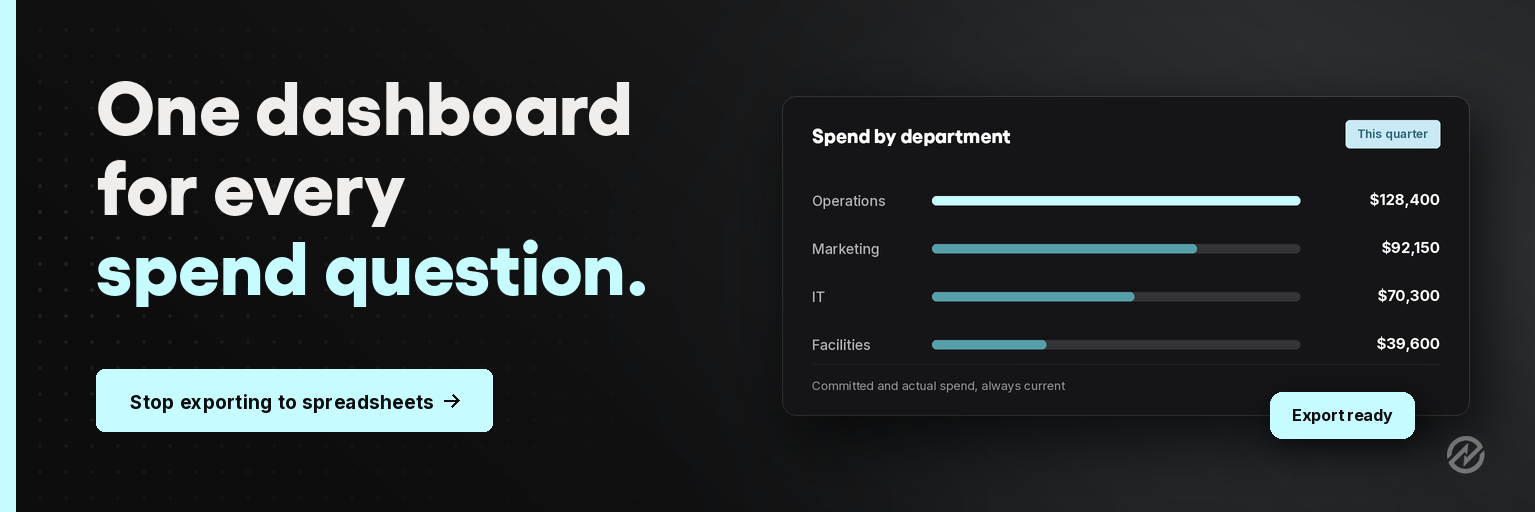
Procurement reporting makes this practical rather than aspirational. When requests, orders, receipts, and invoices are already connected in one system, cycle times, spend by category, and supplier performance can be read from records the team created while doing the work, instead of being assembled by hand from spreadsheets each quarter.
What happens after the cycle closes
The nine steps end with a paid invoice and a complete record. The relationship with the supplier doesn't end there, and neither does the work.
Most organizations buy from the same suppliers repeatedly. The sourcing effort in steps 1 through 3 is expensive precisely because it's thorough, which means the return on that effort comes from the second, fifth, and twentieth purchase rather than the first. Ongoing relationship management is what protects that return.
Reviewing supplier performance against what was agreed
A supplier review compares what the agreement promised against what actually happened. That's straightforward when the data was captured during the cycle and nearly impossible when it wasn't, which is the main practical argument for taking step 9 seriously.
Four measures cover most of what matters:
- Delivery reliability. What percentage of orders arrived complete and on the committed date? A supplier who is consistently three days late is a planning problem you can work around. A supplier whose lateness is unpredictable is one you cannot plan around at all, and the second is worse than the first, even if the average is better.
- Supplier quality. Defect and rejection rates, and how the supplier handles a rejection when it happens. Their response to a problem is more informative than the problem itself.
- Invoice accuracy. How often invoices matched the purchase order without intervention. Repeated discrepancies from one supplier are a real cost, paid in accounts payable time rather than in the price.
- Responsiveness. How quickly they answer questions, confirm orders, and resolve issues. Harder to measure, but immediately obvious to anyone who works with them.
The point of scoring suppliers isn't to build a league table. It's to make the conversation at renewal a discussion about evidence rather than impressions.
Deciding which relationships deserve investment
Not every supplier warrants the same attention. A stationery supplier and a sole-source component manufacturer occupy very different positions, and treating them identically wastes effort on one and underprotects the other.
A reasonable way to sort them is by what would happen if they stopped supplying tomorrow. Where a replacement is available within a week at a similar price, the relationship is transactional and should be managed efficiently rather than closely. Where switching would take months, require requalification, or interrupt production, the relationship is strategic, and it justifies regular review meetings, shared forecasts, and a genuine understanding of the supplier's own constraints and capabilities.
Strong supplier relationships pay back most visibly under pressure. When a supplier is allocating limited stock across their customers, or deciding who gets a shortened lead time on an urgent order, the customer who communicates clearly, pays on the agreed terms, and doesn't treat every conversation as a negotiation tends to get the better outcome. That's not sentiment; it's the supplier making a rational decision about which relationships are worth protecting.
Using supplier information to reduce risk
Reviewing suppliers systematically also surfaces exposure the organization might not have identified. Concentration is the common one: a single supplier accounting for a large share of a critical category, or several apparently distinct suppliers who turn out to depend on the same upstream source.
Supply chain disruptions rarely announce themselves in advance, but the organizations that handle them best are usually the ones that knew where their vulnerabilities were before anything went wrong. Knowing which categories have a qualified alternative supplier, and which don't, is the difference between a procurement problem and an operational crisis.
Risk mitigation at this stage is mostly unglamorous. Keeping certifications and insurance documents current. Knowing when contracts expire rather than discovering it at renewal. Maintaining a second qualified source for anything the business genuinely can't operate without. None of it is difficult, and all of it is easier to do continuously than to reconstruct under pressure.
Keeping supplier information somewhere it stays useful
The recurring failure here is that supplier knowledge lives with individuals. One person knows which contact actually responds, which of two similar suppliers is more reliable for short lead times, and why the organization stopped using a third supplier. When that person moves on, the next buyer starts from a price list.
Supplier management software addresses this by keeping supplier records, documents, contacts, and purchasing history in one place tied to actual transactions. Because performance information accumulates from orders the team is already processing, the next sourcing decision starts from a record of what happened rather than from someone's recollection. Manage vendor relationships this way for a year, and the supplier evaluation in step 3 becomes considerably faster and better informed.
The purchasing process, and where it sits inside procurement
The purchasing process is the transactional part of procurement. It covers selecting a supplier, placing the order, receiving the ordered items, and paying for them. If you've been asked to document your organization's purchasing process, you're usually being asked to write down steps 3 through 8 of the nine above.
That's the honest answer to a question people ask constantly. Purchasing and procurement are not synonyms, but they're also not two separate processes running in parallel. Purchasing is the part of the procurement lifecycle where money and goods actually change hands. Procurement is the wider function that decides what should be bought, from whom, on what terms, and whether the whole arrangement is working.
The stages of the purchasing process
Described in its own terms, rather than as a subset of something larger, the purchasing process runs like this:
- A purchase request is raised and approved. Someone identifies what's needed and gets internal authorization to buy it.
- Suppliers are researched and compared. Quotes are gathered and evaluated against price, reliability, and quality.
- Terms are negotiated. Price, payment terms, and delivery schedules are agreed and documented.
- The order is placed. A purchase order goes to the chosen supplier.
- Goods and services are received and checked. What arrived is verified against what was ordered.
- The invoice is approved and paid. Records are matched, payment is released, and the transaction is filed.
Six stages rather than nine, because the purchasing view starts with the request rather than the underlying business need, and ends with payment rather than a performance review. Same work, narrower frame.
Why the distinction matters in practice
This isn't a terminology debate. It changes what a team is accountable for.
An organization that thinks of itself as doing purchasing tends to measure speed and price. Orders placed, invoices processed, savings against list. Those are real measures and worth tracking, but they describe execution rather than judgment.
An organization doing procurement asks earlier questions. Should we be buying this at all, or is it already in inventory management? Is this the right supplier for the next three years, or just the cheapest one available this quarter? What happens to us if they fail? Those questions get asked before the transaction starts, which is the only point at which the answers can change anything.
Most mid-market organizations begin with purchasing and grow into procurement, usually when the volume of transactions makes it clear that no one has a complete picture of what the company is buying or from whom. That transition is the subject of the next section.
Where the purchasing process usually breaks down
Three failures account for most of the delay in a purchasing process that technically works:
Requests arriving incomplete. The purchase request doesn't contain enough information to act on, so it goes back, and each round trip costs days. Fixing this is a matter of form design rather than effort.
Approvals with no visible owner. A request is waiting on someone, and the person who submitted it doesn't know who it's waiting on. This is the most common single bottleneck in purchasing, and the reason approval workflow automation delivers such visible results relative to how simple it is.
Records that don't connect. The order lives in one place, the delivery note in another, the invoice in a third. Nothing is wrong with any individual record, but assembling them to answer a question takes an afternoon, so the questions stop being asked.
Each of these is a structural problem with a structural fix, which is genuinely good news. They're not caused by people being careless, and they don't get better through effort alone.
How the procurement process changes as an organization grows
The nine steps stay the same at every size. What changes is who performs them, how much of the process needs to be documented, and how the organization maintains a view of the entire procurement process when it's no longer happening in one place.
Most procurement problems described as growing pains are really this: a process designed for one set of conditions still running under a different set.
The stages an organization moves through
One person doing everything. In a small company, the same person often raises the request, chooses the supplier, places the order, and approves the invoice. The controls that matter here are minimal and mostly about record-keeping. Formalizing much beyond that costs more than it returns.
The signal that this stage is ending is usually the first genuine surprise. An invoice arrives that nobody recognizes, or two departments buy the same thing separately in the same month.
Separated duties. The first real control most organizations introduce is separating who requests from who approves, and separating both from who confirms the invoice. This isn't distrust. It's the basic structure that makes an audit trail meaningful, and it's what auditors look for first.
Approval thresholds also appear at this point. A tiered structure, where routine spending is approved locally and larger commitments are escalated, is more workable than a single rule for everything.
A defined procurement function. As transaction volume grows, procurement becomes someone's actual job rather than part of everyone's. Sourcing gets more deliberate, supplier records get maintained, and the organization starts asking category-level questions rather than transaction-level ones. Procurement managers and procurement specialists start to own parts of the process end-to-end.
Multiple entities. This is where the process changes most and where the most common design mistake happens.
The multi-entity problem
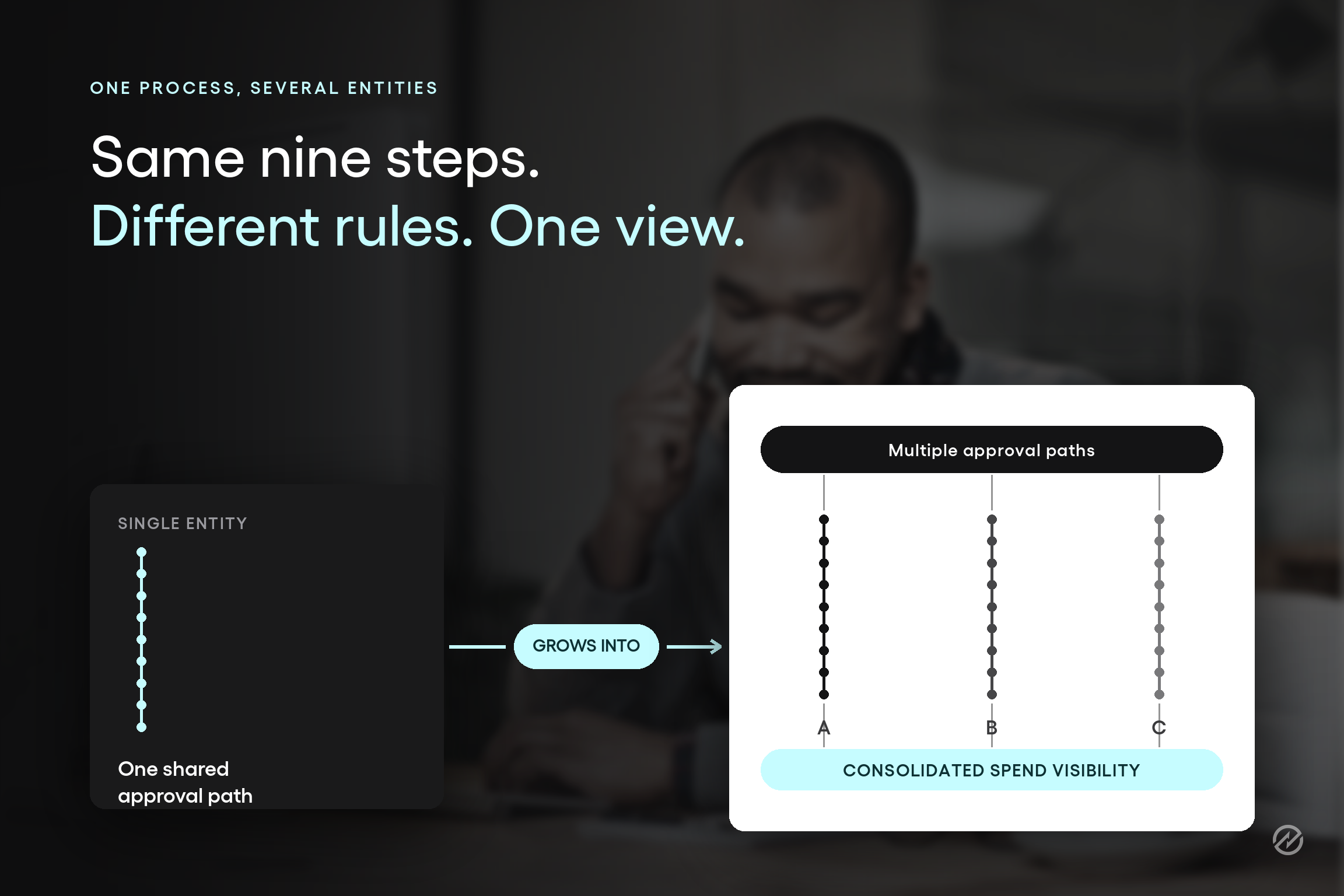
A single-location company can run all nine steps through one shared process. A parent company with several subsidiaries usually cannot, and trying to force it is where many procurement implementations go wrong.
Each subsidiary may work with different suppliers, operate under a separate budget, follow different approval thresholds, and, in some cases, be subject to entirely different regulatory requirements. A construction subsidiary and a services subsidiary of the same group have genuinely different purchasing needs. Imposing one identical process on both produces a process that fits neither, and people route around processes that don't fit.
At the same time, the parent organization needs consolidated visibility. Total spend by supplier across the group. Which entities are buying from the same vendor at different prices. Whether committed spend across all subsidiaries is tracking against the consolidated budget.
So the requirement is genuinely two-sided: the same nine steps, configured differently for each entity, reporting into a single consolidated view. Organizations that recognize this early design for it. Organizations that don't tend to build a single, rigid process watch subsidiaries work around it and end up with less visibility than they had before.
The practical test is a question worth asking before any procurement system is configured: if we acquire another entity next year, will our process extend to include it, or will it need to be rebuilt? If the honest answer is rebuilding, the design assumption is wrong now, not later.
What changes and what doesn't
Growth changes the mechanics, but it shouldn’t change the sequence.
A ten-person company and a five-hundred-person group both identify a need, authorize it, choose a supplier, order, receive, verify, pay, and record. The entire procurement lifecycle is the same shape. What scales is the number of people involved, the formality of each handoff, and the amount of information that has to be visible to someone who wasn't in the room.
That's the useful thing about treating procurement as a defined process rather than a set of habits. When the organization changes, you're adjusting parameters within a structure that already works, rather than inventing a new way of working under time pressure.
Where procurement becomes a strategic decision rather than an administrative one
At the point where procurement is managing meaningful spend across multiple departments or entities, its decisions start to affect things well beyond purchasing. Payment terms affect working capital. Supplier concentration affects operational risk. Category consolidation affects both cost and the amount of administrative work the organization carries.
This is where a chief procurement officer or an equivalent senior owner becomes justified, and where procurement stops reporting activity and starts contributing to strategic decision-making. The conversation shifts from how quickly orders were processed to whether the supply base supports the broader business goals the organization has set, and whether the operational efficiency gained in one area is being offset elsewhere.
How to implement or improve a procurement process
Most organizations aren't starting from nothing. They have a process that works unevenly, and the job is to make it consistent without stopping the purchasing that keeps the business running.
That constraint shapes the approach. A procurement process redesign that requires everyone to change everything at once tends to fail, not because the design was wrong but because the organization can't absorb it. The sequence below is ordered by what has to be true before the next thing can work.
Start by documenting what actually happens
Not what the policy says. What people do.
Take the last twenty purchases across different departments and trace each one. Who raised it, who approved it, how the supplier was chosen, whether a purchase order existed, how the invoice was verified. The gap between the documented process and the real one is where the opportunities for improvement lie, and it's usually wider than anyone expects.
This step is frequently skipped because it feels like overhead. It isn't. Redesigning a process you've only seen described is how organizations solve problems they don't have while leaving the real bottleneck untouched.
Fix approval thresholds before anything else
Approvals are the most common bottleneck in procurement, and thresholds are the cheapest lever available.
Two questions settle most of it. What value can each role approve without escalation? And who approves when that person is unavailable? The second question is the one organizations forget, and it accounts for a meaningful share of stalled requests.
Set thresholds high enough that routine purchases don't consume management's attention, and low enough that significant commitments receive a genuine review. If most requests require three approvals, the thresholds are wrong. If nothing ever escalates, they're wrong in the other direction.
Make the purchase request form do more work
An incomplete request generates a round trip, and each round trip costs days. Requiring specification, quantity, needed-by date, budget code, and business justification at submission means approvers can decide immediately rather than asking questions first.
This is the highest-return change relative to effort in the entire process, and it requires no software to begin.
Decide what triggers a purchase order
Some organizations issue a purchase order for every purchase. Others set a value threshold below which one isn't required. Either is defensible. What causes problems is having no rule, because accounts payable then receives invoices with no way to predict whether a matching order exists.
Whatever you decide, it needs to be written down and applied consistently. A no-PO-no-pay policy only works if the exceptions are defined in advance rather than negotiated each time.
Build the supplier list you actually want
An effective procurement strategy depends on knowing who you buy from. Most organizations discover, when they look, that they have more suppliers than they need, several of whom are used once a year for something another supplier could provide.
Consolidating where it makes sense reduces administrative work and improves your position on price. It also concentrates risk, which is why this exercise should identify reliable suppliers worth building on and categories where a second qualified source is worth maintaining. Effective procurement balances the two rather than optimizing only for cost.
Connect the records before adding tools
The single change that most improves procurement performance is ensuring that requests, orders, receiving records, and invoices reference each other. Every downstream capability depends on it: three-way matching, spend analysis, cycle-time measurement, and supplier performance review.
This can be done on paper. It's easier in software, but the discipline is what matters. An organization with connected records and a spreadsheet has better procurement information than one with a procurement platform and inconsistent data entry.
Introduce changes in an order people can absorb
Sequence matters more than speed. A workable order for most organizations:
- Standardize the purchase request form
- Fix approval thresholds and name deputies
- Establish the purchase order rule
- Connect receiving to orders and invoices
- Begin measuring cycle time and supplier performance
- Review and consolidate the supplier base
Each step makes the next one easier. Attempting five and six before one and two produces measurement of a process nobody follows consistently.
Where risk management fits
An effective procurement strategy accounts for what happens when something goes wrong, and this is the point in the improvement work where those provisions should be built into the process to help mitigate risks rather than handled on a case-by-case basis.
The main exposures are concentration in a single supplier for a critical category, contracts renewing without review, certifications lapsing unnoticed, and urgent purchases bypassing the process entirely. That last one deserves particular attention. Genuine emergencies happen, and a process with no expedited path invites people to work around it. The fix is an expedited route with reduced steps but retained authorization, not the absence of one.
Mitigating risks in procurement is mostly about making the exceptions visible. A process that quietly absorbs urgent purchases without recording them as exceptions can't tell you how often it's being bypassed, which is the number that matters.
Ensuring compliance without adding friction
Compliance requirements vary considerably by sector and jurisdiction, and organizations in regulated industries should confirm their specific obligations with their own advisors rather than relying on general guidance.
The general principle holds regardless: compliance is easier when it's a byproduct of the process rather than a separate activity. If authorization, ordering, receipt, and payment are recorded as they occur and linked to one another, producing an audit trail is a matter of retrieval. If they're not, it's a project.
Meeting regulatory requirements this way also costs the team almost nothing day-to-day, which is the difference between a control that holds and one that erodes the first time someone is under deadline pressure.

Procurement KPIs worth tracking
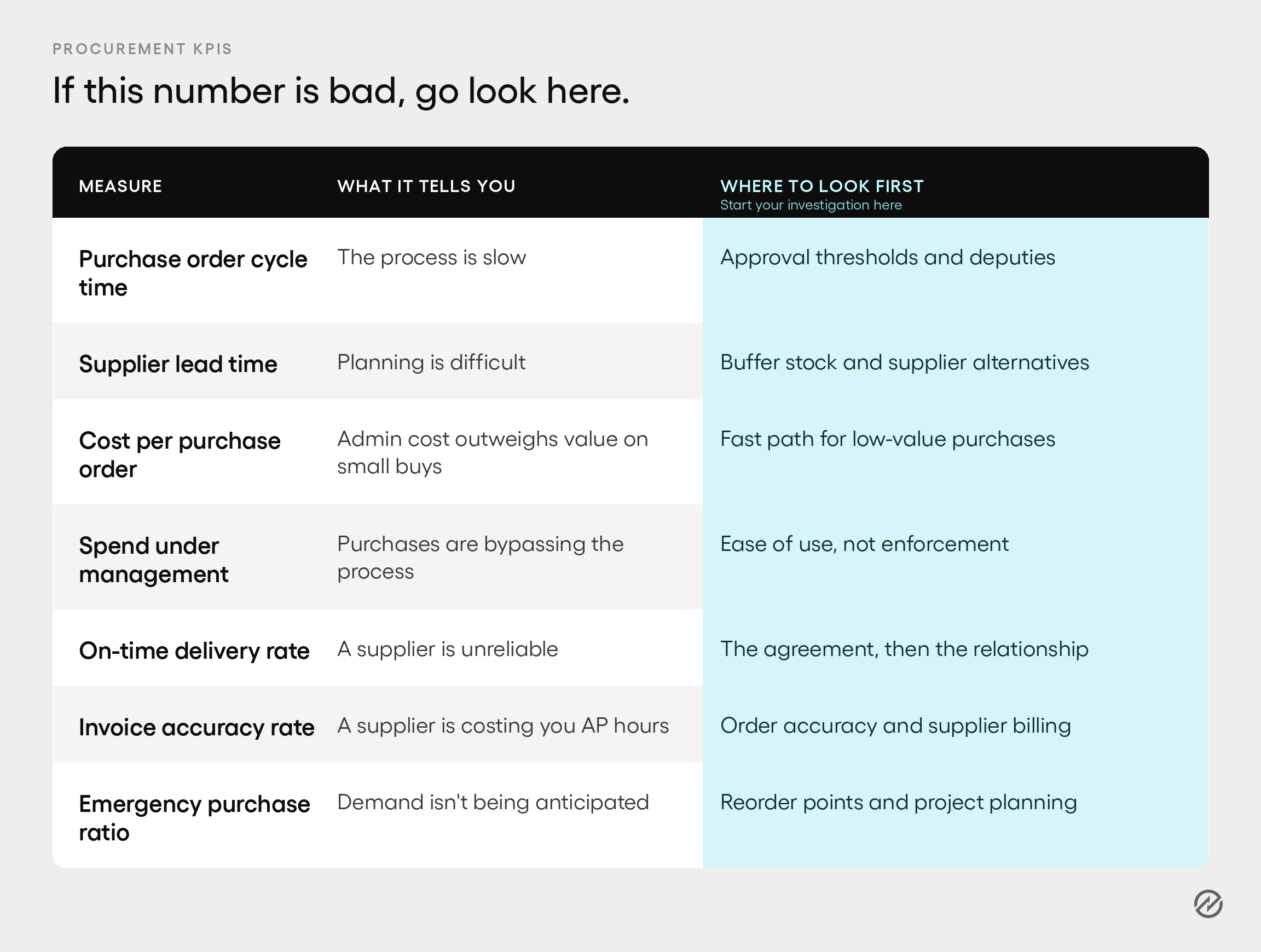
Most procurement dashboards measure what's easy to count rather than what changes a decision. The procurement KPIs worth tracking are those that pinpoint something specific to go and fix. If it doesn't, it's reporting for its own sake.
The measures below cover the entire procurement cycle, from request through supplier review. Start with two or three rather than all of them. Procurement professionals who begin by instrumenting everything usually end up maintaining a dashboard nobody reads.
Speed: where the process is losing time
Purchase order cycle time. How long from when a request is raised to when the order reaches the supplier? This is the single most useful procurement measure, because the delays it exposes are almost always structural. Track the median rather than the average, since a handful of unusual purchases will distort the mean and hide what routine requests actually experience.
Break it into segments once you have a baseline. Time waiting for approval, time in strategic sourcing, time to issue the order. The segment carrying the delay tells you what to fix. Most organizations find approval waiting dominates, which is why the threshold work matters so much.
Supplier lead time. How long does it take from a supplier receiving your order to shipping it? This one measures the supplier rather than you, and it's essential for planning. A supplier with a long but reliable lead time is manageable. A supplier whose lead time varies unpredictably forces you to hold buffer stock, which is a real cost that never appears on their invoice.
Requisition-to-approval time. Worth isolating if purchase order cycle time is high and you don't yet know why.
Cost: where the money is going
Cost per purchase order. The fully loaded administrative cost of processing one order, including staff time. Most organizations have never calculated it and are surprised by the result. It's the number that makes the case for automation concrete, and it's also what tells you a rigorous process applied to small purchases is losing money.
Spend under management. The percentage of total organizational spend that runs through the defined procurement process. Everything outside it is spend nobody negotiated, benchmarked, or reviewed. This is usually the most revealing single figure in a first procurement review, and improving it typically surfaces more cost-saving opportunities than any negotiation.
Realized savings. What you actually paid against a defensible baseline, whether that's the previous price, the market rate, or the initial quote. Be honest about the baseline. Savings measured against an inflated opening quote impress nobody in finance.
Purchase price variance. PPV is the difference between the price you planned and the price you paid. Useful for cost control because it shows drift over time rather than at a single point in time.
Quality and reliability: whether suppliers are performing
On-time delivery rate. The percentage of orders arriving complete on the committed date. The foundational measure when you evaluate supplier performance, and the one most likely to already exist in some form.
Defect or rejection rate. How much of what arrives fails inspection. Rising numbers from an established supplier usually signal a change on their side that's worth asking about directly before it escalates.
Invoice accuracy rate. How often invoices match the order without intervention. A supplier who regularly bills incorrectly is charging you in accounts payable hours.
Emergency purchase ratio. Unplanned or expedited purchases as a share of total purchases. This is an underused measure and one of the most diagnostic in the set, because emergency purchases cost more, bypass normal sourcing, and often skip approval steps entirely.
A high ratio rarely means people are being careless. It usually means demand isn't being anticipated: reorder points that don't reflect actual consumption, projects that don't share requirements until they're urgent, or renewals nobody tracked. Organizations that improve demand planning generally see this ratio fall, because the purchases were foreseeable and simply weren't foreseen. Tracking the ratio by department shows you where the planning gap lies.
Making the numbers usable
Three things separate tracking key performance indicators that get acted on from a dashboard that gets ignored.
Every measure needs an owner. A number nobody is responsible for doesn't get investigated when it moves.
Every measure needs a reliable source. If producing the figure takes a day of manual work each month, it will stop being produced. This is the practical argument for connected records more than any other.
Every measure needs a reason. Before adding a KPI, answer what you'd do differently if it got worse. If there's no answer, don't track it.
Review monthly for operational measures such as cycle time and on-time delivery; quarterly for structural ones such as spend under management and supplier concentration. Watch the direction more than the absolute value. A cycle time of six days improving steadily is a healthier signal than four days drifting the wrong way.
Where procurement software changes the process
Everything in this guide can be done without buying anything. Approval thresholds, a better request form, a purchase order rule, connected records: none of that requires software, and organizations that fix those things on paper first get more out of a system when they eventually buy one.
What software changes is the cost of doing it consistently. A manual process holds up while volume is low and one person can hold the whole picture in their head. It degrades as transactions multiply, because every handoff depends on someone remembering to make it. Procurement management software matters when the process is right, and the effort of running it becomes the constraint.
Here's what actually changes, step by step.
Requests arrive complete. A structured request form collects specification, quantity, date, and budget code before submission. Approvers stop asking questions before they can decide, and the round trips that cost days disappear.
Approvals route themselves. Configurable approval workflows route each request to the right person based on rules you set, such as amount, department, location, project, or category. The purchasing policy is applied consistently every time, without anyone manually deciding where a request should go, and the requester can see who's holding it. This is where most organizations see the largest single improvement, because approval waiting is where most of the delay was.
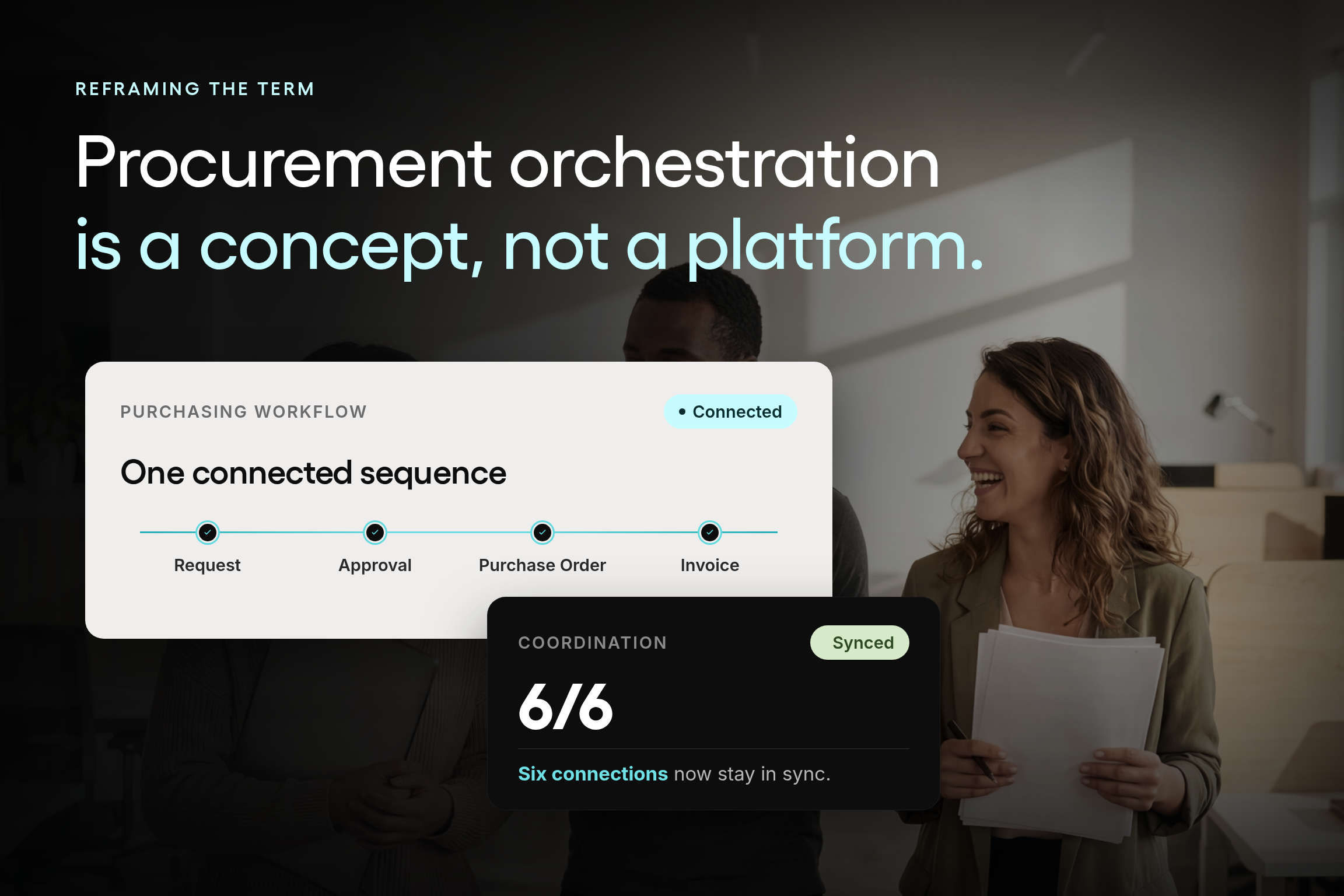
Information carries forward instead of being retyped. An approved requisition becomes a purchase order without re-entry. The order stays linked to the request that authorized it, which is what makes an efficient procurement process possible rather than just a faster one. Fewer transcription errors also mean fewer discrepancies surface weeks later during invoice matching.
Commitments register when the order is issued. Budget and spend control shows committed spend alongside actuals, so a budget owner sees what's already been promised rather than only what's been invoiced. That's the difference between finding out about an overspend and preventing one.
Matching happens automatically, and exceptions come to you. Three-way invoice matching compares order, receipt, and invoice as soon as the invoice is captured. Clean matches process without intervention; only genuine discrepancies reach a person. Accounts payable spends its time on the invoices that need judgment.
Supplier information accumulates instead of dispersing. Supplier management keeps records, documents, contacts, and purchasing history tied to real transactions. Managing supplier relationships stops depending on who remembers what, and vendor management becomes something the organization does rather than something an individual does.
Reporting comes from records you already created. Procurement reporting comes from records you already created. Cycle time, spend by category, and supplier performance are read directly from the work rather than being assembled by hand each quarter.
What this looks like in practice
The results customers report cluster around the same shift, from days to hours:
Ashesi University reduced purchase order processing time from two to three business days to under two hours, with a 15% cost reduction reported. Ohio Hills Health Services went from more than five business days to a few minutes, reporting procurement costs down by more than 10%. Technical America reduced its time from two to eight hours to under two hours, with roughly 25% in purchasing cost savings reported. Father Joe's Villages moved from two to three business days to a few minutes and reported purchasing costs halved.
Different sectors, different starting points, the same pattern. The time wasn't being lost to the work itself. It was being lost between the steps.
The concern worth taking seriously
The most common hesitation about procurement software isn't cost. It's that adding formal controls will slow purchasing, and that the organization will end up with a system nobody uses.
It's a reasonable worry, and it's the right question to ask. The evidence points the other way, but only because the controls and the speed come from the same thing. Automated routing is simultaneously a control and an accelerator. The request can't skip an approver, and it also can't sit unnoticed in an inbox.
What determines whether that holds is whether the system fits how the organization actually buys. This is where the multi-entity point from earlier comes into play. A platform that forces one identical process across departments, locations, or subsidiaries gets worked around, and a process people work around delivers neither control nor speed.
Tradogram is built for that reality: enterprise-grade control with mid-market simplicity, configured around your approval rules, thresholds, budgets, and entities rather than requiring you to adopt someone else's. As Joel Gerber, SVP Technology at Adheris Health, described it: "Great experience from initial presentation, testing, implementation, and thorough support. Tradogram was very easy to customize and use. Setup and configuration were simple and easy to maintain."
Or, more directly, from Ruba Bou Harb, Procurement Manager at The Nawaya Network: "Tradogram is a very user-friendly software, and it is integrated with Xero, so we are running the procurement and finance operation smoothly due to the Tradogram system. We love it!"
Where to start
Procurement is a core business function, and treating it as strategic procurement rather than administrative processing is what turns it from a cost center into something that affects margin, cash flow, and operational risk. But that shift starts with the process, not the platform.
Document what actually happens. Fix your approval thresholds. Standardize the request form. Then, when running the process consistently has become the bottleneck, look at what procurement software removes.
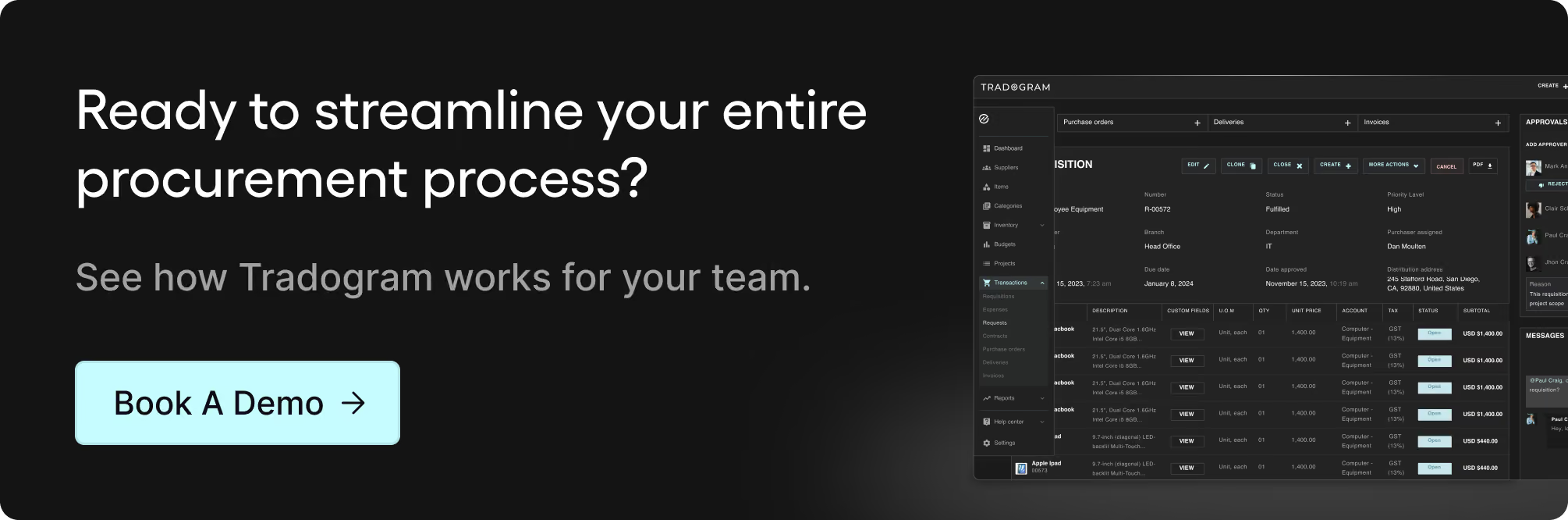
If you're at that point, explore Tradogram's core features to see how requests, approvals, orders, receiving, and invoices connect in a single workflow, or book a demo, and we'll walk through your process rather than ours.