


What is the Default Unit of Measurement (UOM) Section?
The Unit of Measurement (UOM) section is used to define the standard way an item (whether a good or service) is quantified and delivered. It provides flexibility in how items are listed in your database and how they appear on created transactions.
The configuration you set here defines the breakdown of the item when the quantity on a transaction is 1. For example, if you order a quantity of 1 of this item, the UOM defines how that singular item is received.
The UOM section is divided into three parts:
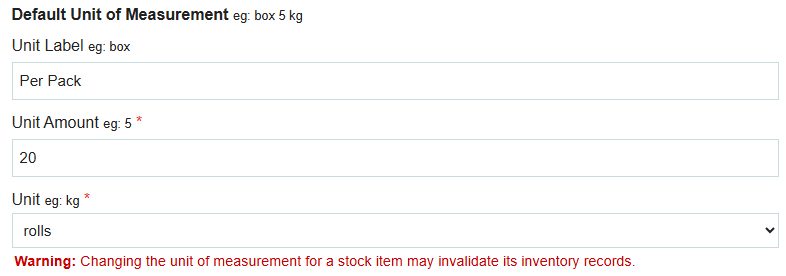
Example
If you purchase toilet paper, and each individual order comes in packs of 20 rolls:
Resulting UOM: Per Pack, 20 rolls

Crucial Note: Pay careful attention to the Unit selection, as this defines the most fundamental term for the item being received (e.g., rolls, hours, kilograms).
To see how you can manage the UOM in the items database, review our tutorial on creating items.
The UOM can also be modified when creating a transactions using the edit icon in the UOM section of the line item table:

Unit Drop Down Options
Pieces
Weight
Volume
Length
Area
Time
.webp)
.png)


